
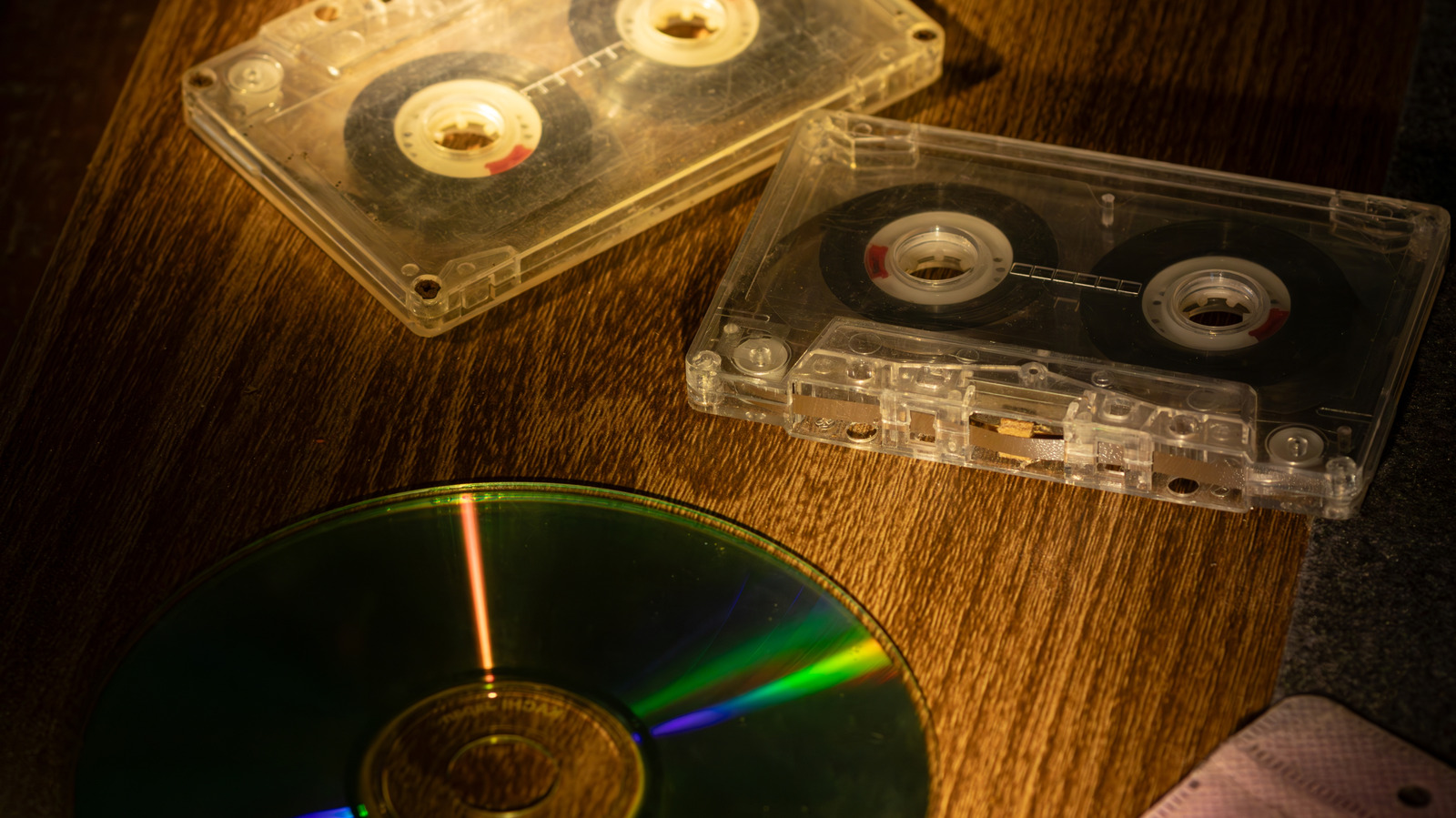
Cassettes and CDs both still pull in loyal fans, but they do not deliver sound in the same way. The big split comes down to old-school analog tape versus digital storage, and that difference shapes everything from clarity to wear over time. For listeners chasing the cleanest playback, CDs usually come out ahead, even if cassettes keep a strong nostalgic grip.
It helps to start with how each format holds music. Cassettes store audio on magnetic tape as analog data, while CDs keep it in digital binary form, which cuts down on hiss and other unwanted noise. That digital approach also lets CDs reproduce a recording more faithfully, which is a major reason they became the go-to format once they arrived.
The technical advantage is easy to hear in the numbers. CDs typically offer a wider dynamic range, around 96 dB, while cassettes generally land somewhere between 50 and 75 dB. That wider range means more room between the quietest and loudest parts of a song, so the result usually feels fuller and more detailed.
Signal-to-noise ratio matters just as much. In plain terms, it measures how much of what is heard is the actual music and how much is background noise getting in the way. CDs generally do better here too, which is why they tend to sound cleaner and less muddy when compared with tapes.
There is also the wear-and-tear problem, and cassettes take the harder hit. Tape can stretch over time, which slowly messes with playback and can dull the sound. CDs are not indestructible, but a disc that gets handled well can keep working for years without the same kind of gradual decay.
That said, cassettes have not vanished, and their comeback says a lot about how people connect with music. Nostalgia has played a huge role, turning tapes into more than just a playback format and making them feel like a physical piece of memory. For many listeners, that old-school charm outweighs the technical drawbacks.
For the average person, the gap between the two formats is not always dramatic. A decent cassette, especially a later model with noise reduction, can sound surprisingly good, and a quality player can make a big difference. If the goal is pure audio accuracy, CDs still win the matchup, but cassettes bring a texture that some people actually want.
That is the real split in this debate. CDs are the safer pick for clarity, convenience, and long-term reliability, while cassettes offer personality, warmth, and a little imperfection that never fully left the room. The choice often comes down to whether the priority is hearing every detail or enjoying the ritual of the format itself.
