
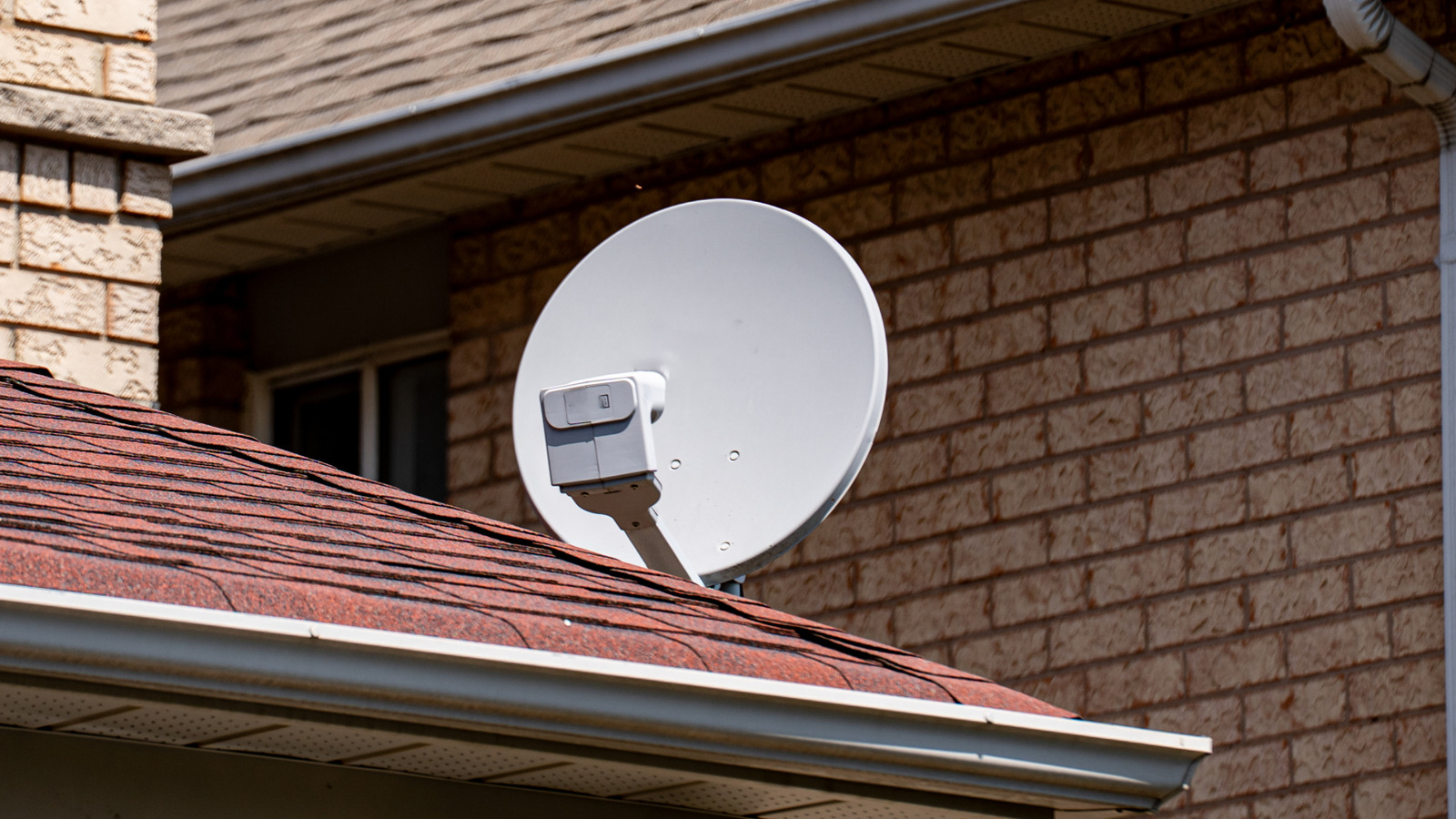
If you are hoping to turn an old satellite dish into a TV antenna, the short answer is no, not really. The dish and an over-the-air antenna are built for completely different jobs, so the swap sounds clever but usually leads to disappointment. You can, however, reuse parts of the old setup and make a clean move to free local TV if that is the direction you want to go.
A satellite dish is tuned to grab high-frequency satellite signals, while a TV antenna is meant for broadcast signals that travel through the air from local towers. That difference matters a lot, because the hardware inside each one is designed around a specific signal range. If you simply connect the dish to your TV’s antenna input, you will probably get nothing useful, and mounting an antenna in front of the reflector does not magically change that.
The good news is that the dish does not have to go to waste. The mounting spot can sometimes be reused for a real TV antenna, although the pole may not match perfectly and an adapter might be needed. You may also be able to keep the coax cable if it is still in solid shape, but other pieces like splitters or old support hardware often need to be replaced.
That makes the switch more practical than the dish-to-antenna idea itself. Instead of forcing the dish to do a job it was never built for, it is smarter to treat the old installation like a starting point and upgrade from there. A proper antenna setup gives you a much better shot at reliable reception without a lot of guesswork.
If you are planning to ditch satellite or trim expensive streaming bills, a digital TV antenna can be a nice way to get local channels for free. Just do not assume the tiny antennas built into some smart TVs can handle the job, because those are usually meant for Bluetooth or Wi-Fi, not over-the-air broadcasting. For real TV reception, you need an actual high-definition antenna built for that purpose.
Choosing the right antenna takes a little thought, especially because the distance claims on the box are only part of the story. Your location relative to broadcast towers, the direction they sit in, and even the terrain around your house can all affect how well the signal comes in. Where you place the antenna matters too, and that is why one home may do fine with an indoor unit while another needs an outdoor model.
Indoor antennas are great when the signal is strong and the setup is simple. Outdoor antennas tend to perform better when towers are farther away or obstacles get in the way, since they can usually catch a cleaner signal from a higher spot. The right choice depends less on hype and more on what your home can actually receive.
If the old satellite dish is no longer useful, recycling is often the best move. Because it includes electronic parts and wiring, it should go to an electronics recycling center or a local e-waste collection program rather than tossed out like ordinary trash. That keeps the cleanup simple and avoids turning a useless dish into an even bigger mess.
So if you were hoping for a quick trick to turn satellite gear into a TV antenna, that shortcut is mostly a dead end. Still, the old mounting position, cable, and hardware can sometimes help you set up a real antenna with less hassle. Once the proper antenna is in place, you are dealing with the right tool for the job, and that is what actually delivers the channels you want.
