
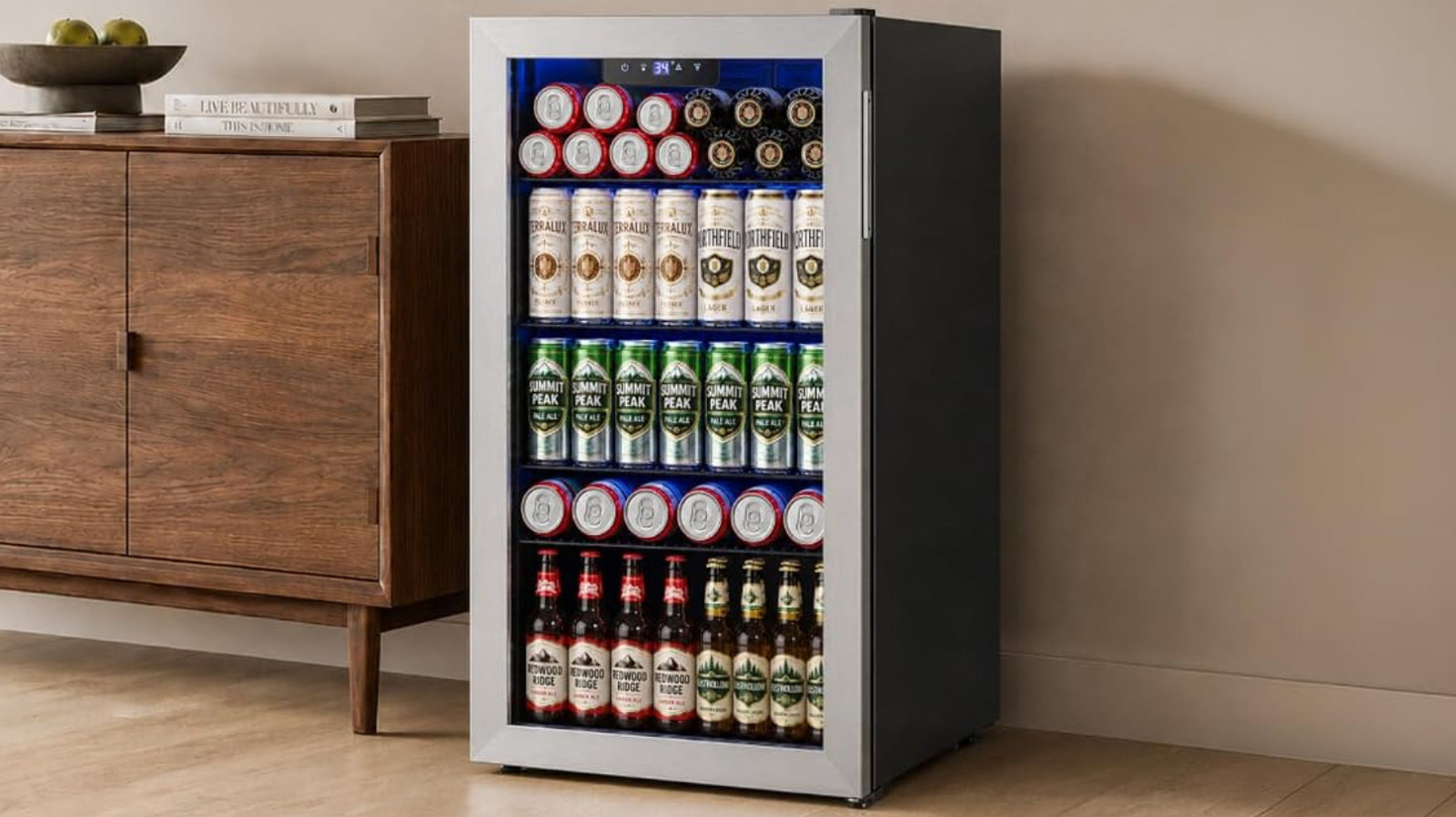
Beverage coolers can look like an easy shortcut when fridge space runs tight, but they are not automatically a safe stand-in for a real refrigerator. Whether they can handle food depends on how cold they run, how consistently they hold that temperature, and whether they offer enough of the right kind of storage. For drinks, they usually do the job just fine, but perishable food brings a much stricter set of rules.
The key number to watch is 40 degrees Fahrenheit. That line matters because food safety gets shaky fast once temperatures creep above it, especially for dairy, meat, leftovers, and other items that spoil easily. If a beverage cooler can be adjusted to stay at or below that point, it can technically work for some food storage, but only with caution.
The trouble is that many beverage coolers were built with cans and bottles in mind, not groceries. They often lack the shelving layout, humidity control, and consistent cold zones that a full-size refrigerator provides. That means they may be fine for short-term use or very specific items, but they are not a great long-term home for perishables.
This is where the food safety warning gets serious. The so-called “Danger Zone” sits between 40 and 140 degrees Fahrenheit, and bacteria love that range. Once food spends too long there, the risk rises quickly, and the result can be a meal that looks fine but is no longer safe to eat.
For people who want something compact for everyday food storage, a mini fridge usually makes more sense. Mini refrigerators are designed more like scaled-down versions of standard fridges, with shelves, door storage, and sometimes a small freezer section. They are made to handle more than just drinks, which gives them a clear edge for dorm rooms, offices, and bedrooms.
Electric coolers offer another middle ground. They are portable like traditional coolers, but they use powered cooling instead of ice, which gives them a more stable temperature and less mess. Some models even let users tweak settings through an app, which makes them handy for road trips, camping, or tailgating when convenience matters more than capacity.
Traditional coolers still have a place too, especially for short outings. They do not need electricity and come in several styles, from soft-sided models that are easy to carry to hard-sided versions that usually keep ice cold longer. Backpack coolers add another layer of convenience, especially when hands-free portability is more important than storing a lot of items.
Each cooling option solves a different problem, and that is really the heart of the issue. A beverage cooler can be a smart fit for drinks or tightly controlled short-term use, but it is not a universal replacement for a refrigerator. The best choice usually comes down to what needs to stay cold, how long it needs to stay cold, and how much room is actually available.
