
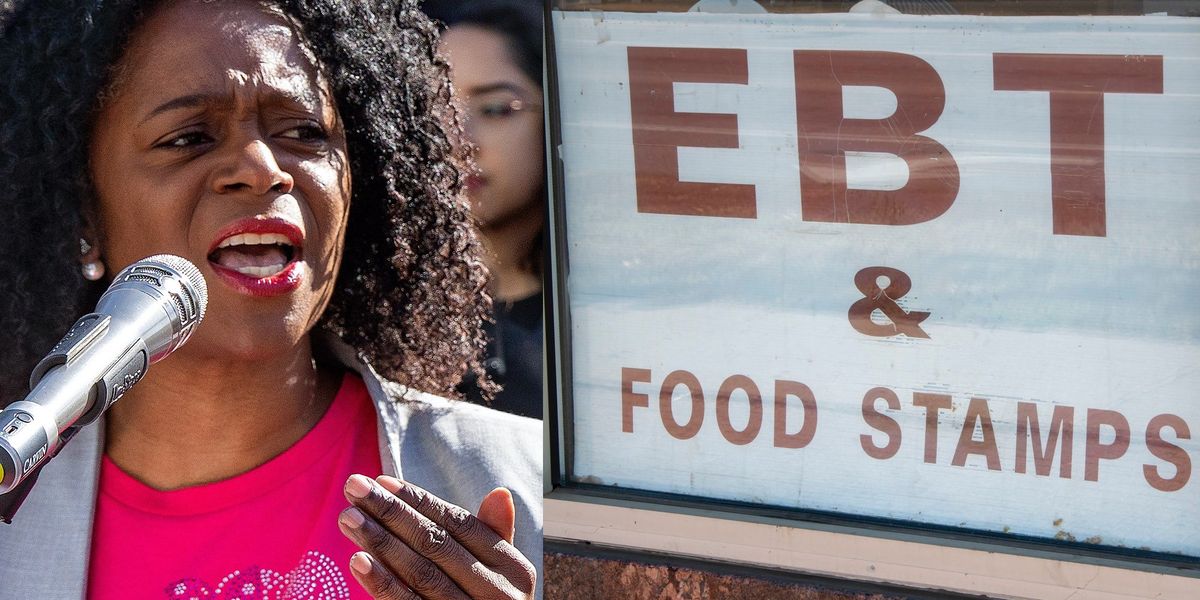
California lawmakers are looking to change the game when it comes to welfare fraud, and it’s stirring up quite the debate. The proposal, crafted by Democrat state Sen. Lola Smallwood-Cuevas, seeks to decriminalize certain cases of welfare fraud under $25,000, especially when they are due to administrative slip-ups. The bill suggests that these cases should be handled by officials for investigation rather than being immediately pushed into the criminal justice system.
Sen. Smallwood-Cuevas argues that the current system is overly harsh, leading to felony charges for what could be simple paperwork errors. She told Fox News Digital, “California’s safety net should lift families up, not trap them in poverty.” Her stance is that a missed deadline or an innocent mistake shouldn’t result in tearing families apart with serious legal consequences.
The bill’s supporters believe it’s about helping families avoid unnecessary entanglements with the law due to minor errors. According to the Department of Social Services, Los Angeles County alone sees between 15,000 and 20,000 welfare fraud referrals annually. Out of these, fraud is confirmed in around 5,000 to 8,000 cases, and only a fraction, about 200, are forwarded to the District Attorney’s office.
A significant endorsement for the bill comes from the SEIU union and various welfare rights organizations. On the other hand, the proposal has drawn strong opposition from the state’s district attorney’s association, the California welfare investigation association, and the San Bernardino County Sheriff’s Department. These groups are concerned that the bill could open the door to more fraudulent activities.
Critics are particularly worried about how the bill might encourage more welfare fraud. They argue that the proposal is based on a misleading premise that welfare fraud is largely due to administrative errors. The California District Attorneys Association has voiced opposition, stating that welfare fraud is a crime requiring specific intent to deceive.
The association argues that to prosecute someone for welfare fraud, there must be proof of intent to defraud the system. They fear that the bill, if passed, would result in “unchecked welfare fraud” that could hurt taxpayers and those truly in need of assistance. The organization also emphasizes that the proposed legislation does not genuinely support the needy but instead protects those who exploit the system.
The bill’s authors have cited racial and gender disparities in welfare fraud prosecutions as one of their motivations. Studies indicate that 75% of welfare fraud convictions involve women, and half of the arrests are of black and Hispanic women. These statistics serve as a rallying point for those supporting the bill, highlighting systemic issues.
California’s district attorneys association counters this by pointing out that the justice system already requires intent to be proven, which they believe ensures fairness. They stress that the proposed changes could undermine the integrity of welfare programs by making it easier for people to manipulate the system. The association’s stance is that the bill would ultimately do more harm than good.
The conversation around this bill is a classic example of the ongoing debate over welfare reform. Supporters of the bill see it as a necessary step to protect families from overly harsh penalties for minor errors. Meanwhile, opponents worry about the potential for increased fraud and the impact on the welfare system’s sustainability.
The divide also reflects broader political tensions, with critics arguing that the legislation aligns with a lenient approach that could undermine accountability. They see it as a move that prioritizes administrative convenience over the rigorous enforcement of laws designed to protect taxpayer money. This perspective is echoed by various conservative voices who advocate for strict measures to deter welfare fraud.
The bill’s supporters, however, argue that the focus should be on compassion and understanding for ordinary people who make mistakes. They emphasize the importance of not criminalizing individuals for errors that often occur due to complex bureaucratic processes. This view is backed by those who believe in reforming the system to be more humane and less punitive.
As the debate continues, the question remains whether this bill will pass and how it would shape the future of welfare fraud enforcement in California. The differing views highlight the complexity of balancing the need for accountability with compassion in social welfare policies. Both sides agree on the importance of protecting the welfare system but differ on how best to achieve that goal.

1 Comment
50 years ago when i was a caseworker i busted the white woman in charge or welfare tights for 75,000 in fraud , the judge said she wasnt eligable for aid but didnt have to pay it back , i went back to the office and resigned.