
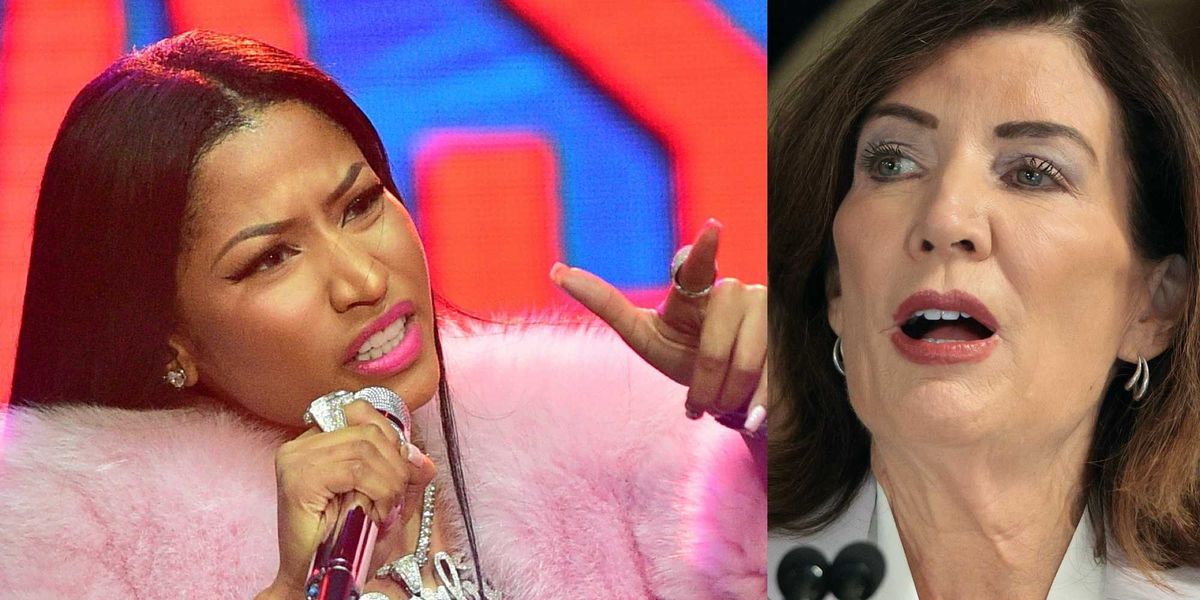
Nicki Minaj’s latest online broadside landed squarely on New York Gov. Kathy Hochul, and the exchange quickly turned into a flashpoint about politics, public safety, and celebrity influence. What started as another sharp social media jab escalated into a full-on verbal beatdown, with Minaj framing the governor as a symbol of failed leadership while the feud drew in New York political figures and plenty of attention online.
The clash had a familiar modern rhythm: one viral post, a wave of reactions, then a louder response that kept the story moving all day. Minaj’s criticism was blunt and personal, while supporters of the governor pushed back and tried to paint the moment as just another celebrity-driven distraction. Even so, the comments struck a nerve because they tapped into a broader frustration many New Yorkers already feel about crime, disorder, and the state of life in the city and beyond.
Minaj did not hold back, taking aim at Hochul in language that was meant to sting and spread fast. In a social media age where outrage travels faster than careful explanation, that kind of message can dominate the conversation in minutes. The result was less a debate and more a public pile-on, with the governor’s name now attached to a growing online storm she did not ask for but could not avoid.
The feud also pulled in Bruce Blakeman, who added fuel to the moment by weighing in on the governor’s handling of state issues. That gave the exchange a sharper political edge and made it clear this was not just celebrity theater. When local officials, national attention, and a superstar’s megaphone all collide, the lines between entertainment and governance get blurry fast.
Social media has changed the way public figures are attacked, defended, and judged. A single quote can become a rallying cry, a meme, or a political weapon, depending on who picks it up first. In this case, Minaj’s remarks landed because they were forceful, direct, and tied to a wider sense that leaders are falling short when people want visible results.
That’s part of why the feud resonated beyond the usual gossip circuit. People who never normally weigh in on state politics suddenly had an opinion, and the exchange became a proxy fight over competence, accountability, and who gets to speak for frustrated voters. When a celebrity says the quiet part out loud in public, it can put a governor on the defensive in a way that polished press conferences never quite do.
Hochul now faces the awkward reality that criticism from a music star can travel farther than many official statements. The spectacle may fade quickly, but the underlying message tends to linger, especially when it touches on safety and leadership in a place as politically charged as New York. In that sense, the feud was never just about one tweet or one insult, since it exposed how quickly public anger can latch onto a familiar name and turn it into a symbol.
For Minaj, the move fit a pattern of speaking loudly and without apology when something bothers her. For Hochul, it was another reminder that political image can crack in public faster than it can be repaired. And for everyone watching, it was proof that in 2026, the loudest battle over a governor’s record might not happen in Albany at all.
