
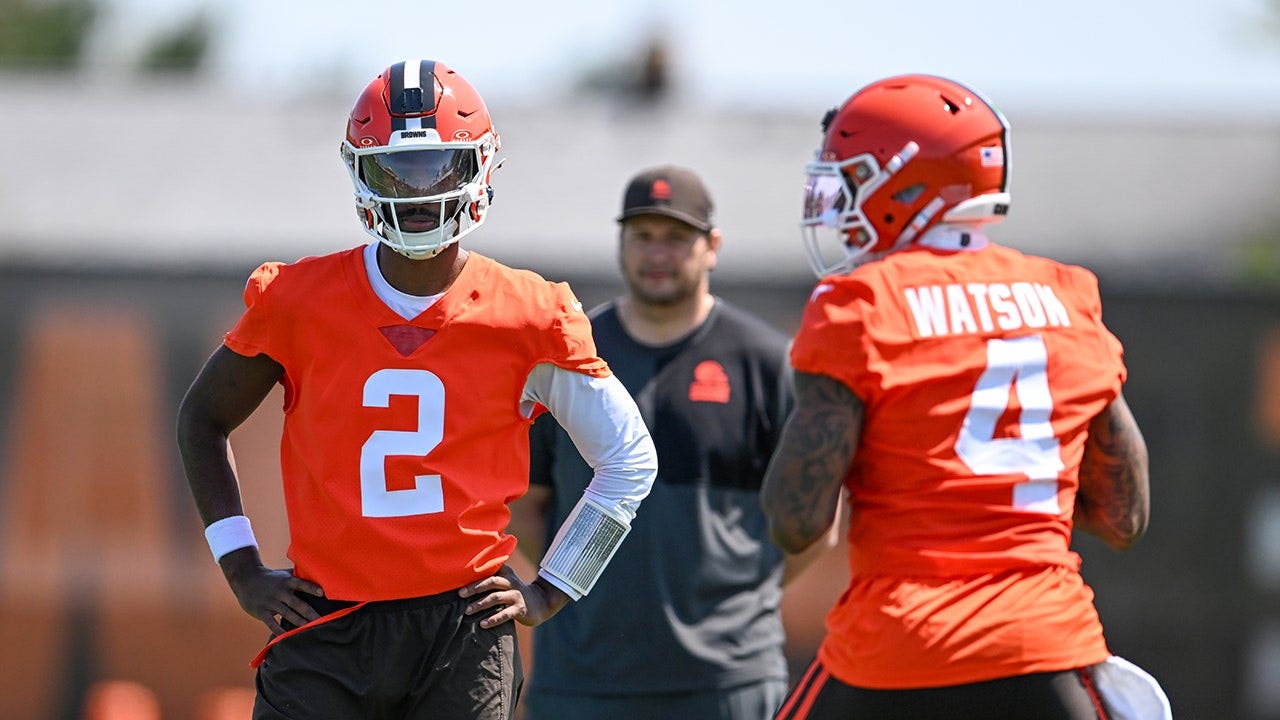
This piece breaks down the quarterback competition in Cleveland and why it remains unsettled as organized team activities begin. Cleveland Browns coach Todd Monken says the quarterback competition between Deshaun Watson and Shedeur Sanders is far from decided heading into OTAs. We’ll look at what that line from the coach means, how the two players differ, what OTAs actually test, and what to track as the team moves forward.
Monken’s comment landed as a clear reminder that no starter has been handed the job, and that the coaching staff intends to evaluate both players on merit. That tone keeps the door open and raises the stakes for each practice rep, but it also signals a methodical approach rather than a hasty choice. Coaches often frame competitions this way to keep players sharp and accountability high.
Deshaun Watson arrives with a track record of NFL starting experience, an established pocket presence, and a resume built on professional reps against top defenses. Shedeur Sanders brings youth, recent college success, and developmental upside that appeals to coaches who want a quarterback they can mold. The contrast between proven pro instincts and ascending potential is central to why the race is still up in the air.
OTAs are not full-contact or the final exam, but they matter for timing, playbook grasp, and how the quarterbacks run the offense at game speed. Coaches will watch footwork, decision-making under simulated pressure, and how each quarterback communicates cadence and protections to the line. Those small measures during low-risk periods often reveal who can pick up adjustments fastest when the hits start coming.
Beyond the individual duel, this contest affects the entire offense’s construction and identity for the season. Receivers and tight ends must adapt to each quarterback’s tendencies, while the offensive line needs consistent signals and tempo to execute blocks and protections. Even special teams and game-planning take cues from who leads the huddle because the play-calling and risk profile can shift with the quarterback’s strengths.
Timing for a formal decision typically stretches into training camp, when full contact and live reps expose different weaknesses and strengths than OTAs do. Still, a strong showing in these early sessions can tilt momentum, earn trust from coaches, and shorten the leash for mistakes later. Conversely, struggles in OTAs create questions that opponents and media will amplify, so both quarterbacks have tangible incentives to perform now.
The messaging from the coaching staff and front office will be watched closely by fans and reporters who want clarity, but measured communication helps manage expectations while the team evaluates. Social media buzz and headlines may demand a quick answer, yet football evaluations take shape over weeks of interactions, not single soundbites. That balance between transparency and patience is part of how a team protects its process.
What to track in the coming weeks is straightforward: accuracy on timing routes, quickness in making pre-snap reads, and leadership under routine adversity in practice scenarios. Watch how each quarterback handles adjustments and how consistently they deliver the ball to receivers in stride, because those details translate directly to in-game efficiency. The competition will evolve through practice habits and game-like reps, and those who show steady command will force the staff to make a clear call when the time comes.
