
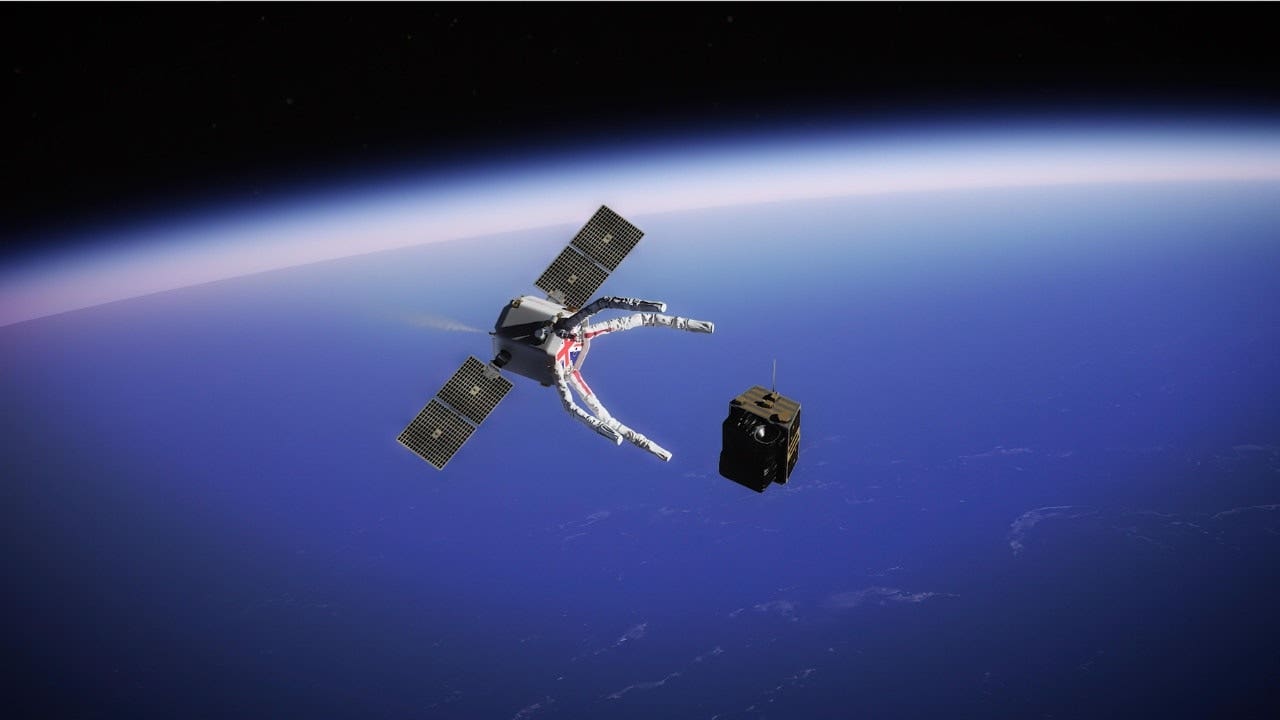
Britain is betting big on a bold fix for a problem that keeps getting worse in orbit: dead satellites, broken rocket pieces and a sky full of high-speed clutter. The plan centers on a robotic spacecraft with oversized claws that can latch onto abandoned satellites, drag them down and help burn them up safely in Earth’s atmosphere. If it works, the mission could turn space cleanup from a futuristic idea into a real job.
Space around Earth is crowded in a way that’s hard to picture from the ground. Thousands of tracked objects are already up there, and countless smaller fragments are moving even faster, which makes every collision riskier than it looks on paper. A tiny shard can do serious damage when it is racing through orbit at extreme speed.
That is why Britain’s Active Debris Removal effort is getting so much attention. The UK Space Agency has tapped ClearSpace UK to build the mission, with funding set at about $81 million. The spacecraft is expected to launch in 2029 from SaxaVord Spaceport in Scotland, and its first task is to remove two inactive UK satellites from low Earth orbit by 2032.
The big idea is simple, even if the execution is anything but. The spacecraft will track a target, match its motion and then use a specialized capture system to grab it without turning the whole operation into a new debris problem. Once the dead satellite is secured, the craft will lower its orbit, release the object and let atmospheric drag finish the job.
That matters because dead satellites do not just sit there politely. Many tumble, drift and linger long after their useful life is over, which makes them harder to manage and more dangerous over time. A reusable cleanup craft could change the economics of the whole effort if engineers prove it can be refueled and sent back out for another round.
The scale of the orbital mess is the real reason this mission feels urgent. The European Space Agency says tens of thousands of objects are being tracked, and that number includes functioning satellites, spent rocket bodies and debris. Millions of smaller fragments are also believed to be circling Earth, often too tiny to track but still dangerous enough to ruin a mission.
One of the nastiest fears in this arena is the Kessler syndrome, a chain reaction where collisions create more debris, which then creates even more collisions. That kind of runaway damage could make certain orbital zones far more hazardous for future spacecraft. ESA has warned that active cleanup will be needed if long-term debris growth is going to be kept under control.
The danger is not limited to satellites and commercial hardware either. Astronauts on the International Space Station have had to shelter from debris before, including during the tense aftermath of a Russian anti-satellite test in 2021. In moments like that, the difference between a near miss and a catastrophe can come down to a tiny fragment moving at brutal speed.
There is also the less glamorous but very real issue of what happens when old hardware comes back down. Most material burns up during reentry, but not everything does, especially larger pieces or tougher components. Researchers have been paying closer attention as launch activity increases and the odds of uncontrolled reentries rise with it.
That makes Britain’s plan feel bigger than a single cleanup mission. If the spacecraft can successfully capture objects that were never built to be serviced, it could open the door to a whole new kind of orbital work. In time, operators might hire specialized vehicles to retire aging satellites instead of leaving them behind as junk.
For everyday life on Earth, this is not some distant science fiction side quest. Satellites help power navigation, communications, weather forecasts and a lot of the digital systems people rely on without thinking about them twice. Keeping orbital space safer helps protect that invisible infrastructure, and that is exactly where the stakes start getting real.
The project is still only a beginning, and two satellites will not solve the broader debris problem. Still, a successful capture and disposal mission could prove that space cleanup is possible in a practical, repeatable way. That would be a big shift for a domain where leaving things behind has too often been the default.
