
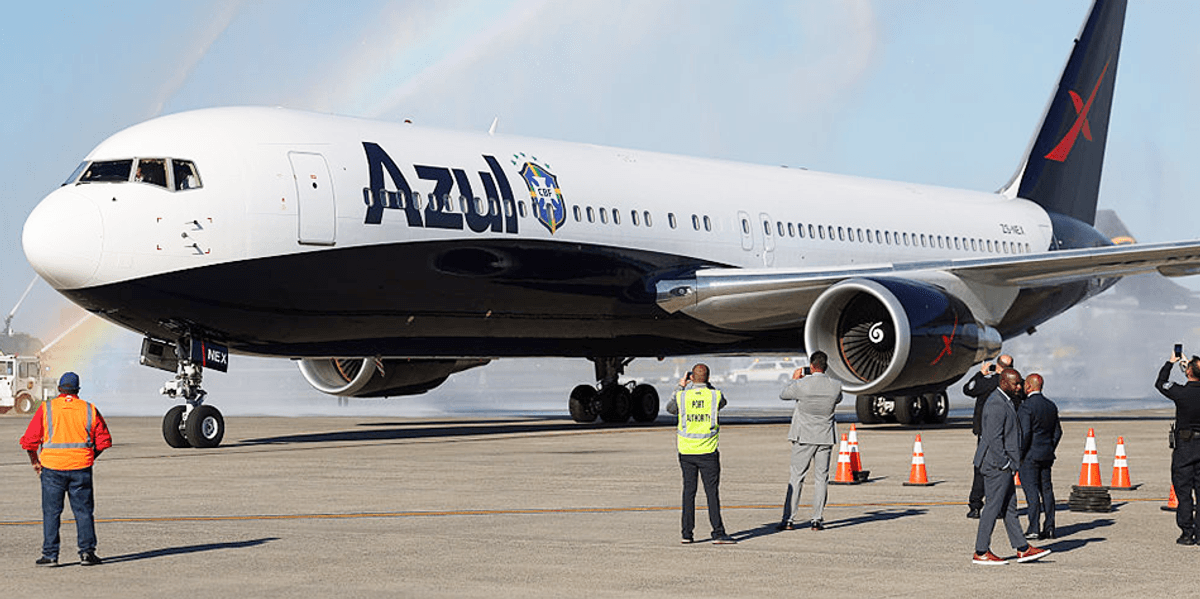
Brazil marked its World Cup sendoff with a public, faith‑tinged moment that turned a routine runway departure into a ritual: firefighters sprayed water over the team plane in a baptism‑like blessing, the scene framed by a nation where Catholicism and soccer are tightly woven into daily life.
At Rio de Janeiro’s Galeão International Airport, fans and staff gathered as the national squad prepared to board, and what would normally be a hurried airport pushback became a public ceremony. Fire trucks positioned on the tarmac raised their water cannons and formed arching sprays that the team’s Boeing passed beneath, a gesture that looked less like an aviation salute and more like a communal rite. The mood was peppy, hopeful, and unmistakably ceremonial.
Media coverage picked up the visuals and the symbolism, noting the water arches and the coordination with the football federation for the event. Reporters described the incident as a “blessing” of the aircraft, a moment where airport crews, federation officials, and supporters shared the spotlight. The sight of a painted national jet sliding under sheets of water captured imaginations in Brazil and beyond.
‘The event represents the collective hope of the entire nation.’
Catholicism’s presence in Brazil helps explain why the sendoff felt spiritual as well as sporting. The country has a massive Catholic population, and religious rituals often spill into public life, especially around major events that touch national pride. That mixture of faith and football produces moments where a plane’s takeoff becomes a symbolic departure for an entire people’s aspirations.
Several well-known players have taken public steps toward faith in recent years, with a handful participating in baptismal rites and public religious observances. Names like Alisson Becker and Roberto Firmino have appeared in those reports, tying personal faith to public identity during high-profile moments. Those individual choices feed into broader narratives about identity and team spirit for Brazil on the world stage.
Fans have long found creative ways to honor the Seleção beyond chants and banners. In past years supporters covered a retired jet with stickers and murals in a shopping center, transforming metal and paint into a roaming shrine to jerseys, heroes, and memory. This year’s jet arrived fully branded in national colors and emblems, carrying both the squad and a heavy cultural load as it taxied toward international runways.
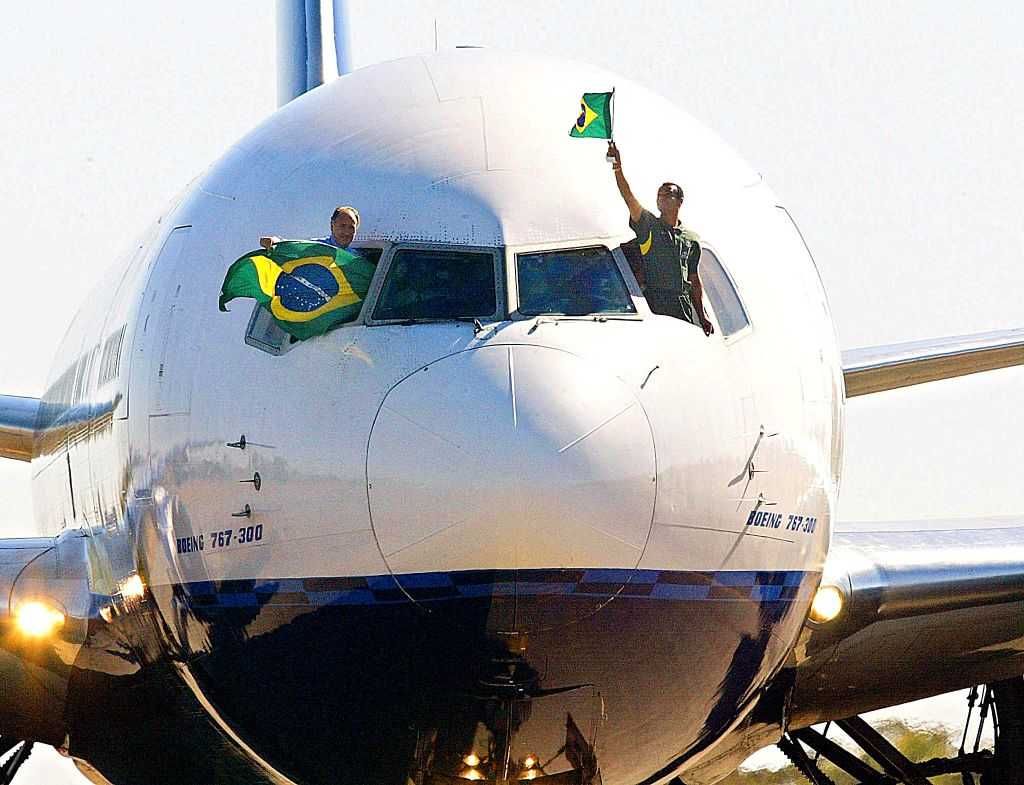
The aircraft itself has an interesting backstory, having once been part of a major rock tour and later repurposed as the team’s transport. It’s a big Boeing 767 that has moved from stage limo to national carrier, and its price tag and pedigree only added to the spectacle. Whether a former tour plane or a purpose‑built team jet, the machine now plays a role in the team’s public narrative.
Brazil’s relationship with the World Cup is built on history and expectation. With five titles, the country leads the trophy count and carries a legacy no other nation matches, while also standing out as the only team to have appeared in every tournament since 1930. Those facts make every sendoff more than logistics; they make it a ritual of hope and pressure rolled into one.
International commentary picked up on the emotional tone, calling the moment both tradition and a pageant of national longing. Some outlets described similar ceremonies as customary for aircraft before major departures, while others framed the act as an expression of collective optimism that accompanies Brazil every time it heads to the global stage. Either way, it was clear the event meant more than a photo op.
The water salute lit up social feeds and airport cameras, but it also left an impression on those who watched in person. For a few minutes at Galeão, routine airport noise gave way to applause and prayers, chants and camera flashes, and a lump‑in‑the‑throat kind of pride. When the plane finally lifted toward the span of countries hosting the tournament, the moment felt like a small, public benediction for the team and a nation eager for another title.
– YouTube
VANDERLEI ALMEIDA/AFP/Getty Images
