
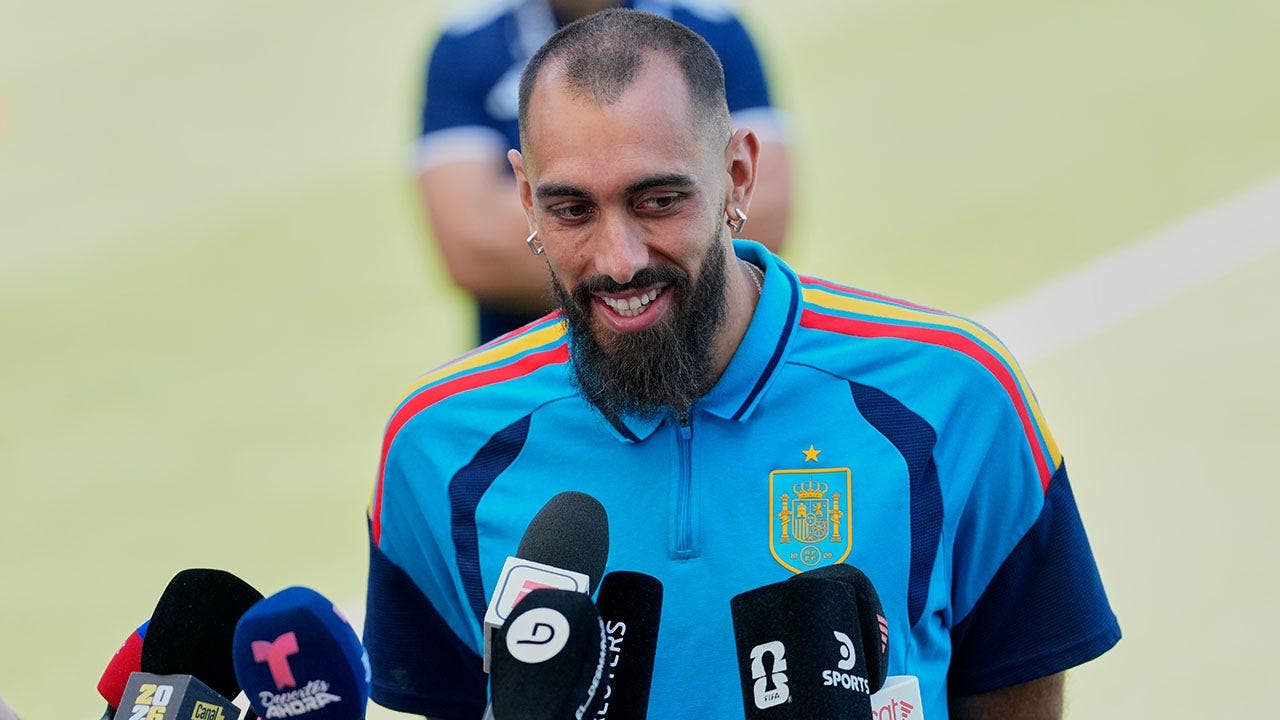
Borja Iglesias is heading into Spain’s World Cup final with plenty on the line, and he made clear that the usual postgame handshake routine is not exactly on his wish list. The striker said he hopes the moment after the match is brief and forgettable if Spain ends up lifting the trophy, while President Donald Trump is expected to be part of the ceremony.
Spain meets Argentina on Sunday afternoon at New York/New Jersey Stadium in what could be the biggest stage of Iglesias’ career. If Spain wins, he would be among the players expected to greet Trump afterward, but his comments to Spanish media showed he is not interested in pretending to be enthusiastic about it. The final has the kind of pressure and spotlight that can turn every small gesture into a headline.
“I don’t want to go to prison,” he said of shaking Trump’s hand, via All Out Soccer. “I hope to greet him at a time when we are all very happy, and that it passes very quickly and I can forget about it.”
He kept going, and the tone was just as blunt. “I don’t think this is the time to create controversy. People know perfectly well what I think. I would love to do many things, but the reality is that even if people think I am all-powerful, I don’t have that much power to tackle certain things.”
Iglesias has not been shy about his views before, and that part of his public image is now colliding with the biggest match of the tournament. He has voiced support for pro-Palestinian protesters and has also been critical of the former Spanish soccer federation boss who left his post after kissing a player following the FIFA Women’s World Cup.
He also said he believes Trump “struggles” with people who fight “for progress and for fundamental values.” That kind of comment adds more edge to an already charged setting, especially with cameras, medals, and diplomatic handshakes waiting after the final whistle.
Trump is expected to be at the World Cup final, and his presence has already become part of the event’s larger conversation. He also took part in the trophy presentation at the FIFA Club World Cup, where he stayed on stage for the celebration ceremony, so this would not be his first time stepping into the center of a soccer spectacle.
The political theater around the match is hard to ignore, but Spain still has a title to chase and Argentina is not exactly showing up to be a background act. That keeps the focus where it belongs, on the field, where every run, tackle, and finish will matter more than whatever happens in the handshake line.
For Iglesias, the tension is part personal, part public, and part unavoidable. He is walking into a final where victory could mean glory, but the cameras will be just as eager to catch the reaction afterward as they are to catch the goals during the match.
