
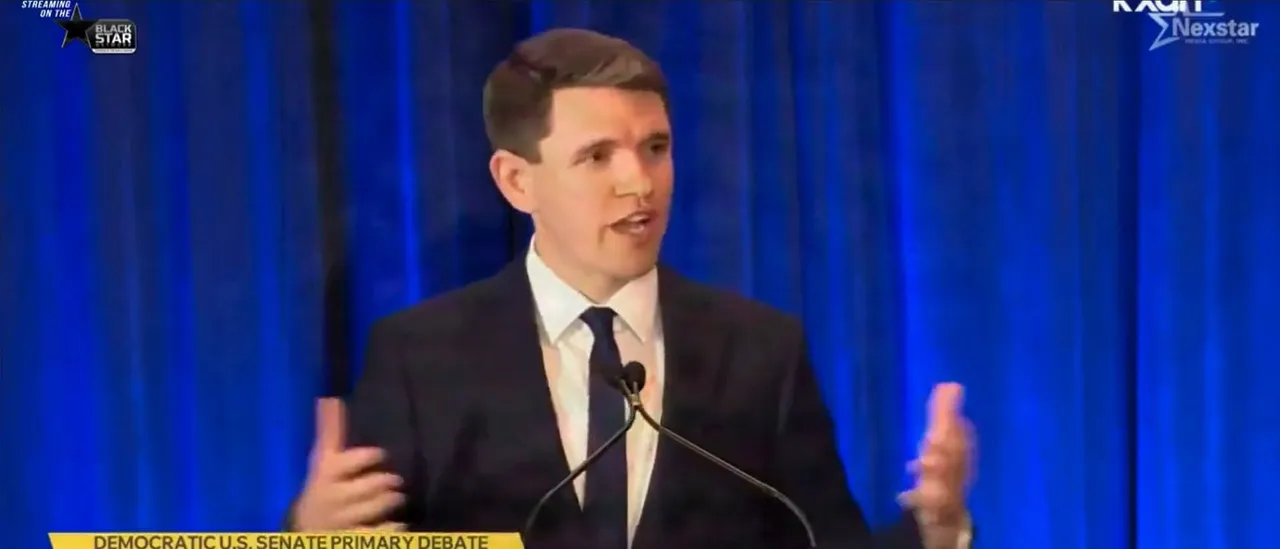
Texas Democrat James Talarico stirred controversy by casting the U.S.-Mexico line as a soft, welcoming threshold, a stance Republicans see as dangerous and out of touch with reality. He beat Jasmine Crockett in a tight primary showing 53.1% of the vote, but his debate comments about the border drew sharp criticism and raised questions about his view of national security. This article breaks down the exchange, the political fallout, and how recent federal actions on immigration contrast with Talarico’s language. It places his remarks against the backdrop of the current hardline enforcement policies pushed by the Republican administration.
Talarico told voters during a livestreamed Jan. 24 debate that the southern border should feel open and friendly, using a house metaphor to make his point. “Our southern border should be like our front porch. There should be a giant welcome mat out front,” Talarico said. That line landed as tone-deaf to many conservatives who have pushed for strict measures to stop cartel smuggling, human trafficking, and illegal crossings. For voters worried about safety and sovereignty, the image of a “welcome mat” at the border is not reassuring.
Republicans point to a string of executive moves by the current administration meant to strengthen enforcement and choke off transnational crime. Within days of taking office in January 2025, the president signed orders targeting Mexican cartels and other transnational gangs as foreign terrorist organizations, and declared a national emergency at the southern border. Those actions were accompanied by a large infusion of resources for federal enforcement agencies to carry out deportations and interdictions.
The administration also secured significant funding—measured in the billions—to expand Immigration and Customs Enforcement operations and other border security measures. Conservative lawmakers framed that package as a practical response to decades of porous enforcement and argued it is the only path to restore order. From this viewpoint, political rhetoric that treats the border as an open invitation undermines the case for tougher policies and emboldens illegal behavior.
Talarico’s political biography complicates the narrative for some voters. A former public school teacher who later enrolled in a Presbyterian seminary, he styled his Senate run around rediscovering focus on working people. Still, critics say his debate persona and policy metaphors reveal a disconnect from border realities, especially in a state like Texas where local officials confront daily operational and humanitarian challenges. The choice of language matters when public safety and lives are on the line.
The campaign has also seen flare-ups unrelated to immigration that add to the friction. A podcaster accused Talarico of making a dismissive remark about a fellow Democrat, saying, “James Talarico told me that he signed up to run against a mediocre black man, not a formidable and intelligent black woman, and I want to explain why this is problematic, especially as he shifted his current approach in the Texas Senate race.” That accusation fed intra-party distrust and complicated Talarico’s effort to unite Democrats behind a singular message.
Republican critics say voters deserve clarity: serious border policy requires deterrence, enforcement resources, and cooperation with neighboring countries to disrupt drug and human smuggling networks. Soft metaphors and friendly-sounding optics don’t stop cartels or secure checkpoints. The contrast between tough federal actions and Talarico’s words on the debate stage underscored a broader ideological split over whether the border is a security challenge to be contained or a hospitality issue to be reimagined.
Campaign dynamics in Texas will keep this debate front and center, with Republicans ready to use the “welcome mat” line to highlight differences on safety and constitutional responsibility. For many conservative voters, the priority remains clear: restore control, enforce the law, and defend communities from the fallout of open-border policies. That argument is likely to shape messaging and turnout in the months ahead as both parties wrestle for credibility on immigration policy.
!function(r,u,m,b,l,e){r._Rumble=b,r[b]||(r[b]=function(){(r[b]._=r[b]._||[]).push(arguments);if(r[b]._.length==1){l=u.createElement(m),e=u.getElementsByTagName(m)[0],l.async=1,l.src=”https://rumble.com/embedJS/u3rtroj”+(arguments[1].video?’.’+arguments[1].video:”)+”/?url=”+encodeURIComponent(location.href)+”&args=”+encodeURIComponent(JSON.stringify([].slice.apply(arguments))),e.parentNode.insertBefore(l,e)}})}(window, document, “script”, “Rumble”);
Rumble(“play”, {“video”:”v74ffwu”,”div”:”rumble_v74ffwu”});

1 Comment
I can’t believe that Texans went from a radical racist who blamed White people for the Crimes in America to another Communist open borders Anti-American Dumbasscrate.
Those who voted for him must have been Commifornia and New York idiots who moved to Texas, from the criminal sanctuary States, to Texas, just to change it Blue.