
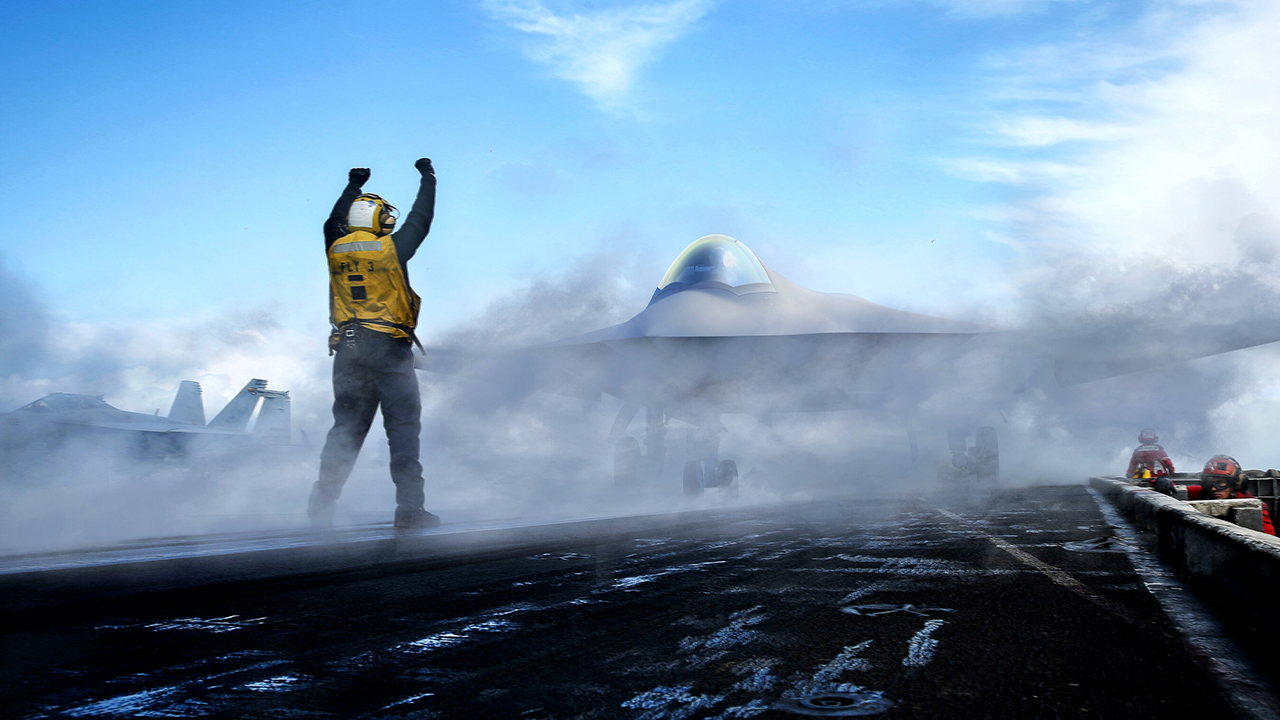
The Navy’s next carrier fighter is no small upgrade. Boeing has been handed a massive contract to develop the F/A-XX, a sixth-generation jet built to sharpen American air power, expand carrier reach, and keep pilots alive in some of the toughest fights imaginable.
Officials are treating the move like a major step toward the future of naval aviation. The aircraft is meant to work in tighter coordination with manned and unmanned systems, push deeper into contested airspace, and eventually take over for aging workhorses that have carried the load for years.
The deal is valued at more than $20 billion and covers full-scale development of the fighter. Boeing now has two sixth-generation programs on its plate, after being selected earlier for the Air Force’s F-47, a sign the company has become a central player in the next wave of American military aviation.
Steve Parker, president and CEO of Boeing Defense, Space & Security, said the company had already prepared for this kind of workload. “Delivering two advanced fighters in parallel was always our plan, and we invested accordingly. We are ready and able to build multiple concurrent future combat aircraft franchise programs,” he said in a statement.
The Navy says the F/A-XX is not just about speed or stealth. It is supposed to bring longer range, stronger mission systems, and better performance in a battlefield where electronic warfare, sensors, and drones matter as much as raw firepower.
That mission includes test aircraft for ground testing, airworthiness checks, and integration work tied to weapons and onboard systems. The point is to make the plane more than a pretty rendering, with real-world survivability and combat punch built in from the start.
Under Secretary of War for Acquisition and Sustainment Michael P. Duffey called the jet “a critical pillar” in the effort to preserve peace through strength. “F/A-XX will dominate contested airspace, extend operational reach, and deliver a decisive combat advantage for the warfighter,” he said.
He also described the program as “a crucial, non-negotiable investment” in the country’s long-term air combat edge. That language fits the broader push to make sure the Navy does not fall behind rivals that are pouring money into advanced aircraft, drones, and anti-access systems.
The new fighter falls under the Next Generation Air Dominance effort and is expected to operate alongside both manned and unmanned aircraft, including Collaborative Combat Aircraft. That mix is becoming the template for future air warfare, where the lead jet may direct a network of weapons, sensors, and loyal wingmen instead of flying alone.
Officials say the aircraft will also boost the performance of the unmanned platforms it works with. In plain terms, the Navy wants a fighter that can act like a quarterback in the sky, coordinating the fight while carrying enough firepower to break through hostile defenses.
Acting Navy Secretary Hung Cao called the contract the start of “a new era” for the service. “The Sixth-Generation fighter is a generational leap in air superiority and will provide the world’s best aviators with unparalleled capabilities to fight, win, and come home safe,” he said.
“We are excited to partner with Boeing, and for our warfighters to continue to dominate the skies and defeat our nation’s enemies,” Cao added. It is the kind of blunt, confident message that usually comes with big-ticket military programs, especially when the stakes involve carrier strike groups and long-range conflict.
Boeing says the aircraft will add major advances in mission systems and operational reach, though plenty of the details remain classified under U.S. national security and export rules. That secrecy is normal for a fighter this advanced, especially one meant to stay relevant against peer adversaries for decades.
The company is also building out a secure manufacturing site in St. Louis as it prepares to produce the jet. Parker said the investment is not just about buildings, but also about people and technology, which is the part that usually decides whether a program becomes a headline or a headache.
Missouri Gov. Mike Kehoe jumped in with an enthusiastic response, calling St. Louis “Fighterland, USA!” He said the win strengthens Missouri’s place in the future of American air dominance, innovation, and national defense, and that pride is easy to understand when a state gets tied to a program this big.
The F/A-XX is expected to begin replacing some of the Navy’s long-serving F/A-18E/F Super Hornets and EA-18G Growlers in the 2030s. It will also operate alongside the F-35C, giving the carrier air wing a harder-hitting and more flexible lineup as the next round of military competition gets more dangerous.
