
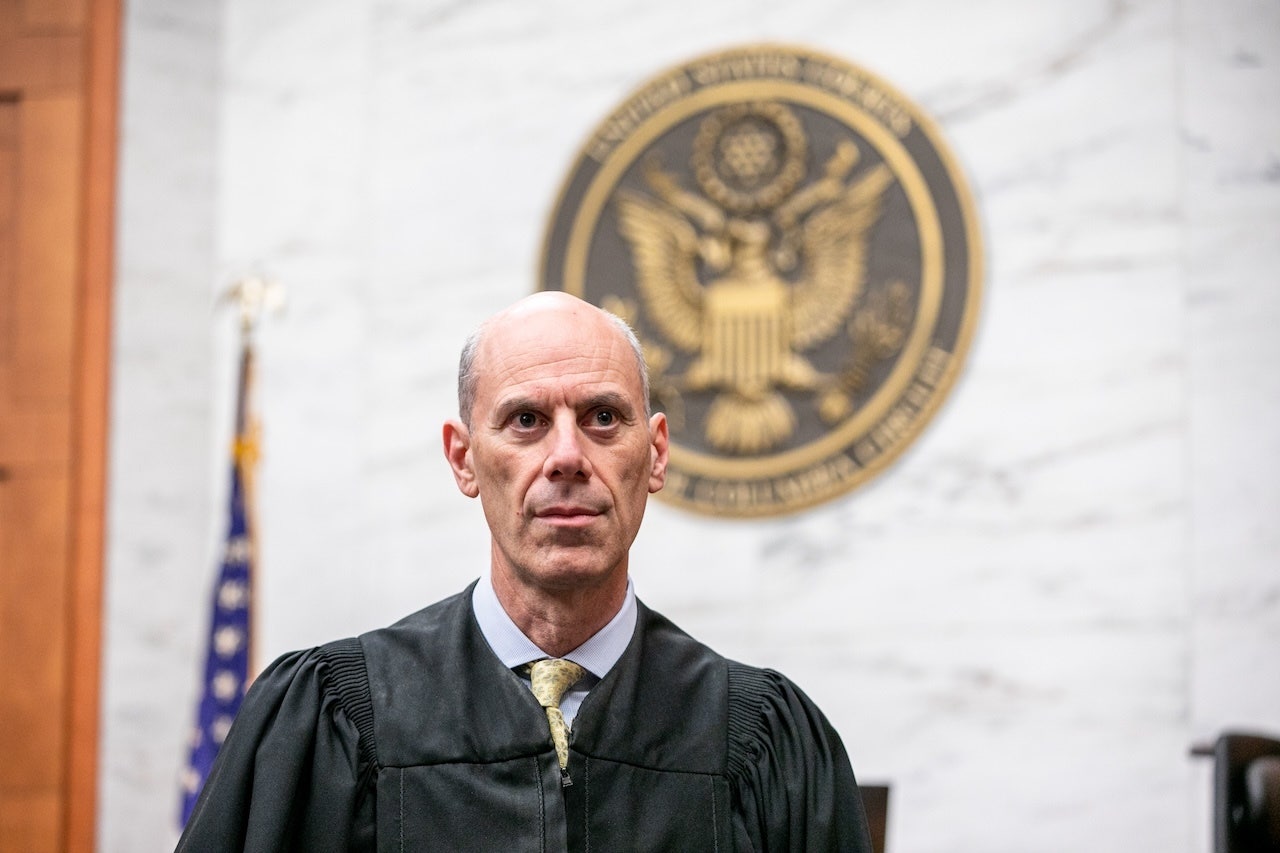
Questions are swirling around the D.C. federal court after Judge James Boasberg landed in the middle of several headline-grabbing fights tied to the Trump administration and Rep. Ilhan Omar. The pressure is not just about the rulings themselves, but about how cases get assigned, when exceptions kick in, and whether the system is as random as it is supposed to be.
Boasberg, an Obama appointee and the chief judge in the District of Columbia, is overseeing a request from media outlets to unseal the search warrant tied to federal investigations involving Omar. That alone has drawn attention, but the bigger story is the pattern forming around his docket and the way critics say it keeps placing him at the center of politically explosive disputes.
In the D.C. court, cases are generally assigned through an electronic random process run by the clerk’s office under the court’s Calendar and Case Management Committee. The setup is meant to keep things fair and predictable, with judges and attorneys expecting the draw to happen without favoritism or behind-the-scenes steering.
Still, there are exceptions, and that is where the eyebrows go up. Criminal grand jury matters are handled by the chief judge, which helps explain why Boasberg ended up with the Omar warrant fight, but it also fuels the broader debate over whether some high-profile matters are landing where they are because of rules, or because of something less visible.
Iowa Solicitor General Eric Wessan said Boasberg’s role in the Omar matter was not a shock, yet he also raised a sharper concern about cases that appear to cluster around judges already known for being openly critical of Trump-era policies. Wessan argued that the court’s own rules should be easier to follow and that more openness would help calm doubts about whether the assignment process is truly random.
That concern picked up steam after Boasberg took on other major fights involving the administration. He oversaw California’s lawsuit over voter-roll disputes and ordered the federal government to hand over names and supporting information tied to roughly 20,000 people identified by the Justice Department as noncitizens on the state’s voter rolls.
He also played a major role in the dispute over deportation flights involving alleged Venezuelan gang members, issuing a March 2025 order that tried to halt the flights to El Salvador. The administration fought back, citing the Alien Enemies Act, and the clash eventually reached the Supreme Court, which vacated Boasberg’s temporary restraining order because the case had been filed in the wrong jurisdiction.
Another fast-moving case hit his desk the same month, this one involving Signal messages from top administration officials discussing a Yemen strike in a group chat that accidentally included Atlantic editor-in-chief Jeffrey Goldberg. Boasberg later ordered the administration to preserve those messages, adding yet another politically charged matter to a docket already under a bright spotlight.
The steady stream of cases led Reps. Jim Jordan, Darrell Issa, and Chip Roy to press the court clerk for a clearer explanation of how judicial assignments are made. Their complaint was simple: if the system is truly random, why is it so hard to verify, and why is the composition of the assignment decks kept secret?
Those worries have now spilled into legislation. Sen. Eric Schmitt introduced a bill in July that would require federal district courts to assign cases strictly at random, with no exceptions, and he branded it the Boasberg Act. Schmitt argued that the current setup leaves too much room for doubt and gives the public little reason to trust that the courts are playing it straight.
Under the existing D.C. court rules, the chief justice does not directly reassign cases, and the committee handles those decisions instead. The court may notify the lawyers and judges involved, but it is not required to publicly explain why a case moved, and that silence is exactly what critics say is making the whole process look murkier than it should.
Wessan said that if the rules really allow exceptions, the court should say so plainly, and if they do not, then the language needs to match reality. His point landed hard because the issue is no longer theoretical, with the same judge repeatedly appearing in some of the most sensitive battles involving immigration, voting, surveillance, and executive power.
The result is a courtroom that feels less like a quiet administrative machine and more like the center ring of a national feud. As long as the cases keep coming and the explanations stay thin, the pressure over Boasberg’s role is not going anywhere.
