
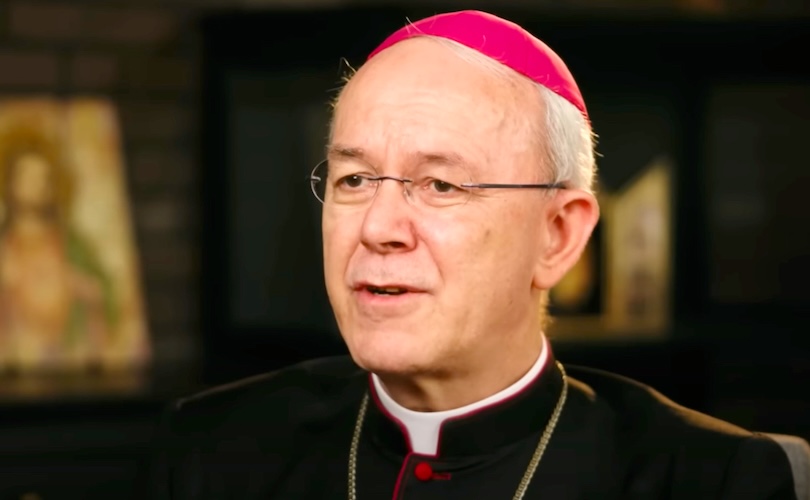
Bishop Schneider publicly criticized a recent synod report that suggested moving “beyond” current Church teaching on homosexuality, arguing the recommendation crosses a theological line and risks undermining core doctrines. He compared the report’s impulse to the serpent’s temptation of Adam and Eve in the Garden of Eden and warned that such moves can lead faithful Catholics into confusion and error. His intervention frames the tension between pastoral outreach and doctrinal fidelity as an urgent question for the Church’s leaders and for ordinary believers. The debate touches on authority, tradition, and how the Church defines truth in changing cultural circumstances.
Schneider’s core claim is straightforward: proposing to go “beyond” settled Church teaching is not a neutral development but an attempt to override established authority. He treats doctrine as grounded in divine revelation and ecclesial continuity, so any push to redefine moral teaching must meet exceptionally high standards. From his perspective, suggesting a departure from that continuity can have dramatic consequences for the Church’s coherence and witness. This is not a dispute about tone or pastoral method for him; it is about the foundations of what the Church teaches.
He used strong imagery to make the point, connecting the report’s language to the story of temptation in Genesis. By invoking the serpent’s temptation of Adam and Eve in the Garden of Eden, Schneider signals that the issue is not merely academic but deeply spiritual. That comparison forces a moral lens: suggestions that seem to promise freedom from rules may in fact erode the moral architecture believers rely on. The warning echoes a long-standing concern that apparent pastoral flexibility can mask a departure from truth.
Critics of Schneider might argue that pastoral sensitivity requires new language and approaches, especially in responding to people who feel alienated by traditional formulations. Advocates of development contend the Church can grow in understanding while remaining faithful to its core principles. Schneider’s answer is that growth cannot contradict established truths without becoming a break rather than a development. The tension between mercy and truth, he insists, must be navigated without sacrificing doctrinal clarity.
The issue also raises practical questions about authority within the Church. If synodal documents encourage moving “beyond” past positions, who decides what “beyond” means and on what basis? Schneider’s critique implies that such decisions should not rest on shifting cultural norms or majority opinion but on continuity with Scripture, Tradition, and magisterial teaching. For him, allowing doctrinal claims to be relativized risks turning faith into a collection of preferences rather than a coherent moral vision.
There are institutional implications as well. When bishops and synods appear divided on fundamental moral teachings, ordinary Catholics can become uncertain about which voice to follow. Schneider worries that ambiguity breeds scandal and discouragement, especially among those who look to the Church for a stable moral compass. He urges leaders to provide firmness delivered with compassion, not slogans that suggest doctrine is negotiable.
The debate also touches on pastoral effectiveness. Some pastors say adapting language or policy can open doors to conversation and healing for people who feel judged. Schneider acknowledges the need to preach with charity but argues pastoral kindness cannot entail abandoning truth. In his reading, true pastoral care strengthens rather than dilutes doctrine, helping people to encounter a coherent vision of human flourishing grounded in revealed truth.
Ultimately, Schneider frames his objection as a call to vigilance: doctrinal change requires clear theological grounding, not mere cultural accommodation. He insists that the Church must resist moves that would place human judgment above divine authority. For those concerned about the direction of the synod’s recommendations, his voice urges a return to clarifying what the Church has always taught and why it matters for life and faith.
