
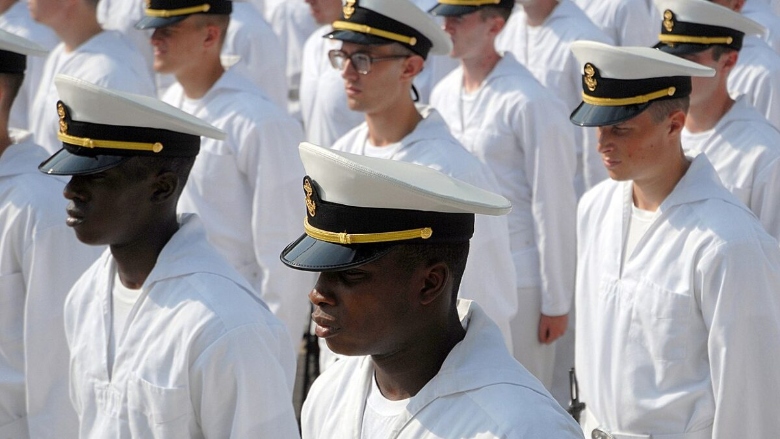
The Biden administration’s Department of Justice (DOJ) has reignited the contentious debate over racial preferences in admissions, this time in military service academies. Despite the Supreme Court’s landmark 2023 decision in SFFA v. Harvard and UNC, which declared racial discrimination in college admissions unconstitutional, the DOJ has found new ways to defend these divisive policies in military institutions. Critics are calling it a dangerous precedent and a blatant disregard for constitutional principles.
In the Harvard case, the Supreme Court rejected the argument that the educational benefits of a racially diverse student body justify racial discrimination in admissions. Chief Justice John Roberts, writing for the majority, dismissed such claims as “imponderable” and incapable of meeting the constitutional demand for strict scrutiny.
However, the Biden administration wasn’t ready to let the matter rest. Solicitor General Elizabeth Prelogar, representing the United States in the Harvard case, argued that racial diversity in military academies is a “national security imperative.” She claimed that diverse officer corps improve military readiness and cohesion, echoing similar arguments made during the Vietnam era. The court summarily rejected these claims, stating they lacked measurable evidence or meaningful connections to the goals they purported to achieve.
Fast forward to SFFA v. USNA, a case challenging the constitutionality of the Naval Academy’s use of racial preferences in admissions. With their previous arguments dismantled, the DOJ devised a new strategy. This time, they claimed that racial preferences create a diverse officer corps, which enhances unit cohesion, combat effectiveness, recruitment, retention, and legitimacy at home and abroad.
This revamped justification, however, recycled the same historical anecdotes about racial tensions during the Vietnam era. Critics argue that it amounts to little more than lawyer-crafted rhetoric designed to obscure the reality: these policies are driven by political preferences, not military necessity.
Judge Richard Bennett of the U.S. District Court for the District of Maryland accepted the DOJ’s argument without applying strict scrutiny. Instead of critically evaluating whether a specific racial mix genuinely enhances combat lethality or military readiness, the court deferred to the judgment of military leaders who simply reiterated the DOJ’s talking points.
Clever lawyering and professional military judgment won the day, but at what cost? Many believe this decision undermines constitutional equal protection principles by allowing subjective and ideologically driven policies to prevail over objective scrutiny.
Critics assert that the admirals and generals didn’t instruct service academies to adopt racial preferences because they believed it would improve combat effectiveness. Instead, they argue it’s a reflection of political pressures from their civilian superiors. By masking this policy preference as a military necessity, the DOJ and military leadership have blurred the line between constitutional governance and ideological expediency.
The Supreme Court’s rejection of racial preferences in the Harvard case explicitly warned against arbitrary and imprecise racial classifications. Yet, this new argument from the DOJ reintroduces the same problematic practices under a different guise.
Legal analysts anticipate that the Naval Academy case will likely face appeals. If the incoming Trump administration follows through on promises to eliminate racial preferences in military academies, the case could become moot. A presidential order could put an end to these practices, potentially leading to Judge Bennett’s ruling being vacated.
Congress could also weigh in, as some lawmakers have suggested codifying a prohibition against racial preferences in the next National Defense Authorization Act. Such a move would prevent future administrations from reviving these contentious policies.
This case underscores a disturbing trend in modern governance: the manipulation of constitutional principles for ideological ends. The DOJ’s shifting justifications reveal a willingness to stretch legal arguments to fit political goals, regardless of the broader consequences for equal protection under the law.
The Supreme Court’s decision in SFFA v. Harvard and UNC was a resounding defense of the constitutional promise of equal treatment. Yet, the Biden administration’s persistence in finding new ways to justify racial preferences suggests that this battle is far from over.
For those who believe in the rule of law, the Naval Academy case serves as a critical test of whether constitutional principles will prevail over creative legal arguments. As the nation watches, the outcome will have far-reaching implications—not just for military admissions but for the broader fight against racial discrimination in all its forms.
Whether through judicial appeals, executive orders, or legislative action, the time has come to reaffirm that no justification—no matter how cleverly crafted—can override the fundamental guarantees of equal protection under the Constitution. This is a moment to choose the rule of law over rhetoric, ensuring that American ideals of fairness and equality are upheld for generations to come.

1 Comment
HELLO, it’s 2024 and the people have spoken. Intersectionality and woke BS is OVER. The military is not a social experiment. Men and women must be qualified, but with no quotas…..
You have to love this country, and be willing to come home alive, injured or in a box.
Applications should be totally based on Meritocracy….
You write your last name ONLY, NO SEX, NO Race, NO Ethnicity.
You fill in your job experience, education, military experience.
You meet physical qualities once you pass the first round.
If you are not in shape or unable to do the tasks based on physical capability, you are OUT!!!
If you are a snowflake, cry baby or progressive, grab your tissues on the way out the door!!!