
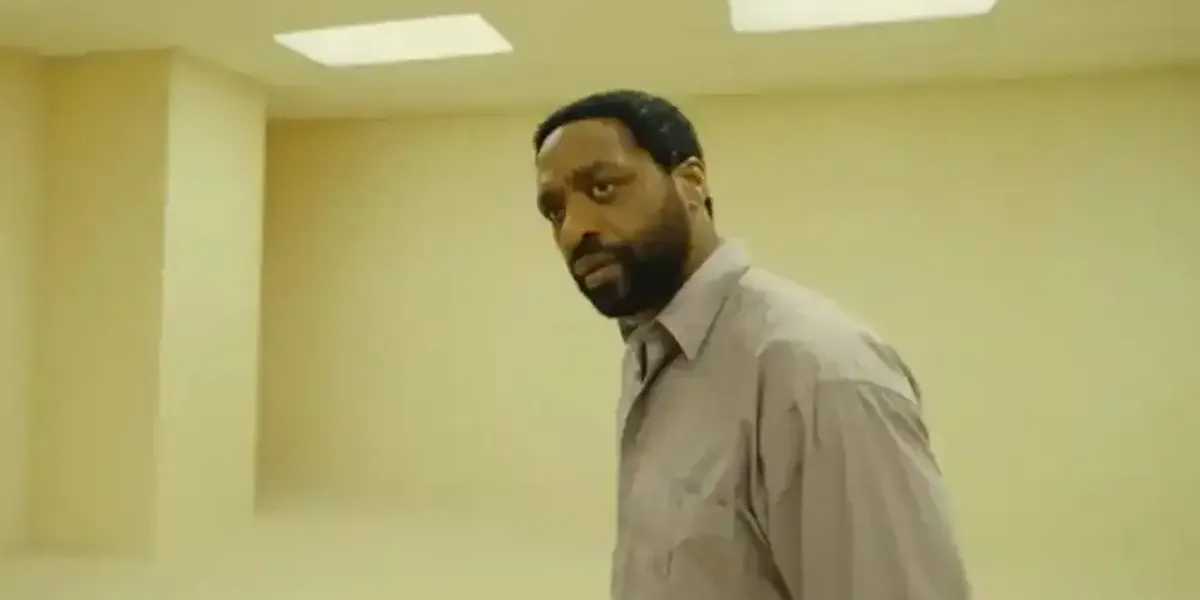
The Backrooms film sprang from an online whisper into a full-blown cultural moment, turning a 2019 4chan image and creepypasta into a mainstream horror that asks uncomfortable questions about purpose, guilt, and the ways we try to explain our own failures. This piece traces that origin, explains liminal and cosmic horror, follows the protagonist’s inward spiral, and explores how the story reads as a spiritual allegory about meaning and self-justification.
What started as a tiny digital myth on a paranormal board grew into something audiences recognize instantly: a maze of yellowed walls, buzzing fluorescent lights, and endless, directionless rooms. The Backrooms concept borrows video-game language — to “noclip” is to slip out of the world the builders intended — and turns that glitch into a setting that feels both familiar and deeply wrong. That tension is the engine of the film’s appeal.
Liminal spaces are meant to be transitory: hallways, waiting rooms, corridors that connect one place to another. The Backrooms remove the destination and leave only the passage, which is more than disorienting; it’s a metaphor for a life without direction. When a place built to carry you somewhere refuses to, it becomes a stage for a different kind of dread.
From that liminal unease the film drifts into cosmic territory. Liminal horror unnerves because something ordinary won’t perform its function. Cosmic horror goes farther and suggests reality itself might not be rational or benevolent. That possibility — that the world might not make sense on its own terms — is the deeper fear here.
The film centers on Clark, a man already frayed by personal collapse: a broken marriage, a stalled career, and a pattern of looking for explanations that excuse him. He wanders into the Backrooms wanting the maze to absolve him, to prove that circumstances or fate, not his choices, caused his ruin. That desire to be exculpated is what the film frames as dangerously self-deluding.
Guilt operates as the movie’s connective tissue. Clark isn’t merely trying to survive the maze; he’s trying to have the maze tell him a story that makes him innocent. Instead of confronting his own role, he seeks a narrative external to himself that will do the hard work of explaining away his mistakes. The Backrooms respond by offering no tidy excuses.
Read as a psychological landscape, the Backrooms feel like a dream where everything is slightly off: familiar, yet impossible. Clark’s search for justification there is symbolic of someone rifling through the unconscious hoping to find a tidy alibi. The maze exposes him rather than redeems him, and his entrapment mirrors the internal trap of self-deception.
Director Kane Parsons has said the Backrooms are not purgatory or hell in any straightforward sense, and the film does not present divine adjudication. That absence of moral structure is precisely what makes the setting effective as a metaphor for a world stripped of intelligible order. If meaning is not given, people will scramble to manufacture their own, and those constructions often fail.
Within a Christian frame, that failure gets a name: life severed from the God who makes reality coherent. The idea is that God supplies the Logos, the rational principle that orders the world; in the film’s terms, what replaces that principle is a counterfeit logic that produces deformity. When people try to be their own architects of meaning, the results can be warped and fragile.
The narrative arc is simple and sharp: a man weighed down by guilt wanders into a world that offers no moral scaffolding, seeks self-justification, and is undone by the irrationality he hoped would excuse him. That trajectory invites a question about how we handle guilt and responsibility, and whether we look outward for absolution or inward for honest accountability. “‘Backrooms’ asks a question more terrifying than anything hiding under the fluorescent lights: What are you doing with your guilt?”
