I explain why identity politics punishes minorities who think differently and why merit, service, and personal responsibility should matter more than ideological litmus tests. This piece argues that conservatives from minority backgrounds face personal attacks instead of policy debates, and that equality depends on treating people as individuals rather than political props.
“You’re a traitor to your race!” That line still lands like a punch because it exposed a deeper problem: dissent from the expected political script often gets met with hostility, not discussion. I learned that early in law school when classmates reacted to a viewpoint they assumed a minority person could not honestly hold.
Back then, my constitutional law class covered affirmative action and disparate impact theory, and I pushed for a colorblind, merit-based approach. I pointed out that some Asian applicants were disadvantaged by race-based preferences, and that should be worth debating on facts and fairness, not outrage.
The left only celebrates minority success when it serves progressive grievance.
We also examined Japanese internment during World War II, and I said what many find uncomfortable: the camps were wrong, yet comparing them to the extermination camps of Nazi Germany ignores important historical differences. I noted that people make decisions in crisis and that moral clarity shouldn’t be abandoned, but history should be discussed without reflexive moral equivalence or performative anger.
Instead of engaging the argument, critics often make it personal. I remember being questioned about my relationship to my own heritage because I refused to toe the expected ideological line, and that kind of identity policing is corrosive to trust and debate.
Identity politics creates a new kind of discrimination by imposing political loyalty within racial groups. If you prioritize individual responsibility, free markets, or limited government, you can be branded as disloyal to your race, which silences alternative views and cheapens meaningful representation.
The media and many Democrats claim they speak for minorities but frequently resort to personal attacks rather than addressing policy disagreements. Prominent conservatives of color rarely get their ideas weighed on the merits; instead they are targeted with character assaults and racialized slurs meant to shut down the conversation.
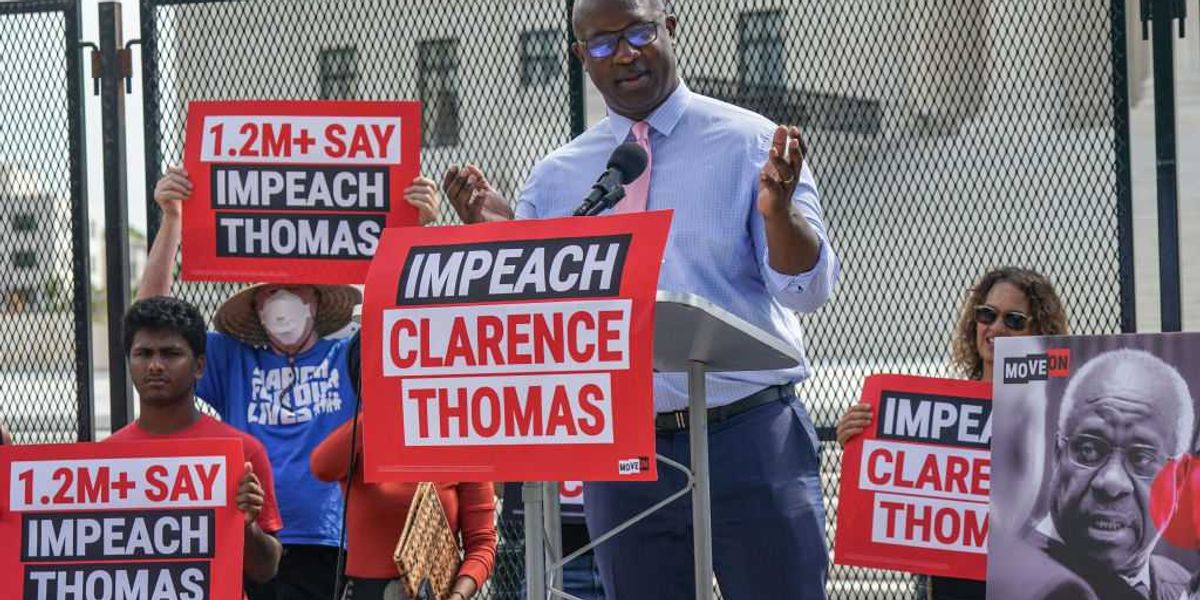
Consider Clarence Thomas, who rose from poverty and forged a conservative jurisprudence that challenges race-based remedies. Rather than debating his skepticism about policies grounded in racial preferences, critics often lob personal insults. Charlamagne tha God called Justice Clarence Thomas a “coon” on “The Daily Show.”
Public examples go beyond the Supreme Court. Elected officials who highlight their immigrant roots and champion the American dream can be dismissed for their policy stances. When someone like Marco Rubio defends personal responsibility and legal immigration reform, critics sometimes treat his convictions as a betrayal of his background instead of engaging his policy arguments.
Similarly, Asian Americans who win through merit can be ignored by the very leaders who claim to champion their interests. The Supreme Court’s decision in Students for Fair Admissions v. Harvard exposed how some race-conscious admissions practices harmed Asian applicants, yet commentary from certain politicians shifted away from that central finding when convenient.
That selective outrage shows identity politics is not primarily about protecting minorities but about advancing political narratives. When minority achievement aligns with progressive causes, it is praised; when it highlights the limits of race-based policies, it is dismissed or punished.
There are real costs to refusing the party line. Figures like Thomas Sowell and others who study culture, incentives, and policy face fierce personal attacks because their conclusions clash with prevailing group-based explanations. Brave dissenters often accept personal consequences just to keep the debate honest.
True equality demands judging people by character and achievement, not by how well they fit a political stereotype. If politics is about power, conservatives argue power should be exercised to expand opportunity for individuals, not to reinforce ideological gatekeeping inside communities.
We should welcome minority voices that challenge orthodoxy and insist on debate grounded in facts and principles. That is the only way to move beyond tribal politics and toward a society that rewards merit, respects personal responsibility, and treats everyone as a full human being rather than a political symbol.