
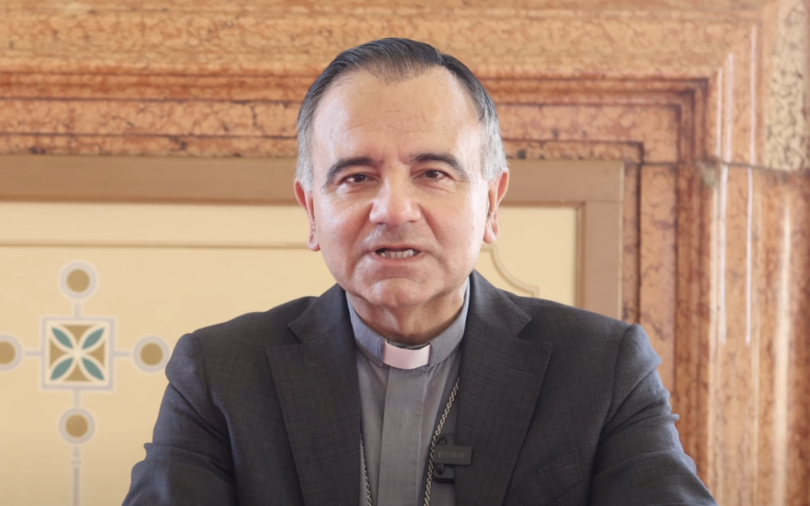
Archbishop Erio Castellucci has pointed to St. Mary Magdalene’s role as the first witness to the resurrection to support allowing women to proclaim the Gospel and preach at Mass, a move aimed at recognizing women’s participation in liturgical life. This shift ties a biblical example to a proposal for expanded liturgical roles, raising questions about tradition, pastoral needs, and canonical practice. The discussion looks at theology, pastoral reasoning, and what change might mean in parish life.
St. Mary Magdalene appears in the Gospels as the first person to encounter the risen Jesus and to be sent as an apostle to the disciples. That moment has long been noted by theologians as an example of witnessing and proclaiming the good news. Archbishop Castellucci referenced that witness when framing the case for women reading the Gospel and offering homilies in the context of Mass.
The proposal is not framed as a break from doctrine but as an appeal to the scriptural example of a woman who received and shared the resurrection message. Castellucci’s argument treats Mary Magdalene’s role as a model for liturgical participation rather than a reinterpretation of ordained ministry. It is a pastoral appeal aimed at widening roles available during the celebration of the Eucharist.
Practically speaking, the change would allow women to take on tasks traditionally reserved for lay readers and homilists in many parishes. Many dioceses already permit laypeople, including women, to read Scripture and deliver reflections in some settings. Castellucci’s suggestion seeks to normalize and perhaps expand those practices within the Mass itself, emphasizing continuity with a biblical precedent.
The move touches on long-standing distinctions in Catholic liturgical life between ordained ministry and lay participation. Proclaiming the Gospel and preaching are acts that carry theological weight, and any adjustment invites careful examination of their meaning. Castellucci appears to invite that theological conversation by pointing to scripture rather than to a purely administrative rationale.
Supporters of broader lay roles argue that greater inclusion reflects the lived reality of active women in parish ministries. They say recognizing women in visible liturgical roles can strengthen community engagement and offer fresh pastoral energy. For them, Mary Magdalene’s example is a compelling scriptural anchor for such inclusion.
Critics often emphasize the importance of preserving established liturgical order and clarity about the distinct nature of ordained offices. They worry that expanding who proclaims the Gospel or preaches could blur lines between ordained and lay functions. This perspective calls for careful discernment to ensure that any changes respect tradition and ecclesial structures.
Canonical considerations will matter if a diocese moves forward with official guidelines. Church law and liturgical norms set out who may perform certain ministries during Mass, and bishops have the authority to regulate liturgical practices in their dioceses. Any formal change would likely involve consultations, clarifications, and perhaps adjustments to diocesan policies.
There is also a pastoral angle focused on formation and preparation. If women are to proclaim the Gospel or preach more frequently, parishes would need to offer training in proclamation, homiletics, and liturgical sensitivity. Good preparation would aim to preserve reverence for the Word while equipping lay ministers to serve effectively.
The conversation around Mary Magdalene’s witness opens broader questions about how biblical examples inform contemporary practice. Using scripture as a living source for pastoral decisions invites dialogue across clergy and laity. It asks communities to weigh fidelity to tradition alongside responsiveness to present pastoral realities.
Any shift in liturgical roles will likely unfold unevenly across regions and parishes, reflecting local bishops’ judgments and pastoral needs. Some communities may embrace expanded lay participation quickly, while others proceed more cautiously. The practical outcome will depend on theological clarity, pastoral formation, and diocesan guidance.
Whatever direction is taken, the debate highlights the ongoing task of connecting Scripture, tradition, and pastoral life in ways that serve worship and mission. Archbishop Castellucci’s appeal to St. Mary Magdalene’s witness has sparked conversation about how the Church honors those who first carried the resurrection message and how that example might shape public worship today.
