
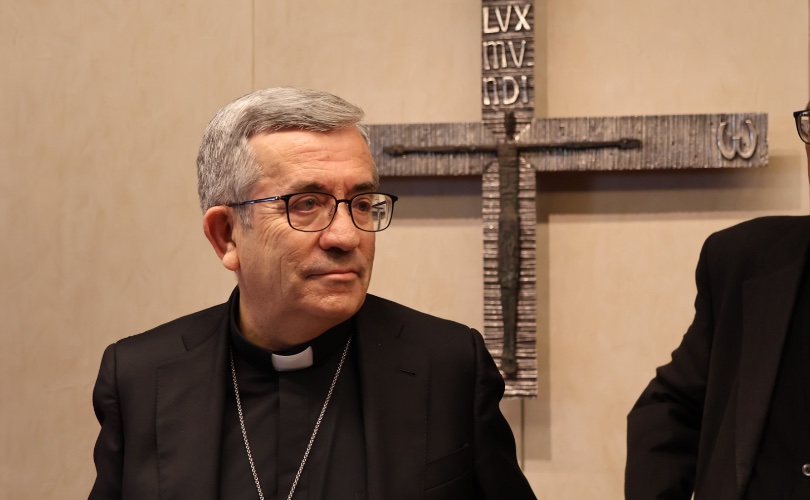
Archbishop Luis Argüello issued a Corpus Christi pastoral letter that reaffirms the longstanding Catholic rule on Eucharistic reception for those in certain marital situations. The letter highlights the church’s position that those who are openly living in unions judged to be inconsistent with church teaching should refrain from receiving Communion, framing the guidance in pastoral and doctrinal terms.
The archbishop’s message is direct and grounded in tradition, reminding Catholics of a rule many may already know but not always see applied in public statements. He stresses pastoral care alongside doctrinal clarity, signaling that mercy and truth are meant to work together rather than cancel each other out. This approach aims to explain the why behind the guideline as much as to restate the what.
At the heart of the pastoral letter is the precise phrase ‘participating in a sinful relationship.’ That line echoes the language used in many diocesan documents when discussing divorced and civilly remarried Catholics and their access to the sacraments. By quoting this wording, Argüello anchors his guidance in the familiar vocabulary of canon and pastoral practice, which helps avoid confusion about intent.
The pastoral tone matters: Argüello does not present the rule as a punitive measure but as a pastoral boundary, an honest way of naming what the church believes sacramental reception requires. He balances the insistence on doctrinal consistency with an invitation to pastoral accompaniment, encouraging clergy to engage people with compassion and clarity. That balance tries to address both conscience formation and communal integrity.
For clergy and lay faithful, documents like this function as touchstones when questions surface in parishes and confessionals. They provide a framework parish priests can use to guide conversations without improvising doctrine on the fly. Knowing the official stance helps reduce mixed messages and supports consistent pastoral practice across parishes.
Some will welcome the reaffirmation as a necessary upholding of tradition and sacramental discipline, while others may feel challenged or hurt by how boundaries are described. The pastoral letter acknowledges the emotional dimension of these realities and invites continued pastoral care, not abandonment. It also underscores the church’s aim to lead consciences toward reconciliation rather than normalize situations the magisterium judges irregular.
Practically, the letter nudges parish communities to think about formation, confession, and accompaniment—how those ministries welcome people and prepare them for full participation when appropriate. It insists that pastoral outreach should be attentive to personal stories without compromising what the church teaches about marriage and the Eucharist. That call pushes parishes to invest in clear catechesis alongside compassionate pastoral practices.
The release during Corpus Christi gives the message added liturgical resonance, tying Eucharistic discipline to the feast that celebrates Christ’s presence among the faithful. By timing the letter this way, Argüello signals that discussions about access to Communion are not merely administrative but deeply tied to the church’s worship and identity. The document asks communities to hold those two realities together: reverence for the sacrament and pastoral care for people.
