
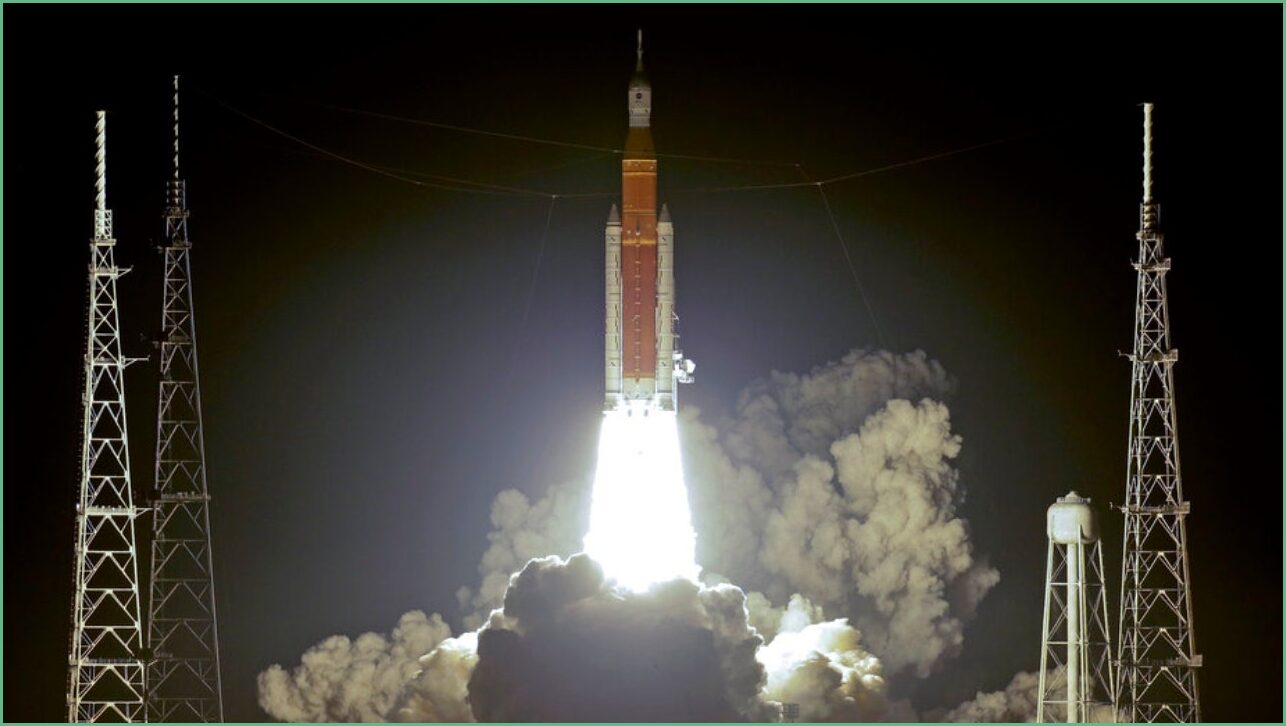
NASA is gearing up to send people around the Moon again with Artemis II, aiming for a Feb. 6 launch in a tightly scheduled window. This crewed, roughly 10-day flight will exercise the Orion spacecraft and the Space Launch System beyond low Earth orbit, pushing systems and crew farther from home than anyone in more than five decades. The mission brings an international crew, a complex rollout to the pad, and a fuel-efficient return trajectory that will test procedures for future lunar landings and Mars planning.
The agency has publicly set an initial launch window that stretches from late January into mid-February, with a handful of preferred dates early in February. If those are missed, backup windows extend through March and into early April, giving planners room to work around weather and technical checks. The schedule is purposeful: launching when orbital mechanics and safety lines up, not on a whim.
“We are going — again,” NASA said Tuesday in a post on X. That short, confident line captures both nostalgia and forward momentum as teams prepare to move the massive rocket. The message underlines that this flight is less a spectacle and more a methodical return to deep-space operations.
The rocket itself stands 322 feet tall and represents the most powerful launch stack the agency has built. Preparations include a multi-mile transfer from the assembly building to Launch Pad 39B that will be handled by a crawler-transporter, a slow, deliberate process meant to protect the vehicle and its systems. That rollout is a major step because it primes everything for the final checks and fueling campaigns.
Onboard will be four astronauts chosen to test the Orion spacecraft with people aboard for the first time in deep space. The crew combines veteran experience with milestone representation, including the first Canadian to fly on a lunar-bound mission and the first woman to travel beyond low Earth orbit. Their role is to put crews through real-time procedures, life support checks, and systems evaluation while far from home.
After liftoff, the plan calls for a short period near Earth where teams will verify the spacecraft’s systems and ensure the crew is comfortable with onboard operations. Then Orion’s European-built service module will perform a burn to send the capsule toward the Moon. That maneuver is the hinge that turns a domestic test into a full deep-space shakedown.
The flight path will swing Orion out on a looping figure-eight around the Moon, taking the crew more than 230,000 miles from Earth at the mission’s farthest point. Rather than burning a lot of fuel for a dramatic return, the spacecraft will follow a free-return trajectory that uses lunar and Earth gravity to bring it home. That approach reduces risk and conserves precious propellant during a crewed systems demonstration.
Recovery will be high tempo: a high-speed reentry capped by a splashdown in the Pacific, where recovery teams will meet the capsule and bring the crew aboard ships. Those operations test the whole chain, from heat-shield performance to medical checks and safe transfer back to ground custody. Each successful step adds confidence for more ambitious missions later in the program.
Artemis II follows an uncrewed Artemis I flight and serves as the next critical milestone before any attempt at a crewed lunar landing. Think of it as the dress rehearsal: if systems, procedures, and teams perform well, the door opens wider for sustained activity at the Moon. The mission also feeds directly into plans for long-term lunar presence and the kind of deep-space endurance that future trips to Mars will demand.
Beyond technical checks, Artemis II is symbolic: it signals a return to human voyages beyond low Earth orbit with international partners on board. The mission’s successes or setbacks will shape timelines, budgets, and policy choices for years to come. For now, the focus is practical and immediate—move the rocket, prove the spacecraft, bring the crew home safe.
