
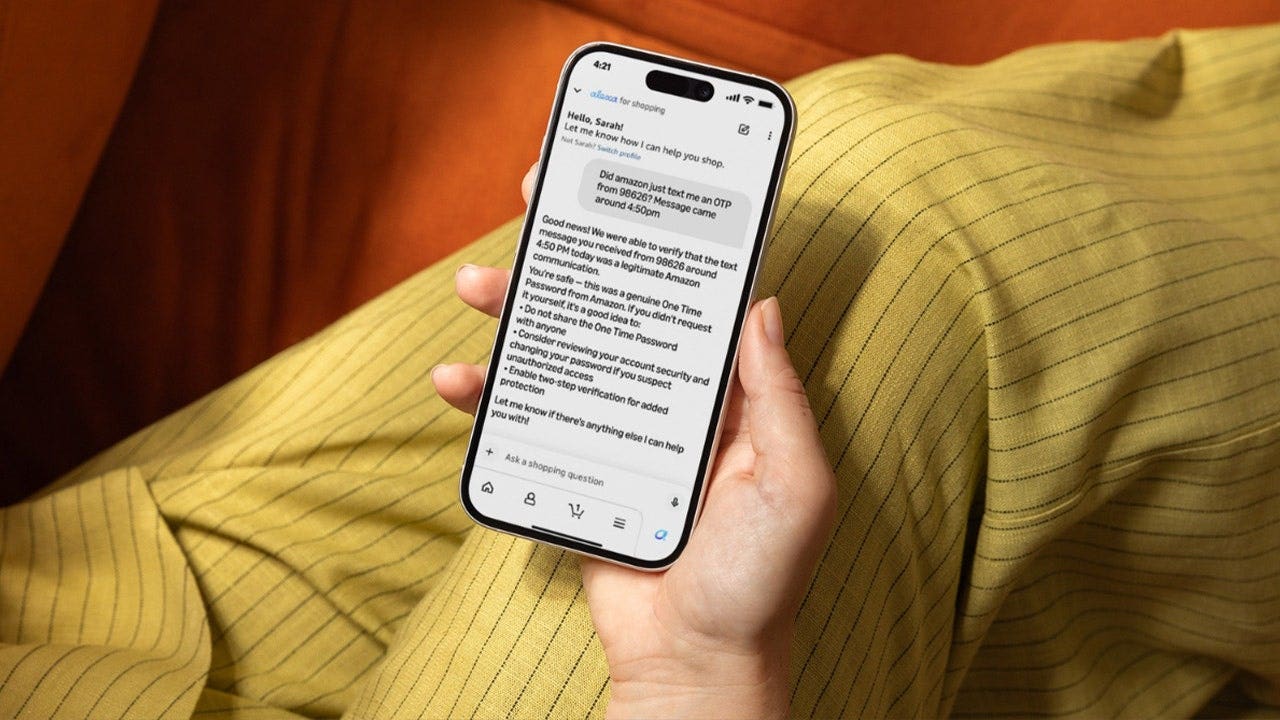
Amazon is giving shoppers a new way to cut through scam fog, and the timing could not be better. With fake delivery notices, bogus account alerts, and shady refund calls still making the rounds, Alexa for Shopping now offers a simple way to check whether a suspicious message really came from Amazon.
The idea is straightforward: when a text, email, or phone call starts looking off, customers can ask Alexa to compare the details against Amazon’s own records. That matters because scammers often lean on familiar branding and urgent language to make people react before they think.
Amazon says millions of people still end up wondering if a message is legit, and that confusion is exactly what fraudsters count on. A package delay can look believable, a Prime warning can feel real, and a fake job offer can sound tempting when it is dressed up in the right language. The pressure is the point.
Alexa for Shopping is built to help with that moment of doubt. A customer can describe the message, explain when it arrived, and say whether it came by text, email, or call, then let Amazon check the information against its communication records.
The company says the tool looks at things like sender details, message content, timing, and formatting. Instead of just flagging suspicious wording, it compares the communication with messages that Amazon actually sent through its own systems. That gives it a stronger shot at separating real notices from imitation.
If Alexa can match the message to Amazon records, it will say so and may offer extra account security guidance. If it cannot match the details, it will tell the customer the message does not appear to line up with an official Amazon communication.
There is also a gray area. Sometimes Alexa may not be able to verify the message with confidence, and that is a clue in itself. When that happens, Amazon says users can try again with more details or use another verification method.
One of those options is the company’s [email protected] email address, which lets people forward suspicious messages for a response. Amazon also has a communication verification form on its customer service pages, giving shoppers another route when a message needs a second look.
The new Alexa feature does something else that could help beyond one shopper’s inbox. Amazon says suspicious submissions are automatically reported to its customer protection and enforcement team, which may help the company spot broader scam campaigns and act faster against impostors.
That matters because fake Amazon messages are so effective precisely because they sound normal at first. A delivery problem fits everyday life, a locked account sounds plausible, and a refund call can feel routine until the scammer starts pushing for quick action.
Once the urgency kicks in, people often click first and think later. That is why the safest move is still to step around the message completely, open Amazon directly, and check the account from the app or official website instead of using any link inside the suspicious note.
Amazon also warns that it will never ask customers to buy gift cards to solve an account problem, and it will not ask for a password or one-time passcode over the phone. Those are classic scam moves, along with caller ID tricks that make a bogus number look official.
Strong caution also helps when the message tries to look polished. Even a convincing logo or well-written email can hide a bad link, so keeping antivirus protection active adds another layer of defense against phishing sites and malicious downloads.
For shoppers who want one more clue, Amazon points U.S. consumers to the Better Business Bureau’s Scam Tracker, where reports can be searched by phone number or email address. It is useful, but it is not a clean bill of health if nothing shows up yet.
That is the new reality of online fraud. Scammers keep finding fresh ways to wear Amazon’s name like a costume, and customers have to keep slowing the game down long enough to spot the crack in the mask.
