
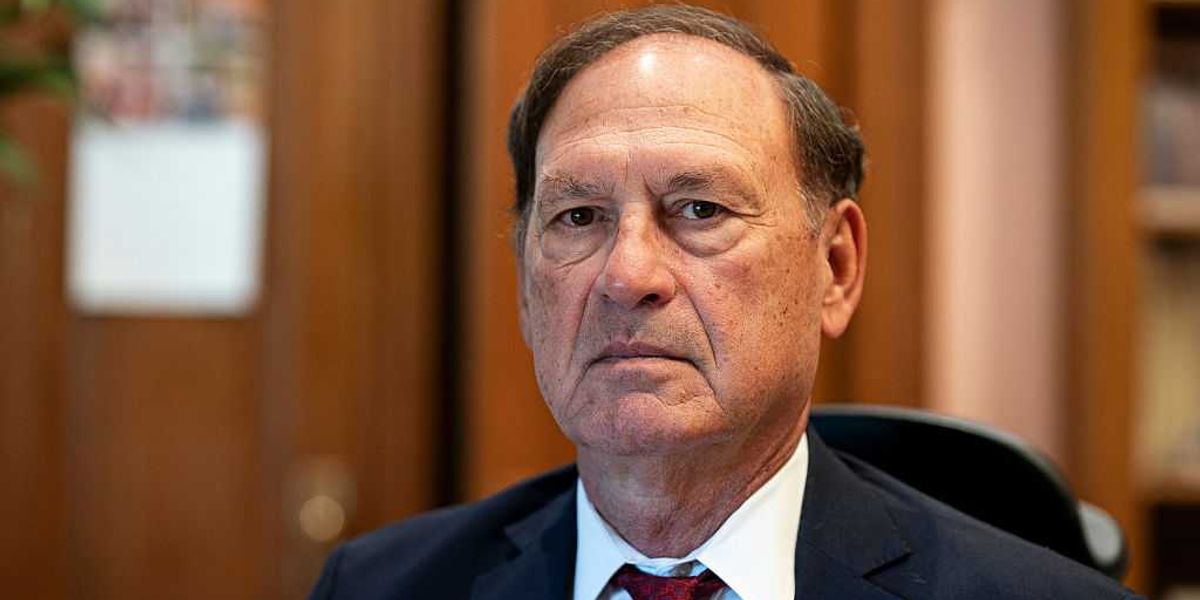
Justice Samuel Alito is sounding the alarm about the Supreme Court’s future, and the message lands with plenty of weight. His warning points to a court under strain, where public trust, sharp division, and growing pressure on justices are shaping a tougher road ahead.
Alito’s remarks tap into a bigger concern that has been building for years: the court is no longer sitting quietly above the fray. Every major ruling seems to trigger a fresh political fight, and the justices are increasingly pulled into the same rough terrain that dominates Washington.
That shift has changed how the court is viewed by the public. For many Americans, it now feels less like a distant legal institution and more like a battleground where the country’s biggest fights are settled in real time.
Alito’s outlook also reflects the growing burden placed on the justices themselves. The pressure does not come only from the cases they decide, but from the nonstop scrutiny that follows every vote, opinion, and public appearance. In today’s climate, even careful legal reasoning can get drowned out by the political noise around it.
The court has long depended on a sense of legitimacy, and that is exactly what makes this moment so tense. Once people start seeing outcomes purely through a partisan lens, confidence in the institution gets harder to protect.
That concern is especially sharp when controversial decisions land in a country already running hot. The Supreme Court is being asked to resolve questions that touch abortion, executive power, religious liberty, gun rights, and election law, all while facing intense reaction from activists and officials alike.
Alito’s warning suggests that the court cannot simply ride out the storm and expect things to settle on their own. The institution is being tested from every angle, and the usual habits of restraint may not be enough to keep it steady if distrust keeps spreading.
There is also a broader question hanging over the whole picture: how much pressure can any court absorb before its role starts to look less judicial and more political? That is the kind of problem that does real damage, because courts do not have armies, budgets, or campaign machines. Their authority depends on public belief that the system still means something.
At the same time, the court remains one of the few places where the country’s deepest conflicts can still be channeled through law instead of pure force. That gives the justices enormous influence, but it also makes every decision feel heavier, sharper, and harder to escape.
Alito’s comments fit into that uneasy reality. The Supreme Court is still standing, still ruling, and still central to American life, but the pressure around it is not easing up, and the next round of fights already feels close at hand.
