
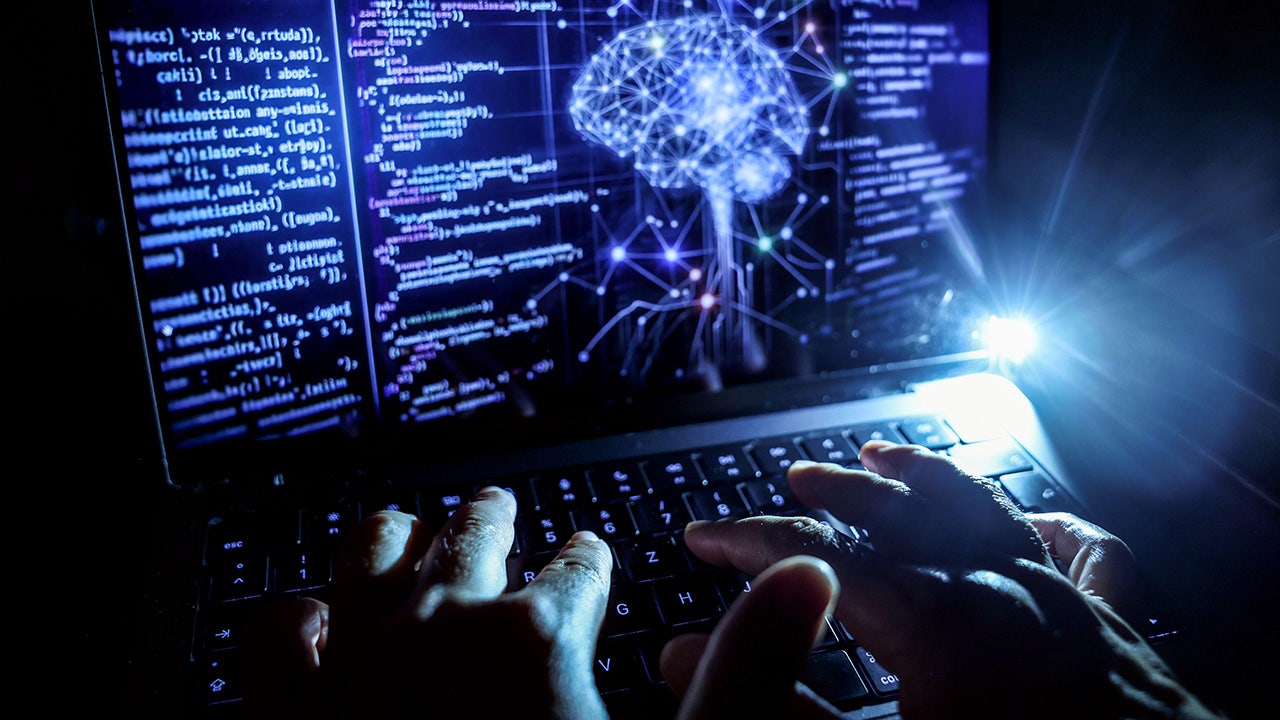
I’ll revisit a noted column, track its haunting idea about cosmic silence, connect that thought to today’s AI surge, flag the Singularity warnings from public figures, stress the political stakes, and close with a moral admonition that keeps the main theme front and center.
Charles Krauthammer returned again and again to a short, precise meditation he published under the title “Are We Alone In The Universe?” that pairs physics with a hard human question. He leaned on the Fermi Paradox and the Drake Equation to frame a single unnerving possibility: the universe might be quiet because intelligence destroys itself. That framing feels less like speculative astronomy than a political and technological warning light blinking red.
In his piece he quoted authorities who suspected “the high probability that advanced civilizations destroy themselves.” That idea, clinical and grim, reframes cosmic silence as a warning about our own trajectory rather than an argument for human exceptionality. Put plainly, silence in the heavens can be read as a prediction of our fate if we mishandle our powers.
“In other words,” Krauthammer continued, “this silent universe is conveying not a flattering lesson about our uniqueness but a tragic story of our destiny.” He did not couch the thought in romantic fatalism. Instead he forced readers to inspect how intelligence can be both our greatest tool and our potential undoing. The logic moves from astrophysics to responsibility in a straight line.
He went further: “It is telling us,” Krauthammer adds, “that intelligence may be the most cursed faculty in the entire universe — an endowment not just ultimately fatal but, on the scale of cosmic time, nearly instantly so.” That sentence hits like a challenge: are we going to let intelligence run amok or are we going to govern it? The question is acute now because we have created technologies that scale intelligence itself.
That brings us to artificial intelligence and the race surrounding it. The modern AI debate traces back decades to Dartmouth in 1956, with intermittent “AI winters” when fear or disappointment shrank investment. Those starts and stops are history, but the current acceleration looks different: vast capital, global competition, and military implications create a momentum that is hard to brake.
Observers who follow the news closely describe the current tempo as a machine that will not stop. John Ellis, for example, curates a daily rundown that gives the same feeling: a car speeding with the accelerator stuck. That is no accidental metaphor; it captures how market incentives and geopolitical rivalry push actors toward first-mover advantage regardless of long-term risk.
Voices from the tech sector are blunt. Elon Musk declared “We have entered the Singularity.” He followed with a second post: “2026 is the year of the Singularity.” Those are not perfunctory tweets; they are flag-waving pronouncements that shape investor, regulator, and public perception. The Singularity is commonly defined as the point at which AI surpasses human intelligence and can improve itself faster than humans can follow.
That definition matters because it reduces the problem to governance: who controls systems that can improve themselves? Krauthammer tried to offer a hopeful tack: “Intelligence is a capacity so godlike, so protean that it must be contained and disciplined.” Containment and discipline are political tasks, not mere technical footnotes. If you believe the stakes are existential, you accept that law, policy, and civic culture must step in.
He concluded with a refrain about history and choice: “Politics,” Charles concluded, “is the driver of history,” and politics “will determine whether we live long enough to be heard one day. Out there. By them, the few — the only — who got it right.” That is an explicitly political verdict. It puts the burden on citizens and leaders, here and abroad, including the regimes that prize control over liberty. The question of survival is ultimately a public decision.
The pictures from astrophysics and the warnings from technologists form the same moral test: how will a free nation use its political institutions to steer powerful tools? The old lesson at the tree of the knowledge of good and evil still applies in modern terms. The answer is blunt and timeless: Don’t go there.
