
- Explain why sharp mower blades matter for a clean cut and healthier grass.
- Show how Ace Hardware may offer blade sharpening, with local differences.
- Point out why service availability and pricing can change from store to store.
- Cover simple ways to check whether a nearby location does the job.
- Share basic sharpening options for people who want to handle it themselves.
- Note the key safety and balance steps that keep the mower working right.
Keeping a lawn mower blade sharp is one of those small chores that pays off fast. A clean edge helps the mower slice grass neatly instead of tearing it, which can leave the lawn looking rough and stressed. If you would rather not do the sharpening yourself, Ace Hardware may be able to handle it, but there is an important catch: the service is not guaranteed at every store.
That is because Ace Hardware locations are independently owned, so the services they offer can vary quite a bit. One store might sharpen mower blades, while another may not touch them at all. Even when the service is available, the price can shift from one shop to the next depending on local labor, equipment, and store policies.
Some locations keep things simple with off-the-mower sharpening, while others will work on the blade while it is still attached for a different fee. In some cases, stores may also handle blades for older reel mowers, though that is usually treated as a special service. The main point is that there is no single Ace Hardware menu for blade sharpening, so the details depend on where you live.
If you want to find out what your nearest store can do, checking ahead is the smart move. A local store website may list services and prices, and a phone call can clear up the rest in a minute or two. It is a lot better than showing up with a dull blade and finding out the shop does not offer the help you need.
When professional sharpening is not an option, DIY tools are easy enough to find. Home improvement stores often sell basic sharpening gear, and the price is usually low enough that it makes sense for homeowners who want to keep up with routine maintenance. The trick is picking the right tool for the job and taking your time, because mower blades are heavy, sharp, and not something you want to rush.
For a push mower, the first step is always safety. On a gas model, pull the spark plug wire before doing anything else, and on an electric mower, disconnect the power source. Once the mower is safe, tip it carefully, remove the blade, and clamp it firmly in a vise so it does not move around while you work.
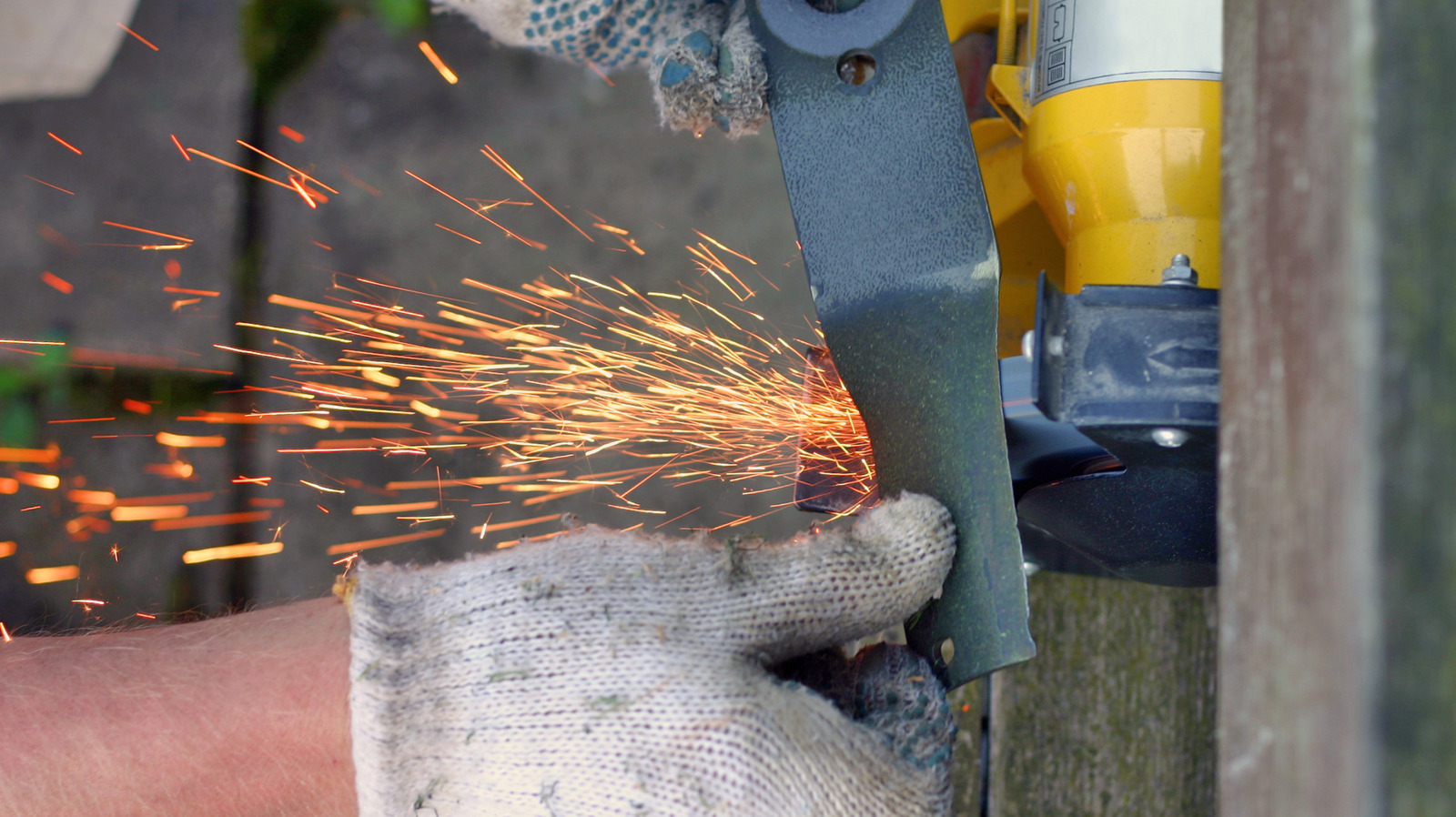
From there, you can sharpen the edge with a metal file, angle grinder, bench grinder, or a drill-powered sharpener. The goal is to restore a clean cutting edge on both sides of the blade without removing too much metal. After that, check balance before putting it back, because an unbalanced blade can shake the mower and cause extra wear.
Reinstalling the blade the right way matters just as much as sharpening it. Make sure it is tightened securely and facing the proper direction, since a backwards blade will not cut the way it should. Riding mowers follow the same basic idea, although getting the blade off may take a few extra steps and a little more patience.
Blades do not have to look ruined to be dull. Hitting rocks, sticks, and other debris can leave tiny chips and dents that slowly drag down performance, even if the mower seems fine at first. When that edge goes bad, the mower works harder, the grass gets cut unevenly, and the whole job starts feeling more like a battle than a quick weekend chore.
