
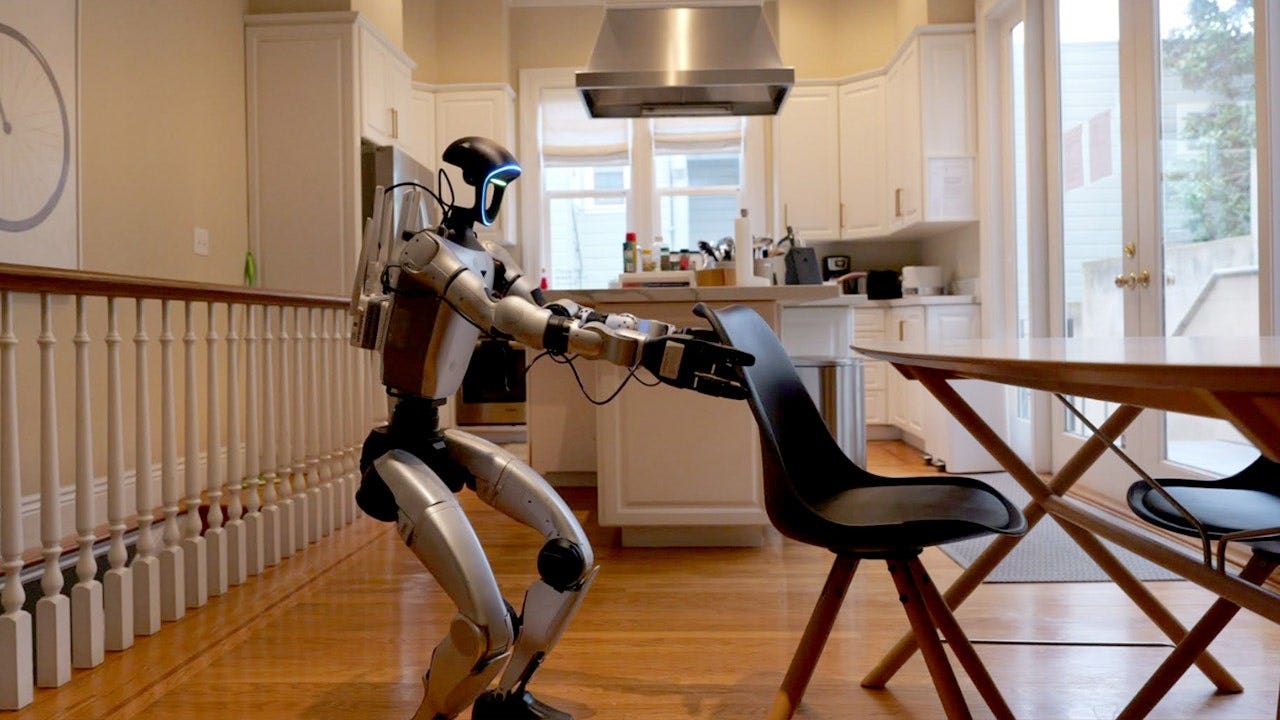
Humanoid robots are moving from science fiction into everyday life, and that shift will decide who controls the next industrial revolution. This piece argues that the United States must lead in robotics for reasons of security, prosperity, and freedom. It lays out the risks of foreign dominance, the practical advantages of humanoids, and the policy fix the country needs now.
Robots are where artificial intelligence meets the physical world, and that union changes everything about work and safety. General-purpose humanoids will replace single-task machines, learning on the job and handling chores humans either cannot or should not do. If Americans don’t build them, someone else will shape our homes and workplaces for decades to come.
Think of what a dependable humanoid could do: care for an elderly neighbor, prep meals for a busy family, or assist a surgeon during a tricky operation. These machines will also enter dangerous places humans avoid, from burning buildings to compromised nuclear sites, making life safer and industry more efficient. The payoff in productivity and human welfare is massive if we lead the effort.
HUMANOID ROBOTS HIT MASS PRODUCTION IN CHINA China has been clear about its goals and has poured state resources into robotics as a strategic industry. During the Lunar New Year a choreographed parade of robots signaled more than pageantry; it broadcast capability and intent on a public stage. The scale of investment there should serve as a wake-up call, not an excuse to freeze.
A fleet of foreign-built humanoids inside American homes and factories would be more than a commerce issue; it would be a security risk. These machines see, hear, map, and integrate with cloud services, meaning software updates could change behavior or harvest sensitive data without owners understanding the scope. A robot knows the layout of your house, the rhythm of your day, and where private conversations happen; that intimacy multiplies the surveillance vector many times over.
NEW REPORT WARNS OF GROWING NATIONAL SECURITY THREAT TO U.S. AS CHINA BUILDS AI: ‘SIGNIFICANT AND CONCERNING’ China’s civil-military fusion model turns commercial tech advances into latent power for the state, and humanoids are uniquely dual use. A household helper could be repurposed for logistics, mapping, or other tasks relevant to a military campaign with a software push. That latent capability is exactly why the stakes are so high and why policy must reflect reality.
We have beaten tough technological competitors before by setting strategy, coordinating public and private investment, and enforcing smart rules of the road. America’s strength has never been accidental; it was built with intention and public will. The same resolve must be applied to robotics: research dollars, manufacturing incentives, and clear export and procurement standards.
Congress has started to move. Senators Schumer and Cotton introduced the American Security Robotics Act to restrict government purchases of certain Chinese-made humanoids, a rare bipartisan signal that the threat is real. That step is useful but incomplete unless paired with industrial policy that builds domestic supply chains for critical components like motors and magnets. A blunt ban without a plan to onshore parts will leave industry and national security both weaker.
Practical policy must thread a narrow needle: protect sensitive sectors and prevent foreign domination while enabling American firms to innovate and scale. That means targeted procurement rules, export controls where necessary, and substantial investment in manufacturing capabilities at home. It also means working with allies to set standards that favor open, secure, and accountable robotics systems.
Winning this race is not about fearmongering; it is about choices. The United States can either cede control of the physical world to adversaries or seize the chance to build safe, trustworthy robots that reflect our values. The machines are coming, and Americans should decide whose machines they will be, on our terms and with our laws guiding the outcome.
