
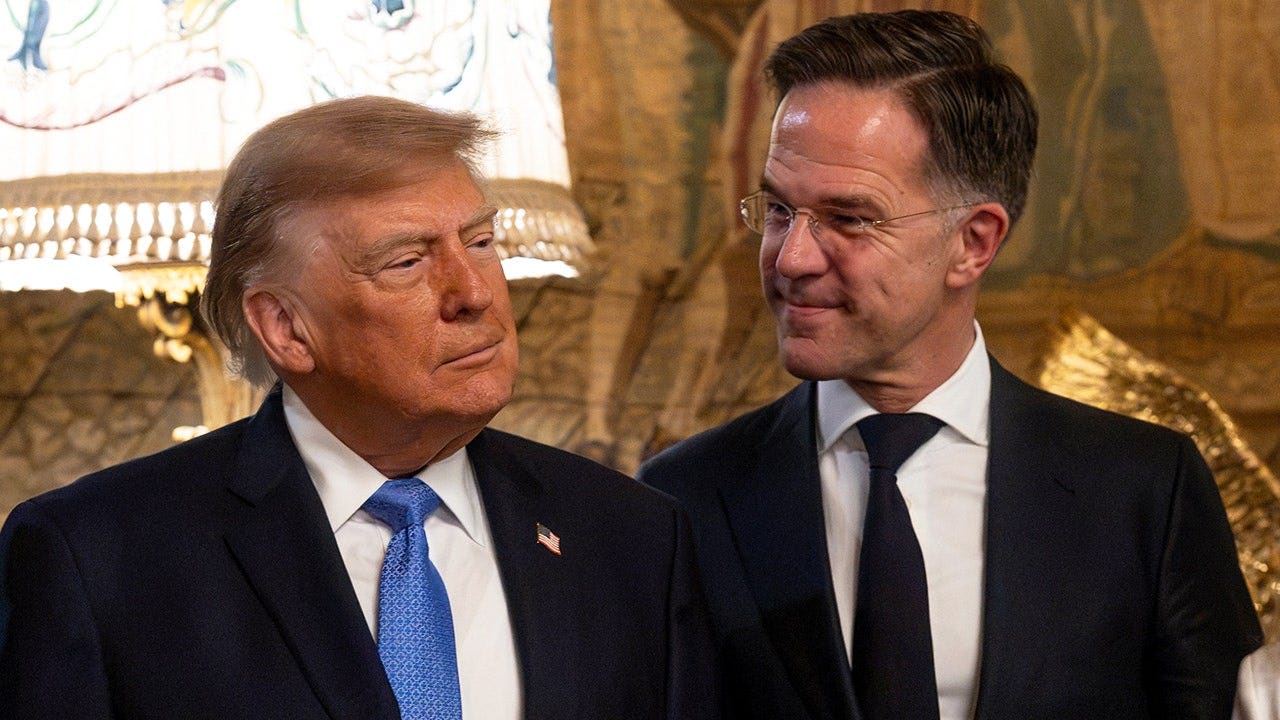
President Donald Trump and NATO Secretary-General Mark Rutte put a sharp message on the table after meeting at Mar-a-Lago, urging Russia not to take any step that could widen the war in Ukraine. Their warning landed at a tense moment, with missile strikes hitting Kyiv overnight and fresh fears that the fighting could spill even farther.
The two leaders met on Thanksgiving Eve in Florida and described the conversation as productive and wide-ranging. They said the war in Ukraine was a central focus, along with tensions tied to Iran and the broader security picture across Europe.
In a joint statement, Trump and Rutte stressed the need to avoid moves that could intentionally or accidentally broaden the conflict. They also pushed for a rapid peaceful settlement and said NATO allies need to keep increasing defense spending and strengthening industrial capacity.
Rutte later took to X and said American leadership remains crucial as NATO works to build a stronger Europe and a stronger alliance. The message was blunt, simple, and unmistakable: NATO wants more deterrence, not a wider blast radius.
Meanwhile, the battlefield kept talking louder than the diplomats. Kyiv’s mayor said Russian forces launched ballistic missiles overnight, triggering damage across the city and leaving at least seven people wounded.
Reports from the Ukrainian capital said strikes hit a shopping center and other buildings, adding to the sense that the war is still grinding forward with no real slowdown. Fires broke out in the Desnianskyi district, where emergency crews were left dealing with the aftermath of another punishing night.
The Kremlin tried to shift the blame outward, accusing Ukraine of escalating the war after reported attacks on Russian-linked targets abroad. Russian officials claimed Kyiv was attempting to expand the conflict geographically, a line that fit neatly into Moscow’s usual playbook of pointing the finger while the war keeps chewing through lives and cities.
Dmitry Peskov, the Kremlin spokesman, said the situation could raise concerns for coastal states and the alliance as a whole. He framed Ukraine’s actions as dangerous and even “terrorist,” language that showed just how eager Moscow is to paint itself as the aggrieved side while the war drags on.
The numbers behind the conflict remain staggering. One report cited in the coverage estimated Russian troop deaths have climbed past 700,000, a brutal marker of just how costly the invasion has become for Moscow.
That toll helps explain why every new exchange of missiles, drones, and threats lands with extra weight. The war is not just a military struggle anymore, it is a test of endurance, leadership, and whether the West can keep the pressure on without letting the conflict spread into something even uglier.
Trump and Rutte’s message was aimed at keeping that line from being crossed. With Russia still striking Ukrainian targets and NATO watching every move closely, the next decisions from both sides could shape how far this war reaches and how dangerous the map becomes from here.
