
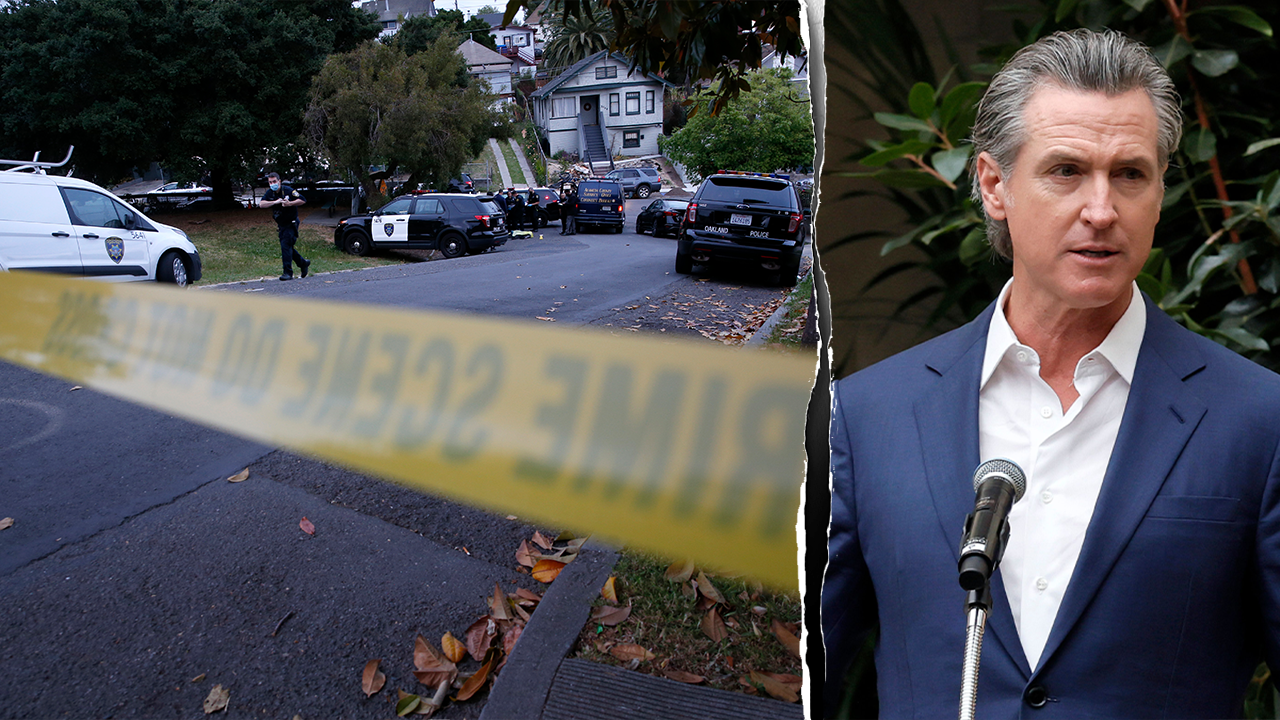
California’s death row fight just got louder, and the pushback is coming from prosecutors, victims’ advocates, and grieving families who say Gov. Gavin Newsom went too far. His decision to commute all 548 death sentences has set off a fresh battle over victims’ voices, voter intent, and whether the state is rewriting justice with one sweeping move.
Newsom defended the blanket commutation by saying case-by-case reviews would create “two classes of murder victims,” but critics blasted that argument as cold and insulting. Modoc County District Attorney Nina Salarno said the governor shut families out of the process and ignored the people most directly harmed by these crimes.
Salarno said the order felt personal because it was personal. She argued that murder victims’ families deserved a real chance to be heard before such a major decision was made, not a broad decree that treats every case the same.
“I found it really offensive as a victim myself, and [for] my other victims,” Salarno said from Washington, D. C., where she met with President Donald Trump alongside fellow advocates. “There should be individual scrutiny. The individual victims should have a voice. And that’s what he has avoided by doing a blanket commutation.”
Topa Padilla, who leads Crime Victims United, said the governor’s move runs straight into what California voters have repeatedly supported at the ballot box. He pointed to the state’s history of backing the death penalty, including a 2016 measure aimed at speeding up executions, and said the message from Sacramento looks a lot like defiance.
“Here’s a guy who throws rocks about kings and protests throughout the streets,” Padilla said, referring to Newsom’s past attacks on Trump. “I will promise you, this is a move that is looked at and viewed as a king. He is trampling on the voters.”
The outrage spilled into Washington too. On Monday, Trump said he would direct the Justice Department to pursue the death penalty for child murderers and speed up federal executions after victims’ relatives gathered at the department to protest Newsom’s decision.
Trump framed the issue in blunt moral terms, saying Newsom and the political left care more about killers than children and families destroyed by violent crime. “Gavin Newsom and the radical left look at these heinous acts, and their sympathy is not for the children and their parents, but for the monsters who extinguished innocent young lives,” Trump said. “He stood with the murderers and child slayers.”
Not everyone agreed with the backlash. Newsom’s office pointed to a Monday release featuring victims and survivors who support the commutations, including Rabbi Suzanne Singer, whose remarks came from a deeply personal place tied to her own family tragedy.
“As a member of the clergy, I believe that all life is sacred. I also believe in the possibility of redemption. Because of this, I oppose the death penalty,” Singer said. “As a civilized nation, it is barbaric that we still subject people to die at the hands of the state. I am so grateful to Governor Newsom for commuting the death sentences that have been imposed in our state. This is true proof of his moral character.”
Meanwhile, the legal fight keeps building. A coalition of roughly 30 county district attorneys, law enforcement groups, victims’ rights advocates, and grieving families has already asked the California Supreme Court to block the commutations, arguing the governor’s action should not stand without a serious fight.
For Salarno, the issue is about more than policy. Her older sister, Catina Rose Salarno, was murdered in 1979 on her first day at the University of the Pacific, and the loss helped shape the family’s long-running push for victims’ rights.
That kind of pain, advocates say, does not disappear just because the state changes a sentence on paper. Padilla said the law should hold its ground and that families deserve finality, even in a state that has not carried out an execution since 2006.
“The fact of the matter is the law is the law,” Padilla said. “It’s like changing the innings in a baseball game, changing from nine to seven retroactively, going back [and] going, ‘I know you won that game, but we’re going to make it seven innings and now you lost.’”
He said the deepest wound may be the sense that the system has been taken away from the families who trusted it. For people who sat through trials, heard the evidence, and lived with the verdict, the governor’s move feels less like mercy and more like the rug being yanked out from under them.
