
Measles is surging again in Pennsylvania, and the latest death has pushed the state deeper into a public health crisis that keeps growing by the day. With cases spreading fast, hospitals seeing more patients, and officials still pressing hard on vaccination, the outbreak has become one of the biggest health stories in the country.
Pennsylvania health officials said an unvaccinated Centre County resident died after testing positive for measles, marking the state’s ninth measles-related death this year. The announcement landed just days after the U.S. lost its measles elimination status, a milestone that had stood for more than two decades and was long treated as proof that the virus had been pushed back for good.
Centre County sits in the middle of the state and is best known as the home of Penn State University. State officials also reported that Pennsylvania now has 1,638 confirmed measles cases across 46 counties this year, including 49 new infections added on Monday alone.
The outbreak has not stayed limited to a few pockets. Hospitalizations climbed from 315 to 330, and state data shows only a small slice of cases involved vaccinated residents, which has kept attention locked on the role of low immunization rates in the spread.
The state has been battling this outbreak since April, and the numbers have only made Pennsylvania stand out more. It now leads the nation in confirmed cases and accounts for more than a quarter of all U.S. infections, a stunning shift for a virus many Americans assumed was firmly under control.
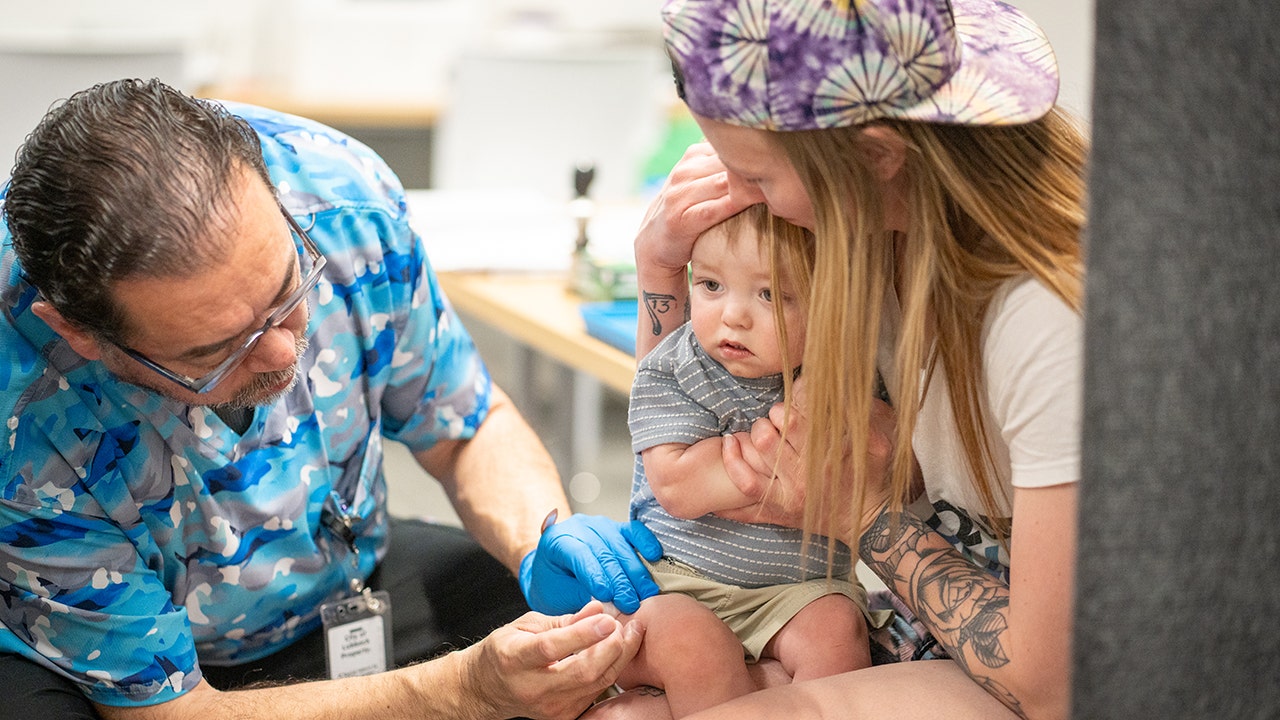
Much of the growth has been tied to rural and Amish communities where vaccination rates have historically lagged. That reality has pushed health officials to step up their response in a big way, especially through temporary clinics and neighborhood-level outreach aimed at getting the MMR shot to more families.
So far, Pennsylvania health officials say more than 7,400 doses of the measles, mumps and rubella vaccine have been given out at nearly 300 pop-up clinics. More temporary sites are expected in the weeks ahead, as officials try to slow the virus before it can move even further through schools, churches, and close-knit communities.
The push for immunization has come with a heavy dose of political tension. Governor Josh Shapiro and Health and Human Services Secretary Robert F. Kennedy Jr. have been arguing for months over how the outbreak is being handled, and Shapiro has accused Kennedy of feeding misinformation about the MMR vaccine and vaccines more broadly.
Kennedy has denied that charge, but his own record on the vaccine has drawn plenty of attention. In testimony before the House in May 2025, he said he would “probably” vaccinate his children against measles, but in August 2024, before becoming HHS secretary, he said he would not give them the MMR vaccine.
He has also said that some of Pennsylvania’s reported measles deaths may have been “fabricated,” adding another layer of distrust to an already heated fight. That kind of back-and-forth has only made the outbreak harder to discuss, especially for families looking for clear answers instead of political noise.
The bigger blow came when the Pan American Health Organization revoked the U.S. measles elimination status last Wednesday. That move means measles is once again considered endemic in the country, which is a sobering sign that transmission is no longer just sporadic but can keep circulating at a fairly steady level.
Measles is far more contagious than many people realize, and that is exactly why public health officials keep warning that falling vaccination rates can quickly turn into a major outbreak. The virus spreads about 12 times more easily than the flu and twice as easily as chickenpox, according to UNICEF, which makes even a small pocket of low immunity dangerous.
The risk is especially serious for babies and young children, who can face severe complications after infection. Those complications can include a weakened immune system or encephalitis, a brain swelling illness that can lead to seizures and intellectual disabilities, which is why the MMR vaccine remains such a central part of the fight.
