
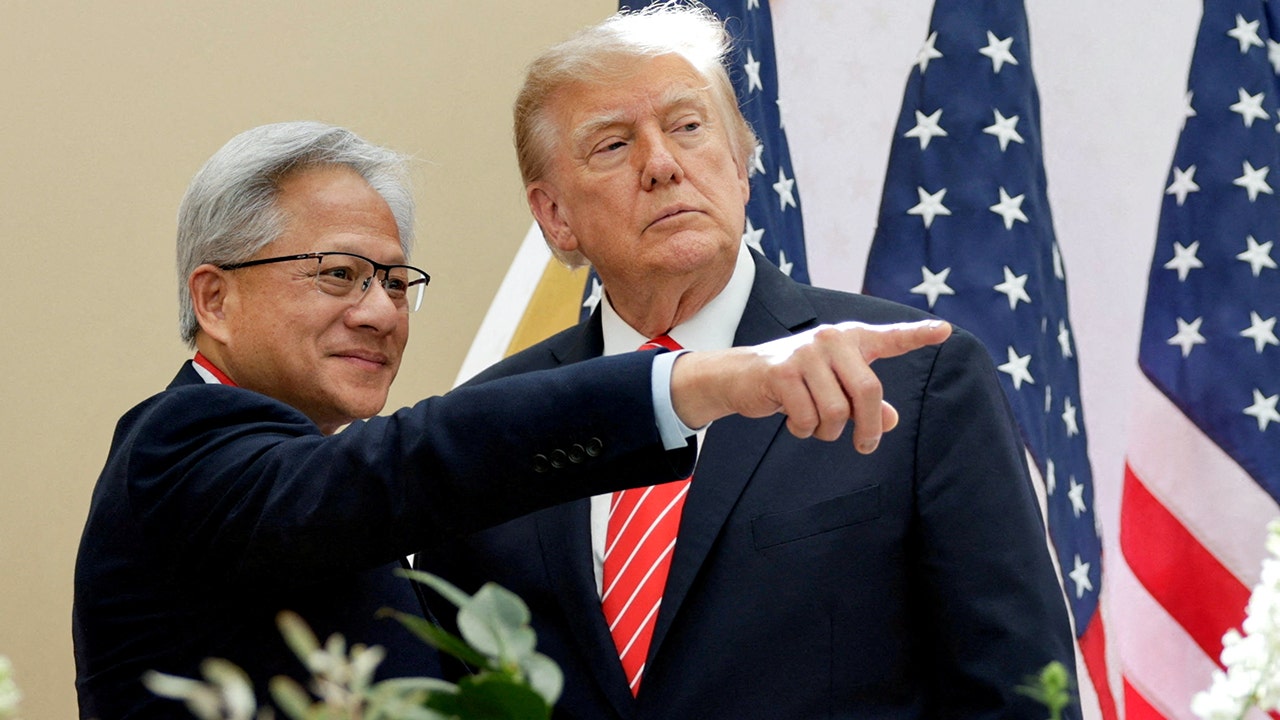
• Trump’s role in Jensen Huang’s return to Nvidia
• Fallout over national security and China concerns
• Democrats accusing Republicans of double standards
• Senate Banking Committee pressure for testimony
• Questions over AI chips, exports, and government influence
Trump’s backing of Jensen Huang’s return to the top job at Nvidia has set off a fresh political firestorm, with lawmakers on both sides of the aisle digging into what happened and why. The fight is about more than one executive or one company, because Nvidia sits at the center of the AI boom, chip exports, and the broader battle over America’s edge against China.
Democrats wasted no time hammering the move as proof that Republicans talk one way about government power and then act another when the stakes get high. Sen. Ruben Gallego, D-Ariz., did not hold back, saying, “This is as close to socialism, communism as I’ve ever seen,” while arguing that it amounted to the government reaching into private business in a way that should make conservatives squirm.
That jab landed because the optics are messy. Nvidia’s board brought Huang back after allegations of affairs, including one involving an alleged Chinese spy, and the timing turned a corporate comeback into a Washington spectacle almost overnight.
The national security angle is what keeps this story from being just another boardroom drama. Nvidia’s chips drive data centers and artificial intelligence systems, and lawmakers are deeply worried about advanced technology flowing toward Beijing or ending up in the wrong hands.
Sen. Rick Scott, R-Fla., said the company can make its own decisions, but the public deserves answers about how this all unfolded. He warned that the episode “looks terrible on its face,” and said Congress needs a full briefing so it can understand the impact on both national security and the economy.
The concern is not limited to Democrats trying to score points. Senate Republicans also sounded uneasy, even after Trump said the United States had no reason to believe Huang’s return posed a national security risk. Sen. John Cornyn, R-Texas, pushed back with a blunt question on X: “No national security risk? Based on what”.
The Senate Banking Committee has become the center of the push for answers. Chair Tim Scott, R-S.C., has already scheduled Huang to testify, and that hearing is shaping up to be a major showdown over export controls, Chinese access to high-end chips, and the limits of White House influence.
Trump made clear he thinks his involvement mattered, telling CNBC that Huang would not have gotten the job back without him. “The answer is no,” Trump said. “I believe my intervention was very important.” That kind of candor may thrill supporters, but it also hands critics a big opening to argue that the administration is meddling where it should not.
Some Democrats are going even further, framing the whole episode as proof of corruption and political favoritism. Sen. Chris Van Hollen, D-Md., said Huang was “at the center of this political corruption and political rot,” and raised concerns about the administration’s approach to AI and chip policy.
Van Hollen also pointed to the larger strategic issue, arguing that high-end chips can help China’s military and that loosening the reins on exports could backfire badly. He said it is hard to square the administration’s tough talk about beating China in AI with any move that could help China close the gap faster.
Sen. Katie Britt, R-Ala., took a more measured line, saying Nvidia had the right to restore Huang but that he still needs to answer for the conduct that sparked the uproar. She also said the Commerce Department should explain its role in the mess and promised a thorough round of questions when the Senate gets its chance.
Behind all the shouting is a simple reality: Nvidia is too important to be treated like just another headline. Its chips sit at the center of the AI race, and every move tied to the company now gets read through the lens of China, competition, and whether Washington is helping or hurting American interests.
The White House has stayed quiet on the request for comment, which only gives the story more oxygen. With Huang set to face senators and lawmakers still circling over the national security questions, the pressure is not easing anytime soon.
