
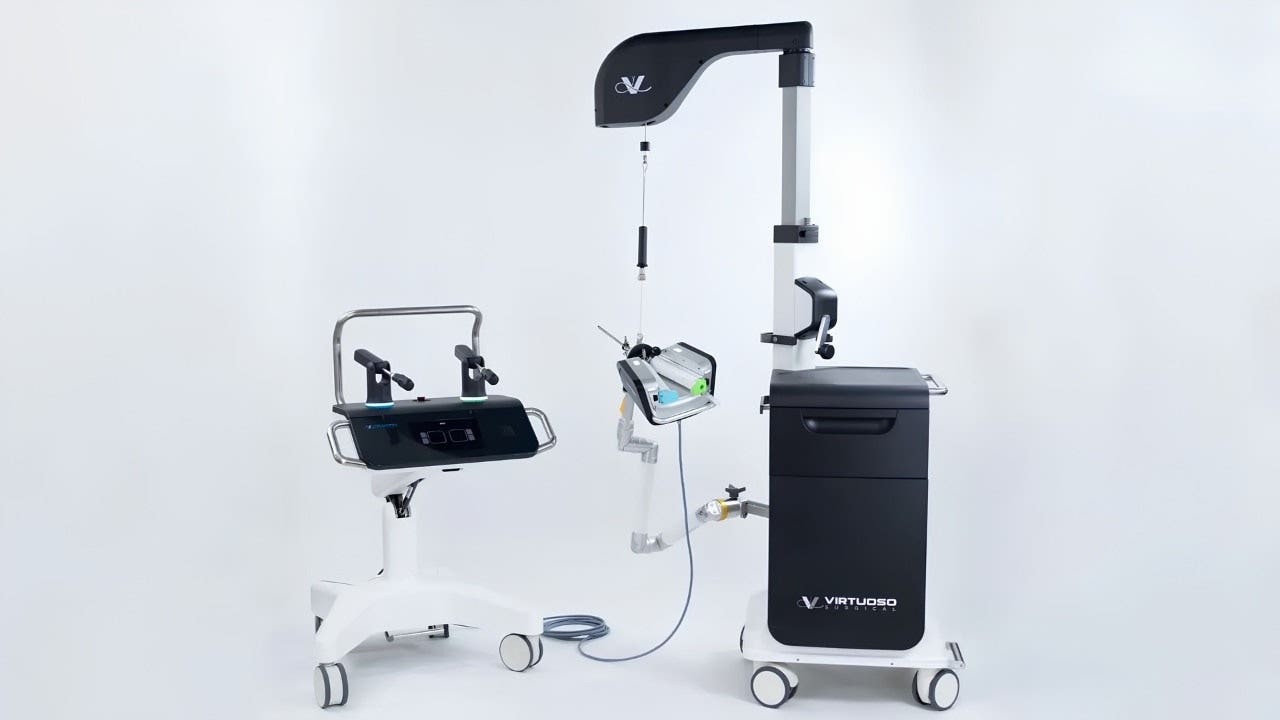
Bladder tumor surgery just got a high-tech upgrade, and it is a pretty eye-catching one. The FDA has cleared the Virtuoso Endoscopy System, a tiny robotic platform built to help surgeons remove bladder lesions through the urethra and keep the tissue intact for a closer look under the microscope. That matters because in bladder cancer, the quality of the sample can shape what doctors learn next.
The system comes from Nashville-based Virtuoso Surgical and uses two needle-sized robotic arms that operate inside a rigid endoscope. A surgeon controls the arms from a console, with one arm lifting the lesion and the other separating it from the tissue below, all without an external incision. The setup is designed to make a tricky procedure more precise, especially when the goal is to remove a tumor in one piece.
That one-piece method is called en bloc resection, and it is already known in urology circles as a useful but demanding technique. Cutting a tumor out whole can preserve the original structure of the tissue, which helps pathologists judge how far the disease has spread. It can also improve the chance of seeing whether cancer has reached the bladder muscle, a key detail that can change the treatment plan.
Bladder cancer is not a small problem. The American Cancer Society estimates that about 84,530 people in the United States will be diagnosed in 2026, and many of them will go through transurethral resection of bladder tumor, or TURBT, as part of the evaluation. Traditional TURBT often removes tissue in fragments, which can be effective, but it can also scramble the very clues doctors need to understand the tumor better.
That is where the appeal of this robotic system starts to click. If surgeons can remove a lesion intact, pathologists may have a cleaner, more useful specimen to work with. Dr. Duke Herrell, CEO of Virtuoso Surgical, said the idea is simple but important: “Removing a tumor intact can provide a better tissue specimen, which supports clearer diagnosis and staging,” Herrell said.
Early data are encouraging, though still early. In the first 20 patients enrolled in the company’s VIABLE study at The Chinese University of Hong Kong, 94% of removed lesions contained detrusor muscle, topping the study goal of 60%. Researchers also reported that surgical margins could be evaluated in 93% of malignant lesions, which gives doctors more information about the edges of the removed tissue.
Still, the fine print matters. The study was small and came from a single center, so it does not settle the bigger question of how the robot stacks up against standard tools in a broad real-world setting. A prior phase of the study with six patients included two postoperative adverse events, and that is a reminder that new devices can look promising without being fully proven.
The FDA granted De Novo authorization for the device on Oct. 30, 2026, and that creates a new category for this kind of endoscope-based robotic surgical tool. The approval covers adult patients and allows the system to remove bladder lesions and collect tissue, including bladder muscle, to help with diagnosing bladder cancer. It is still a surgeon-controlled system, not an autonomous robot making decisions on its own.
Virtuoso Surgical says the first U.S. launch is planned for 2027, with bigger urology centers expected to see it first. Pricing, insurance coverage, and hospital rollout details are still up in the air, which means access will likely be uneven at the start. The company is also looking at future uses in other parts of the body, including the lungs, but those applications are not authorized yet.
For patients, the practical appeal is easy to understand. A smaller tool that helps surgeons gather a cleaner sample could make the first operation more useful and possibly reduce guesswork later. And in cancer care, less guesswork is always a welcome thing.
