
The Nasdaq debut of Anthropic turned into a flashpoint as a coalition of activist groups staged a tightly timed protest outside the market’s front doors. What looked on the surface like a noisy street demonstration was, by the article’s account, a coordinated media operation built to force its message into the same news cycle as the company’s historic offering.
Inside the Nasdaq MarketSite, Anthropic executives were marking an $81 billion initial public offering, one of the biggest moments in the company’s rise. Outside, protesters linked arms, unfurled banners, and pushed chants aimed squarely at the IPO, trying to turn a corporate milestone into a political spectacle.
The scene was not presented as a spontaneous outburst. Instead, it was described as the product of advance planning, organized messaging, and a blend of socialist, climate, anti-Israel, and Democratic-aligned groups that knew exactly when the cameras would be rolling.
According to the article, 14 groups were involved, with combined annual revenues estimated at $43 million. That detail matters because it suggests scale, structure, and money, not just a handful of angry people showing up with signs.
The protest coalition spanned a wide lane of activist politics, from anti-capitalist organizers to climate groups and pro-Palestinian networks. Their shared goal was less about one issue than about using Anthropic’s IPO as a symbolic target for broader complaints about tech power, Wall Street, and global politics.
One of the sharper points in the reporting was the idea that these groups were not simply reacting in real time. They were building a narrative ahead of the event, with coordinated posts, prepared graphics, and a messaging kit designed to shape what happened before it even started.
The planning reportedly began well before the market opened, with organizers circulating an “Anthropic IPO Day of Action Toolkit.” That package pushed activists toward synchronized action in New York and San Francisco, and it encouraged them to flood comments, amplify posts, and arrive with ready-made slogans.
Social media played a huge role in that setup. A joint announcement called demonstrators to 43rd Street and Broadway at a precise hour, and the flyer attached to the effort framed the IPO as a threat to working people rather than a routine market event.
The language was blunt and theatrical, with warnings about an AI bubble, tech billionaires cashing out, and public retirement funds getting stuck with the bill. It was built to sound urgent, alarming, and impossible to ignore.
Once the protest was underway, the article says the visual strategy was unmistakable. Large banners, megaphones, and tightly grouped demonstrators were used to create a scene that would photograph well and travel fast across social feeds.
The slogans tied the company’s market debut to a wide range of grievances, including immigration enforcement, surveillance, war, and health care. That mix made the demonstration feel less like a single-issue protest and more like a stitched-together activist spectacle.
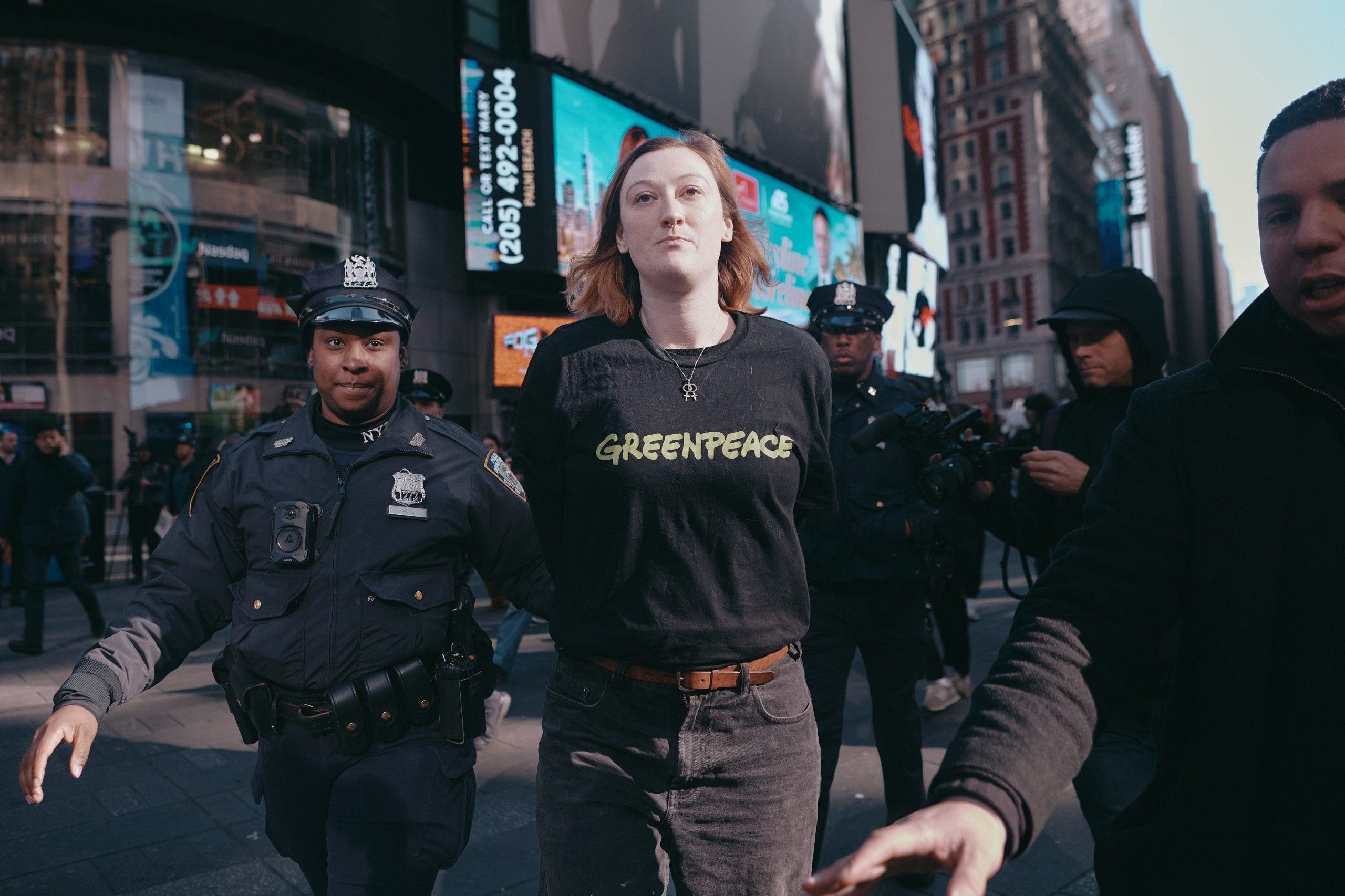
Then came the blockade at the entrance. Activists sat shoulder-to-shoulder in front of the doors, officers moved in, and four demonstrators were restrained as the scene played out in full view of cameras.
The arrest footage was arguably the most important part of the whole operation. Rather than fading into the background, the detained protesters leaned into the moment, using the “perp walk” to deliver slogans and talking points into the lens.
That’s where the article’s timing analysis gets especially interesting. Different groups posted photos and clips in waves, with the content rolling out around the exact moments financial attention was peaking.
The result was a coordinated push across multiple audiences at once. Climate accounts, progressive groups, and anti-Israel networks each helped carry the footage into their own corners of the internet, making the protest feel bigger than the sidewalk where it started.
The article also points to a broader organizing habit that has become hard to miss in modern activism. Street action, social media, staged visuals, and press timing all work together now, and the Anthropic protest was described as a polished example of that model.
What gives it bite is the sense that the point was never just to interrupt one event. The point was to seize a headline, shape the frame, and make sure the public conversation about Anthropic started with outrage instead of business success.
That kind of choreography is becoming the norm for activist campaigns that know how to use viral clips, shared hashtags, and a dramatic arrest to punch above their weight.
