
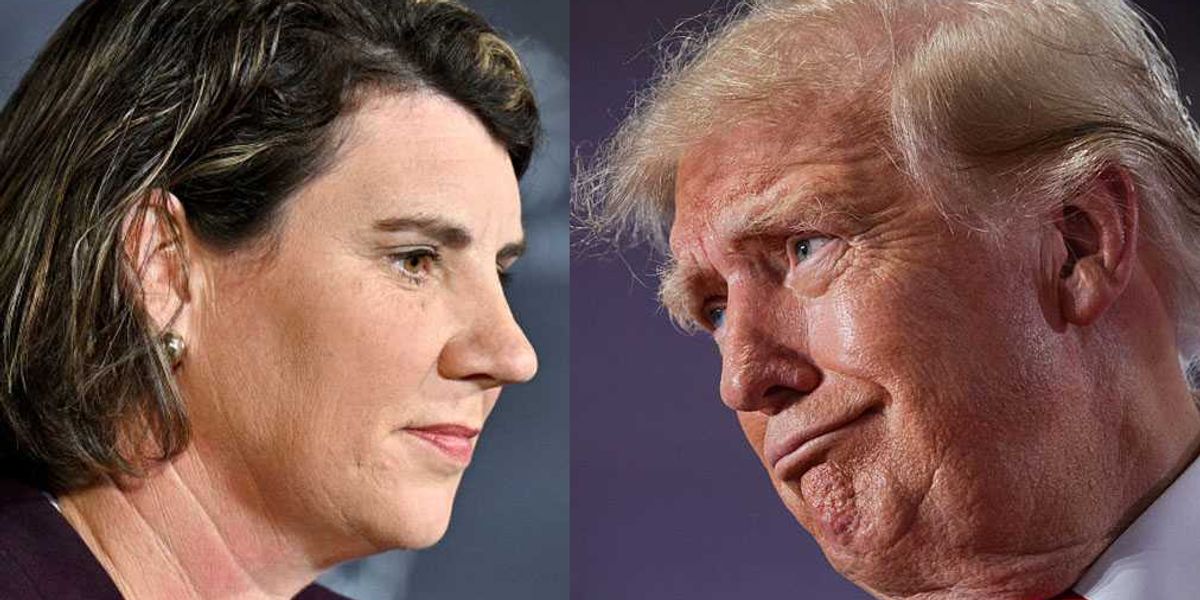
Some political jabs age badly, and this one went all the way off the cliff. A former Democratic figure took aim at Donald Trump over a sharp warning about the Philippines and Russia, only to end up backing into the same reality she mocked moments earlier.
The exchange centered on Trump’s blunt style and a foreign policy claim that sounded outrageous to critics at first blush. But when the full context came into view, the posturing collapsed fast, and the attempted dunk turned into a public faceplant.
What made the moment sting was not just the bad take, but the speed of the reversal. The criticism was aimed at Trump for sounding alarmist about a global flashpoint, yet the issue he raised was rooted in a real tension between major powers and a vulnerable strategic region.
The Philippines has long sat in a hard spot geopolitically, caught between U.S. interests, Chinese pressure, and broader instability across Asia. Add Russia into the mix, and the picture gets even messier, especially when leaders start talking tough without fully understanding the terrain.
That is where the criticism boomeranged. The former Democrat tried to mock Trump’s warning as overblown, but the facts did not cooperate, and the result was a public correction that made the original jab look careless. In politics, there are bad predictions, and then there are the ones that make the person who said them look like they never checked the map.
Trump has always drawn fire for speaking in a way that sounds more like a thunderclap than a press briefing. Supporters argue that style is exactly why he gets attention on threats that polite politicians prefer to bury, and that bluntness can be more honest than polished nonsense.
Critics, of course, love to jump on the rough edges. The problem is that when they do it without locking down the facts, they can wind up validating the very point they were trying to dismiss. That kind of stumble is especially brutal in the age of instant backlash, where one smug post can turn into a full-blown embarrassment in a heartbeat.
The larger backdrop here is the recurring clash between easy political messaging and the ugly reality of foreign policy. Asia is not a stage for clever one-liners, and the Philippines is not some abstract talking point to toss into a viral argument. It is a strategic location with real stakes, and leaders who ignore that usually end up looking naive.
Russia only sharpens the problem. Whenever Moscow gets mentioned in a regional dispute, the conversation shifts from simple rhetoric to something much more serious, because the world has already seen how quickly so-called distant tensions can spill into larger confrontations.
That is why the failed attempt to score points on Trump landed so badly. It was not just a matter of getting a detail wrong. It was a public reminder that political confidence without substance can collapse the second someone with a better grasp of the issue pushes back.
In the end, the episode fit a familiar pattern. Trump says something forceful, opponents rush to sneer, and then the facts walk in and ruin the performance. The only thing left is a very visible lesson that sarcasm is no substitute for actually knowing what is happening in the world.
