
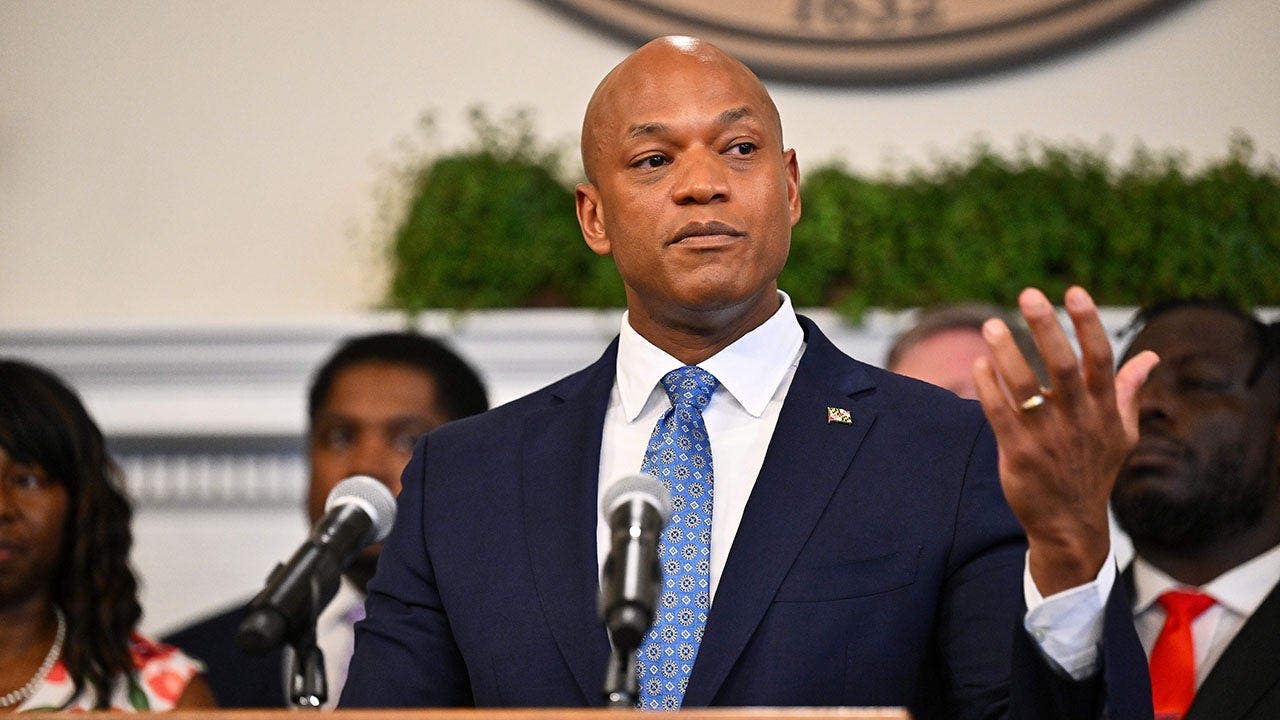
Maryland Gov. Wes Moore is facing fresh scrutiny over his military past after a soldier’s widow pushed back hard on one of the stories tied to his public image. The dispute centers on a funeral Moore referenced while talking about a fellow serviceman, and the timeline has now become the key issue.
The Baltimore Sun reported that Moore’s grandfather died 11 days before the death of Army Sgt. James H. Meister, the soldier Moore had described mourning in that period. According to the report, Moore’s grandfather’s funeral was held on Dec. 17, 2005, while Meister was killed in a roadside bombing on Dec. 28, 2005.
That gap matters because Moore did not learn of Meister’s death until he returned to Afghanistan in January of the following year. The detail undercuts the emotional sequence Moore had attached to the story and gives critics more room to argue that his account was not as solid as advertised.
Meister’s widow, Alicia, said her husband’s memory has stayed alive through his military friends and through their son, who was only a little over a year old when Meister was killed. But she also made clear that Moore was not part of that circle, saying, “I’ve never heard from him,” and adding, “I’ve never personally heard from him.”
She went even further, saying, “I don’t know who [Moore] is. I don’t recall my late husband ever talking about him.” That response landed like a brick because it cut through the polished language and put the story back into human terms, where the family says Moore simply was not part of the picture.
After the Baltimore Sun contacted Moore’s office, Alicia Meister later said she did hear from him. “It was good,” she told the outlet. “He paid his respects and apologized for not reaching out sooner.”
Even so, she made it plain that the attention around her husband has become a burden. “I do wish, though, that my late husband would be removed from the situation completely. I just don’t like that he has been brought in the middle of it.”
Moore’s team has tried to frame the controversy as a matter of bad editing and the pressure of memory over time. He previously acknowledged the conflicting timeline in interviews with the Baltimore Banner, saying stress, grief and the passage of time played a role in how the story was told.
That explanation has not stopped the blowback. In a separate response to the New York Post, a Moore spokesperson dismissed the criticism as a “political hit job” and argued that Moore knew and worked with Meister in Afghanistan, with other service members backing that up.
The spokesperson also accused Sinclair Executive Chairman David Smith of using a grieving Gold Star family as a political weapon. That kind of counterattack may play in politics, but it does little to quiet the central question hanging over the episode: why the story was told in a way that now appears to have the dates backward.
The new dispute comes right after another round of questions about Moore’s military record. Earlier this month, the Baltimore Sun reported that a former Army supervisor challenged Moore’s claim that he led soldiers in combat, another statement that has fueled doubts about how he has described his service.
In that earlier report, retired Army Lt. Col. James A. “Jamie” Gottschling painted a more modest picture of Moore’s time in Afghanistan. He did not dispute that Moore served, but he pushed back on the more dramatic version of events that had circulated around the governor’s background.
Moore’s military résumé has already drawn national attention before. A New York Times report in 2024 found that he had for years claimed a Bronze Star he had not yet received, including on a White House fellowship application in 2006.
He eventually did receive that award in 2024 after then-Sen. Laphonza Butler, D-Calif., urged the Army to issue it. Still, the broader pattern has left Moore vulnerable to accusations that he has padded parts of his biography, and this latest clash with the Meister family adds another uncomfortable layer to the story.
