
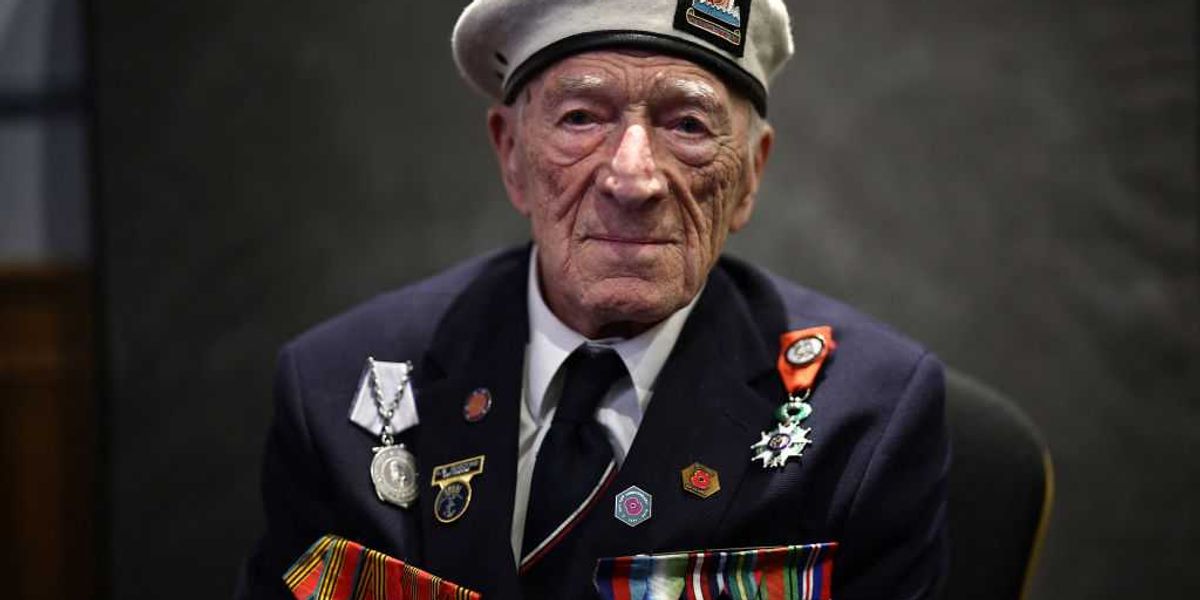
On the first Veterans Day since his death, a blunt wartime rebuke from a WWII veteran is still hanging in the air. His words cut through the usual ceremony and polished speeches, leaving behind a message that feels sharper now than ever. The moment has taken on extra weight because it was never just about one man’s frustration, but about what he believed had been lost.
The veteran’s criticism landed hard because it came from someone who had actually seen the cost of war. He was not speaking like a commentator or a politician trying to score points, but like a man who believed sacrifice deserved respect, not soft excuses. That gave his outrage a kind of moral force that is hard to ignore, especially on a day built around remembrance.
What stung most was the target of his anger. His indictment of the UK reflected a deep sense that the country had drifted away from the values and identity he thought were worth defending in the first place. For many, that kind of warning from a veteran carries more weight than any modern talking point, because it comes from lived history, not theory.
Veterans Day often brings out the usual wreaths, uniforms, and speeches about service. But the veteran’s passing has also forced a more uncomfortable conversation about whether the nation still honors the principles its veterans believed they were fighting for. That tension is part of why his words keep resurfacing, even now.
There is also something especially haunting about a warning that outlives the person who gave it. Once the speaker is gone, the message becomes harder to brush aside, because it is no longer tied to personality or politics. What remains is the raw idea itself, and in this case, it is an idea about duty, gratitude, and national decline.
The reaction around his comments showed just how deeply people can be divided over questions of identity and immigration. To some, his anger sounded harsh, even outdated. To others, it sounded like the plain truth spoken by someone who had earned the right to say it.
That divide is part of why the story has stuck. It touches a nerve that runs through Britain and beyond, where debates over borders, belonging, and memory are never really settled. A veteran’s final judgment can turn those debates from abstract arguments into something far more personal.
His words also fit into a larger pattern seen across generations of veterans, many of whom return home with a fierce attachment to the country they served. They often expect gratitude, yes, but also continuity, meaning that the nation should still look like something worth sacrificing for. When that expectation collides with political reality, the disappointment can be brutal.
On Veterans Day, that disappointment feels louder because the day is meant to celebrate service, not conflict. Still, remembrance is not always comfortable, and sometimes the most honest tributes come wrapped in regret. A veteran who says the country has lost its way can be just as important to remember as one who offers a proud salute.
The lasting power of his indictment may come from how simple it was. No fancy language, no polished spin, just a hard-edged question about what was being defended and for whom. That kind of plainspoken challenge tends to stick, especially when it comes from someone who paid close attention to what war asks of ordinary people.
Now, with his death adding another layer of solemnity, the message feels less like a passing complaint and more like a warning left behind. The day meant to honor veterans has become, for many, a moment to sit with that warning and decide whether it should be answered. In that silence, his voice still seems to echo.
