
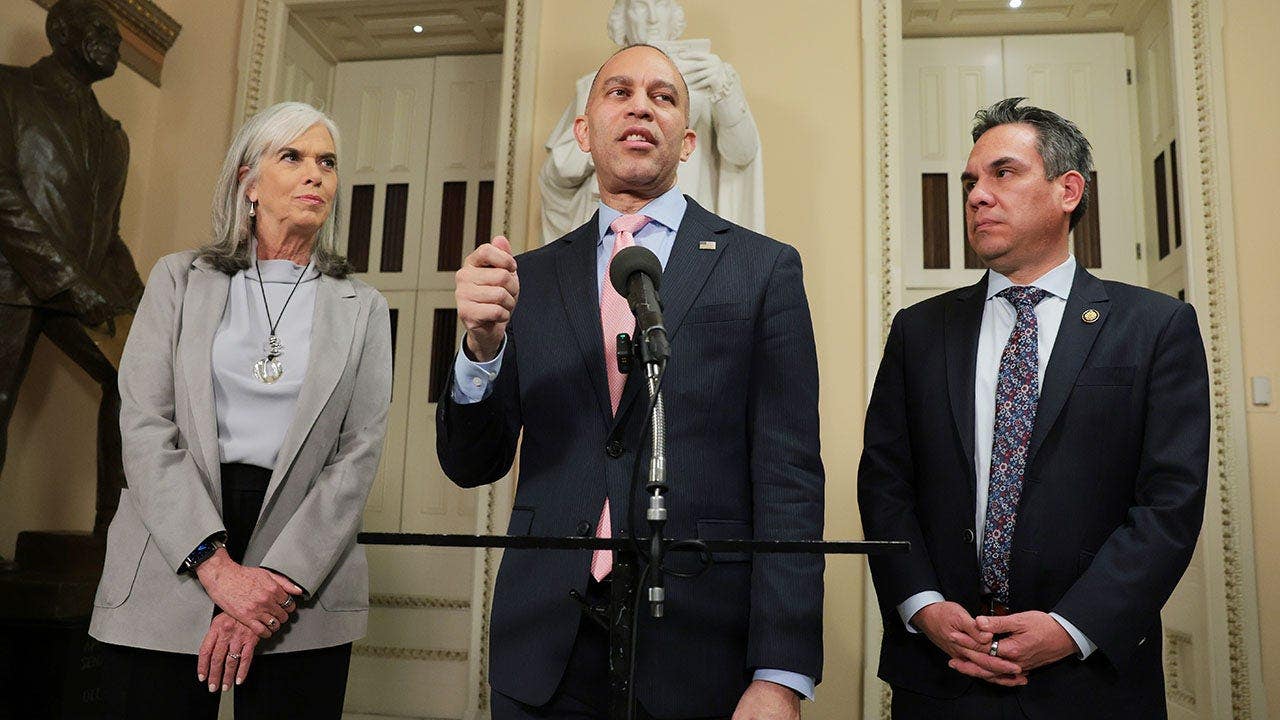
• Jeffries’ bid for Speaker faces fresh scrutiny after a missed impeachment vote.
• Eleven absent Democrats helped Republicans derail the push against Pete Hegseth.
• Party allies split over whether the slip signals weak leadership or simple bad timing.
• Critics pounced on the optics as Democrats prepare to control the House.
• The episode deepened questions about discipline, attendance, and message control.
Democrats were supposed to be riding high, but a messy floor fight turned into an ugly little reality check. With the party preparing to take the House majority, the missed vote on impeaching Pete Hegseth handed Republicans an easy talking point and put Hakeem Jeffries under a brighter spotlight than he probably wanted.
The problem was not just that the resolution failed. It was that 11 Democrats were absent during a procedural vote, and that kind of lapse is the sort of thing opponents love to hammer when power is on the line. If even a handful of those members had shown up, the outcome could have shifted fast and forced a much bigger fight the next day.
That was enough for critics to start connecting the dots between the vote and Jeffries’ bigger ambitions. A party that is about to control more seats is supposed to look organized, sharp, and ready to govern, not caught flat-footed while the other side walks away with a win. Instead, the moment gave the impression of a caucus still figuring out how to move as one unit.
The reaction on social media was blunt and unforgiving. Fred Trump III, a Democrat and author, said he was reconsidering his support for Jeffries after the failed effort, blasting the absences and calling the result a bad look for Democrats.
Some outside voices piled on even harder, arguing that the miss reflected more than a scheduling hiccup. Demand Progress Executive Director Sean Vitka said Democrats knew attendance mattered and still let Republicans escape with a victory, while other commentators framed the whole thing as a leadership problem that should not have happened at this stage.
Still, not everyone inside the party wanted to turn the episode into a referendum on Jeffries. Some Democrats brushed it off as the kind of mistake that happens in Congress all the time, especially when members are scattered and the calendar is packed. The instinct to keep the temperature down is understandable, but that does not erase how bad the optics looked in the moment.
Rep. Melanie Stansbury said she and other Democrats were stuck in traffic, though other reports suggested some of the missing members had been at a fundraiser not far from the Capitol. That gap between the official explanation and the other reporting only made the story linger longer, since vague excuses rarely calm things down in Washington.
The vote also exposed a familiar political truth: timing can be brutal. The next day, Democrats watched a bill they had wanted to oppose pass by unanimous voice vote because no one called for a roll call, which only fed the sense that the caucus had stumbled at exactly the wrong time.
Republicans, meanwhile, had no reason to let the moment go. They were able to block the Hegseth impeachment push and then watch Democrats spend the next stretch answering for it, which is exactly the kind of leverage a majority likes to flex when the other side hands it an opening.
Even some Democrats sympathetic to Jeffries did not try to pretend the episode was nothing. House Minority Whip Katherine Clark stressed that members need to show up and be on time, while others suggested the frustration belonged more to the lawmakers who missed the vote than to leadership itself. That line may help in the short term, but it also hints at a caucus where discipline still needs work.
For Jeffries, the bigger challenge is not one bad vote by itself. It is proving that Democrats can carry the weight of a majority without tripping over the basics, because every slip now comes with more pressure, more attention, and a lot less room to shrug it off.

1 Comment
Impeach blows back in your face see Trump term 1