
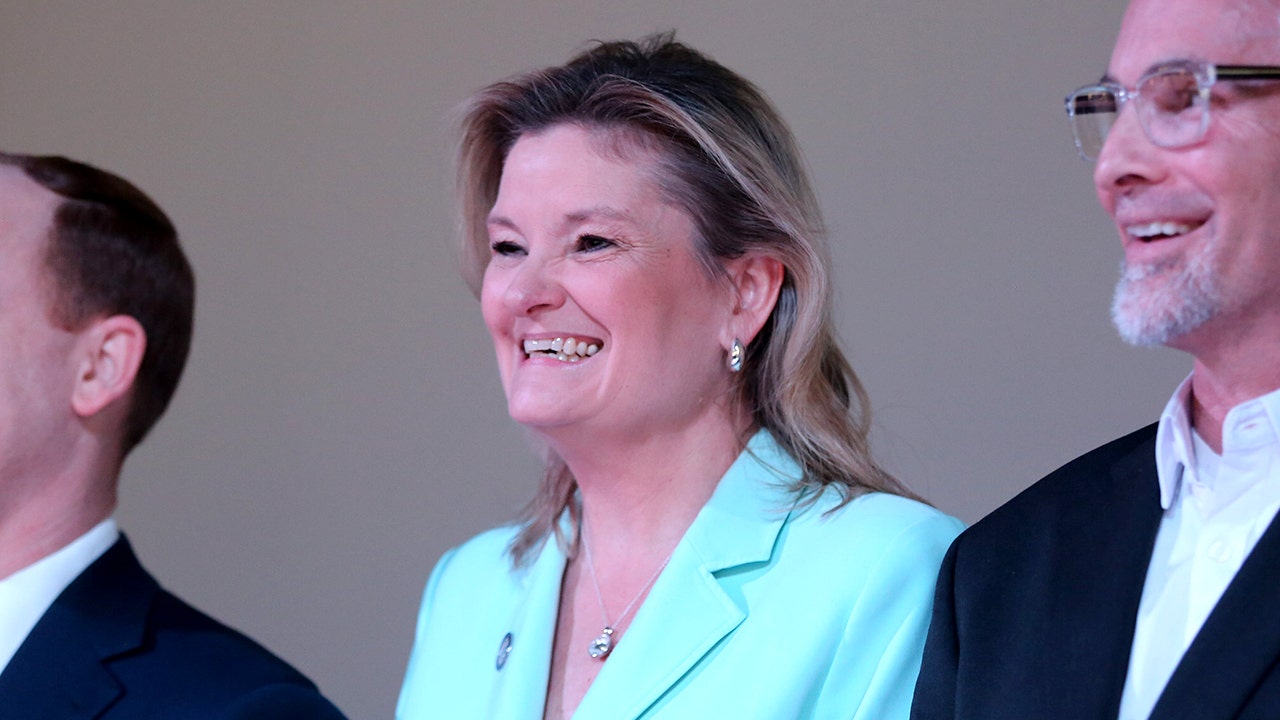
Cindy Holscher’s win in Kansas puts Democrats back in the governor’s mansion for a third straight cycle, even in a state that still leans hard Republican at the presidential level. Ty Masterson conceded after a race that drew plenty of attention, and the result leaves Republicans in a familiar spot: strong in the Legislature, but unable to crack the top statewide job.
Holscher’s victory gives Democrats another big-state foothold in a place where the GOP usually expects to dominate. Kansas voters have backed Republicans for president every cycle since 1968, so this split-screen result stands out and shows that state politics can still bend in a different direction when the governor’s race is on the line.
For Holscher, the path to the top office came after years in state politics. She has served in the Kansas Senate since 2021 and had earlier spent four years in the state House, building the kind of profile that matters in a competitive statewide race. She also had to get through a Democratic primary that featured Ethan Corson, who had backing from former Gov. Laura Kelly and ex-Gov. Kathleen Sebelius.
The campaign was not without noise. Holscher faced questions after old social media comments from 2023 resurfaced, including a remark that suggested Jesus Christ could have been transgender during a debate over proposed Kansas restrictions on drag performances in front of children. That kind of flashpoint can easily blow up a race, but it did not stop her from closing the deal with voters.
After the result came in, Holscher took a celebratory tone online and thanked Kansans for trusting her with the job ahead. The win gives her a fresh platform at a time when state-level battles over taxes, schools and cultural issues are still driving a lot of political energy.
Masterson entered the race with his own built-in advantages. He had President Donald Trump’s endorsement in the GOP primary and carried the kind of conservative résumé that usually plays well in Kansas, where Republicans keep a firm grip on much of the political machinery. Even so, the statewide race slipped away, showing that a familiar red-state pattern does not always translate into a governor’s office victory.
His concession message was straightforward, and he said he had already called Holscher to congratulate her. He also made clear that the issues he campaigned on were not disappearing just because the race ended, which is pretty typical for a politician who expects the fight over policy to keep going long after the votes are counted.
Republicans still have a major say in Kansas through the Legislature, and that matters. Masterson pointed to that control as he prepared to return to the Senate in January, where he said he wants to keep pushing on property taxes, public safety, affordability and schools.
That setup creates a classic divided-government dynamic. Holscher now gets the governor’s office, while Republicans still hold plenty of cards in Topeka, which means the next few years could bring a lot of sharp elbows over spending, education and the daily grind of running the state.
For Democrats, the win is a reminder that Kansas is not locked into one script. For Republicans, it is another warning that presidential strength does not automatically protect every statewide race, especially when the governor’s contest turns into a test of message, turnout and local credibility.
