
• Dakota Meyer’s return to the Marines after 15 years
• The battle that shaped his life in Afghanistan
• The struggle of coming home after war
• Purpose, service, and the pull of duty
• Training again in his late 30s and what it revealed about today’s Marines
Fifteen years after taking off the uniform, Dakota Meyer found himself back in Marine Corps life, and the move carried real weight. He became the first Medal of Honor recipient to reenlist, then pushed through reconnaissance Marine training at 38, a reminder that purpose can hit harder than comfort.
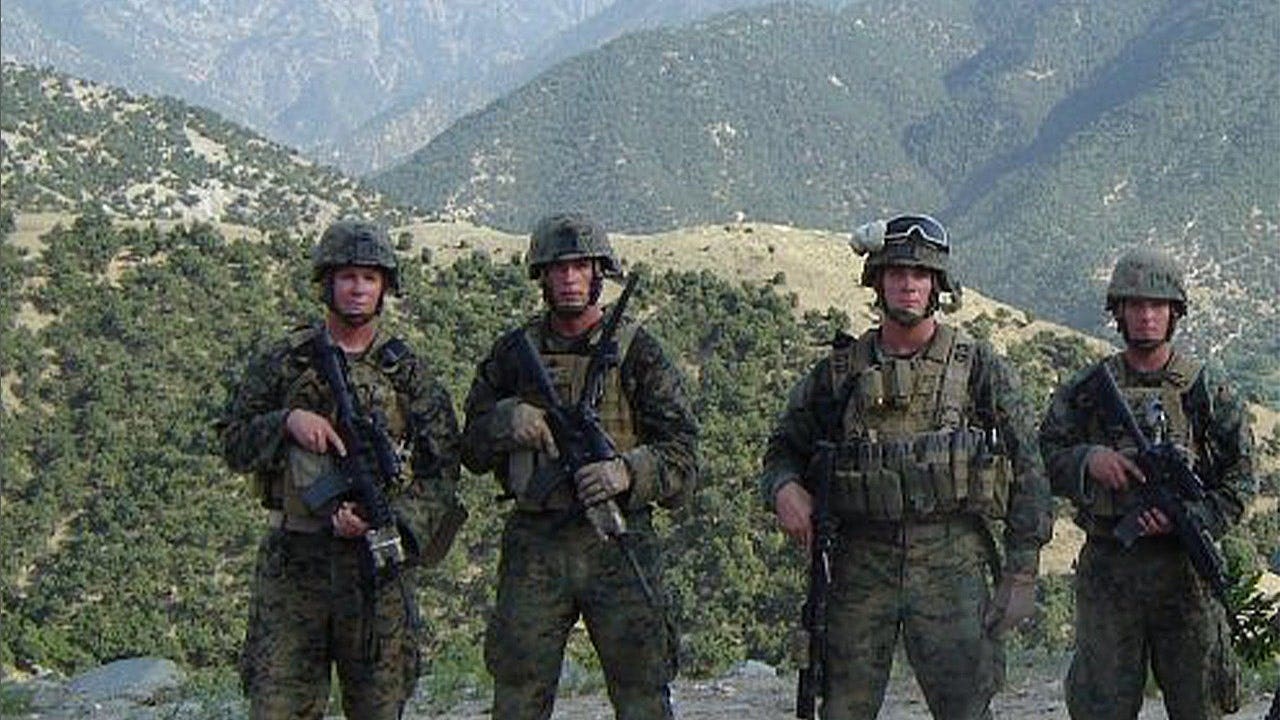
Meyer had already lived through the kind of combat that leaves scars long after the shooting stops. He served in Afghanistan at 21 during the 2009 Battle of Ganjgal, where an ambush ripped through his team’s mission and forced him into impossible decisions under fire.
He has described that day as less about heroics and more about keeping a promise to the people beside him. After repeated attempts to reach trapped teammates, he and Staff Sgt. Juan Rodriguez-Chavez drove into the fight again and again, pulling out wounded troops while Meyer searched for the men who had been left behind.
What followed was the kind of memory that does not fade cleanly with time. Four members of his team died, and Meyer later received the Medal of Honor for his actions, but the decoration did not erase what came next.
Coming home brought a different battle, one without gunfire but with its own brutal edge. Meyer said the transition to civilian life was haunted by the horrors of war, and the hardest part was not finding success, but finding something that felt meaningful again.
That tension stayed with him for years. He built a life outside the military, but the pull of service never disappeared, and he kept coming back to the idea that duty does not end just because active service does.
That mindset came into focus in a conversation at Camp Pendleton, where a young Marine asked whether reenlisting was still worth it. Meyer told him yes, but the answer sat badly with him because he was giving advice he himself was not living.
He later said that moment bothered him enough to force a decision. If he was going to tell others to stay in and keep serving, he needed to be willing to do the same, even if it meant starting over in a demanding pipeline years after leaving the Corps.
By the time he reenlisted in 2025, Meyer was not trying to relive the past. He was chasing the same standard that first caught his attention when he saw a Recon Marine poster as a young man, the kind of elite unit that represents the top end of Marine toughness and discipline.
The physical test was no joke, especially at 38. Meyer said the hardest part was not just the grind itself, but the cumulative fatigue, the slower bounce-back, and the reality that younger Marines recover like they are built from different material.
Still, he came away impressed with the generation serving now. He rejected the lazy idea that today’s Marines are weaker, saying they rise to the level expected of them and often bring a smarter, more adaptable approach to the job.
He also noticed how much had changed since his earlier years in the Corps. During training, younger Marines even spent time teaching him their “new language,” which turned into another reminder that service is not frozen in time, it keeps moving with the people inside it.
For Meyer, that mattered more than nostalgia. The Marines he met after returning were not just carrying on an old tradition, they were proving that the same hunger for challenge, belonging, and responsibility still lives on, even in a force that looks different than the one he left in 2010.
