
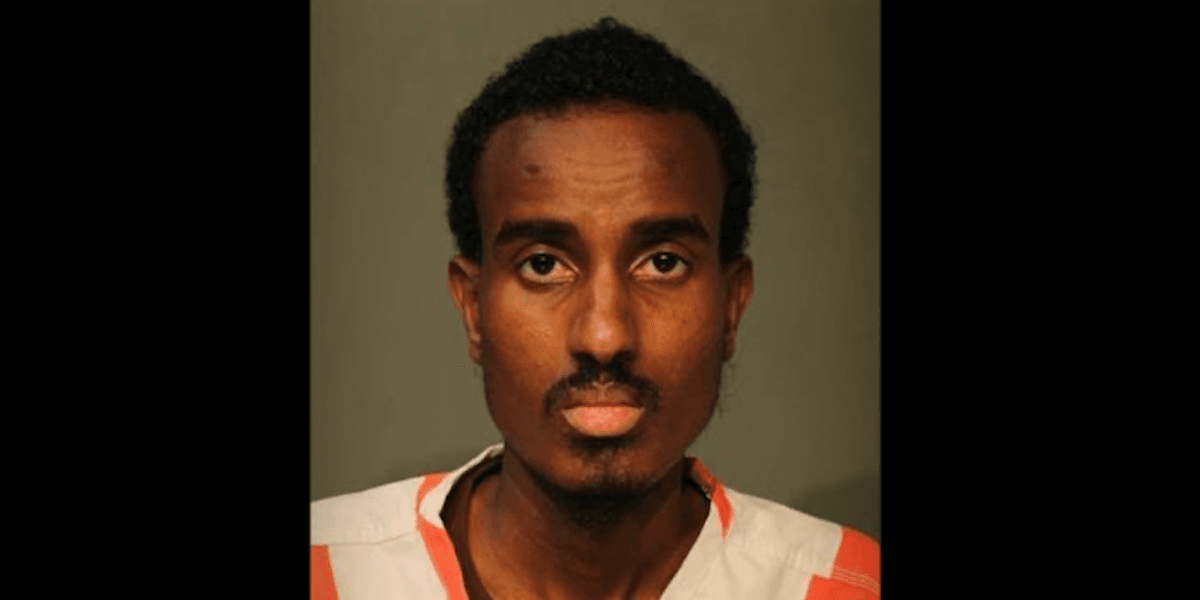
Iowa’s latest criminal case has sparked outrage well beyond one parking lot in Des Moines. A man identified as Hassan Ali Mohamed is accused of opening fire on two McDonald’s workers after a dispute over an order, and the details have quickly turned the incident into a flashpoint about crime, immigration, and public safety.
The accusation itself is disturbing enough, but the backstory has only added fuel to the fire. Authorities say Mohamed is a Somali citizen from Kenya, and that has put a sharper spotlight on how someone with that profile ended up in the United States and moving through the system before a violent encounter at a fast-food restaurant left workers wounded.
According to the account tied to the case, the conflict began with an order that Mohamed believed had been filled incorrectly. What should have been a routine customer complaint instead spiraled into gunfire, leaving two employees caught in the middle of a situation that never should have turned deadly.
That kind of escalation hits a nerve because it feels so senseless. People expect frustration, even rude behavior, in busy service settings, but not bullets over a meal order. When violence breaks out over something that minor, it reinforces the fear that too many places have stopped feeling safe.
The case also raises a broader question that keeps surfacing across the country: why are violent suspects still ending up in positions where they can do real harm? Critics of the Biden administration have long argued that immigration enforcement and public safety protections have been too soft, leaving communities to deal with the consequences after the fact.
For many Americans, the issue is not abstract at all. It is about whether the people who enter the country are properly screened, whether existing rules are actually enforced, and whether dangerous individuals are being allowed to slip through gaps that should have been sealed long ago.
That is why this story has spread so quickly. It blends a shocking local crime with the larger national argument over border control, law enforcement, and the steady sense that ordinary citizens are being asked to carry the burden of policy failures they never voted for.
The victims in cases like this often get pushed to the background once the political debate starts, but they are the ones left to deal with the pain, fear, and possible long recovery. Workers in a fast-food restaurant should be worrying about shifts, customers, and closing time, not whether a disagreement could turn violent in an instant.
Incidents like this also expose how fragile public trust has become. When a simple stop for food turns into a shooting, people do not just question one suspect’s judgment, they question whether the broader system is protecting them at all.
And that frustration does not stay neatly contained in one city. It spreads across neighborhoods, workplaces, and families that see the same pattern again and again, with officials offering statements while citizens are left hoping the next confrontation does not end with another headline like this one.
For a lot of people, the reaction is pretty straightforward: enough excuses, enough hand-wringing, and enough policies that make it easier for dangerous situations to develop. What happened at that McDonald’s is exactly the kind of ugly, preventable violence that keeps hardening attitudes across the country.
The case now sits in the larger debate over who is entering the country, how they are vetted, and what happens when systems fail to stop a threat before it reaches innocent people. In the meantime, two workers are dealing with the aftermath of a dispute that never should have left the counter, much less turned into gunfire.
