
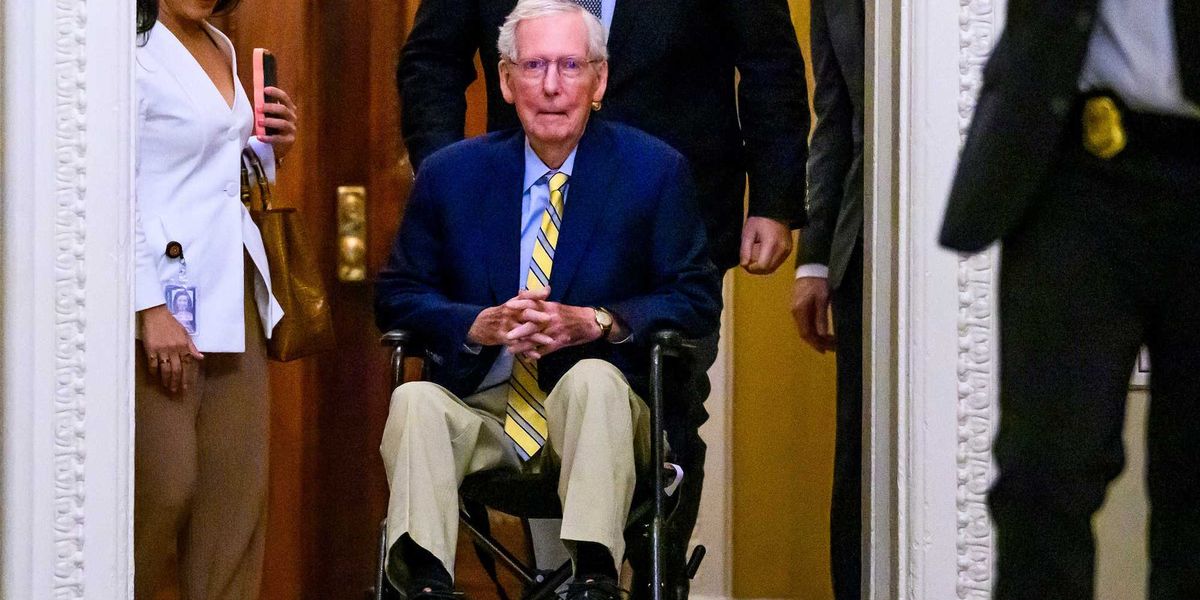
Mitch McConnell drew attention after a strange on-camera response to a question tied to a punishing midterm result, and the moment quickly became its own story. The clip fed a familiar sense that Washington leaders are often out of step with the frustration building outside the Capitol.
The exchange centered on the political damage from the election and the awkward way McConnell handled it. Instead of giving a crisp, confident answer, he appeared stiff and disoriented enough to invite fresh questions about age, stamina, and whether the GOP’s old guard can keep pace with a party that keeps getting reshaped by voters.
That reaction landed at a rough time for Republicans already dealing with the fallout from a disappointing showing. Midterms are supposed to offer a reality check, but this one seemed to sharpen the argument that the party needs sharper instincts, better communication, and leaders who can connect with regular voters without sounding trapped in another era.
McConnell has long been one of the most recognizable power brokers in the Senate, and that reputation cuts both ways. Supporters see discipline and experience, while critics see a symbol of a cautious Washington machine that moves too slowly and too often looks comfortable only with itself.
The video struck a nerve because it fit into a larger public mood. Voters have been restless, trust in institutions keeps getting squeezed, and any moment that looks awkward or evasive gets magnified fast, especially when it comes from a figure who has spent decades at the center of national politics.
For Republicans, the bigger issue is not just one viral clip. It is the broader question of who should be steering the party through the next stretch of elections, and whether the bench is ready to replace a leadership style that many voters now seem eager to leave behind.
McConnell’s response also reminded observers how unforgiving modern political media can be. A few seconds of hesitation can travel farther than a full speech, and once that happens, the image often sticks harder than any explanation that comes later.
That is part of why moments like this matter beyond the immediate embarrassment. They shape how the public reads strength, confidence, and credibility, and in a season already defined by talk of electoral backlash, those impressions can linger longer than the headlines themselves.
