
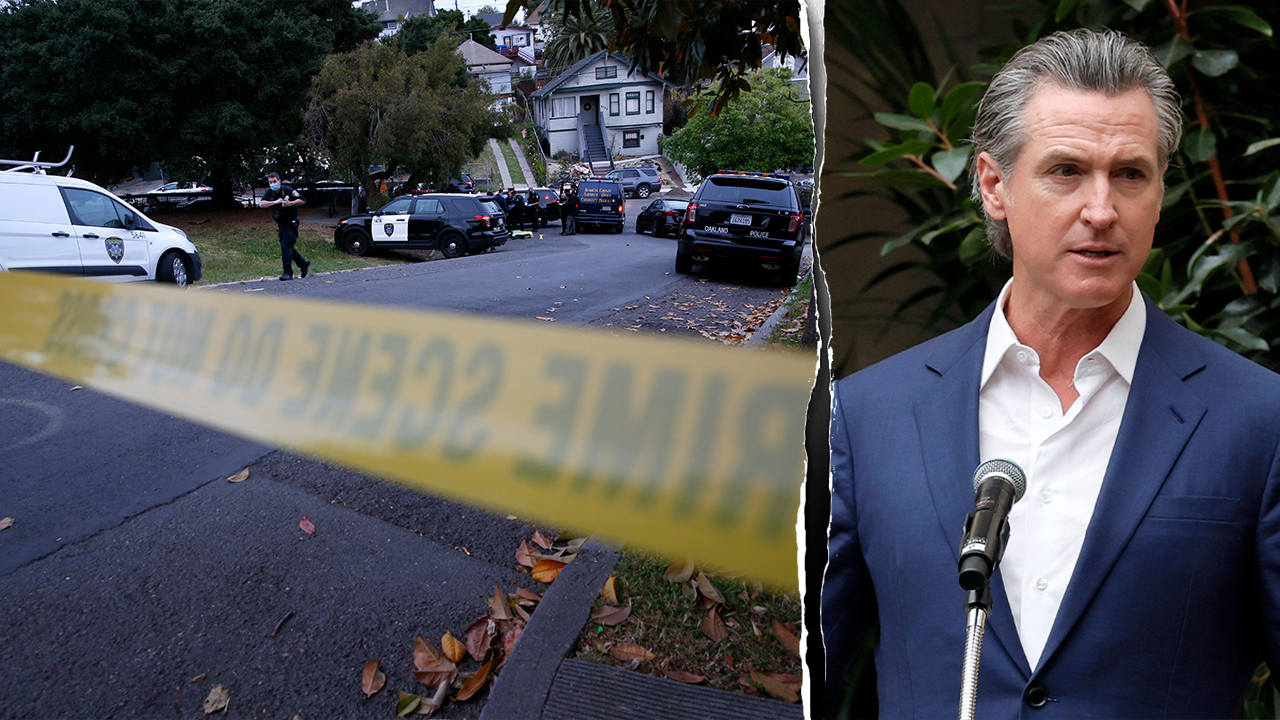
California’s death row just became the center of a political firestorm after Gov. Gavin Newsom commuted the sentences of 548 inmates in one sweeping move. Prosecutors and law enforcement leaders say the decision ignored victims, brushed past voters, and sent the wrong message at the worst possible time.
District attorneys across the state came out swinging, calling the commutations a direct insult to the families who lived through the crimes. San Luis Obispo County District Attorney Dan Dow said the move was driven by politics, not principle, and argued that the governor put “politics over people” when he wiped out the death sentences in one shot.
Newsom said the action fit with his view that state execution is out of step with California’s values. He also pointed to long-running concerns about capital punishment, framing the decision as a moral stand rather than a policy stunt.
That explanation did little to calm the backlash. For critics, the problem is not just the death penalty itself, but the way the decision landed on victims’ families and the broader public, without warning and without any sense that the people most affected were part of the conversation.
Law enforcement groups were especially blunt. San Diego Police Officers Association president Lt. Jared Wilson called the move awful and said justice will not be served for the victims whose cases were swept into the announcement.
The emotional weight of the issue is hard to miss. These were not abstract files or policy charts, but murder cases that left behind devastated families, grieving colleagues, and communities that still carry the scars.
Los Angeles County District Attorney Nathan Hochman pushed back by pointing out that California voters have already had their say on the death penalty. He noted that ballot measures aimed at ending capital punishment were rejected, which, in his view, means the punishment remains on the books for the most serious crimes.
Orange County District Attorney Todd Spitzer took an even sharper tone, describing the commutations as mercy for killers and cruelty for victims. The message from prosecutors was consistent: if the law is still in place, elected officials should not try to erase it with a sweeping executive order.
Riverside County Sheriff Chad Bianco also joined the criticism, arguing that the cases were not flimsy or rushed. He said the inmates had gone through extensive investigations, full trials, evidence review, and decisions by juries and judges before landing on death row.
That point is doing a lot of work in the debate. Critics say the governor’s action overrides years of legal process and replaces it with a single political decision that reaches deep into cases that were already tested in court.
Among the inmates whose sentences were commuted are men convicted of especially brutal crimes, including cases involving children, police officers, and college students. That detail has made the backlash even louder, because many people see the move as flattening out very different crimes under one broad, ideological banner.
Dow said victims’ families were not consulted before the announcement, and that detail has become one of the biggest sore spots. For many prosecutors, that lack of notice made the move feel less like justice reform and more like a public relations hit job on the people who suffered most.
There is also a deeper clash here over what mercy means and who gets to define it. Supporters of the governor argue that capital punishment is broken, while opponents say mercy cannot come at the expense of victims who never got a real voice in the process.
Dow defended the integrity of California’s court system and said the state already has safeguards that screen out weak cases. In his view, the answer is not to toss out the system’s verdicts, but to trust the process that juries, judges, and prosecutors followed from start to finish.
The debate is not cooling off anytime soon, because it touches raw nerves all over the state. For some Californians, the commutations look like reform; for others, they look like a governor reaching across a line that should have stayed put.
