
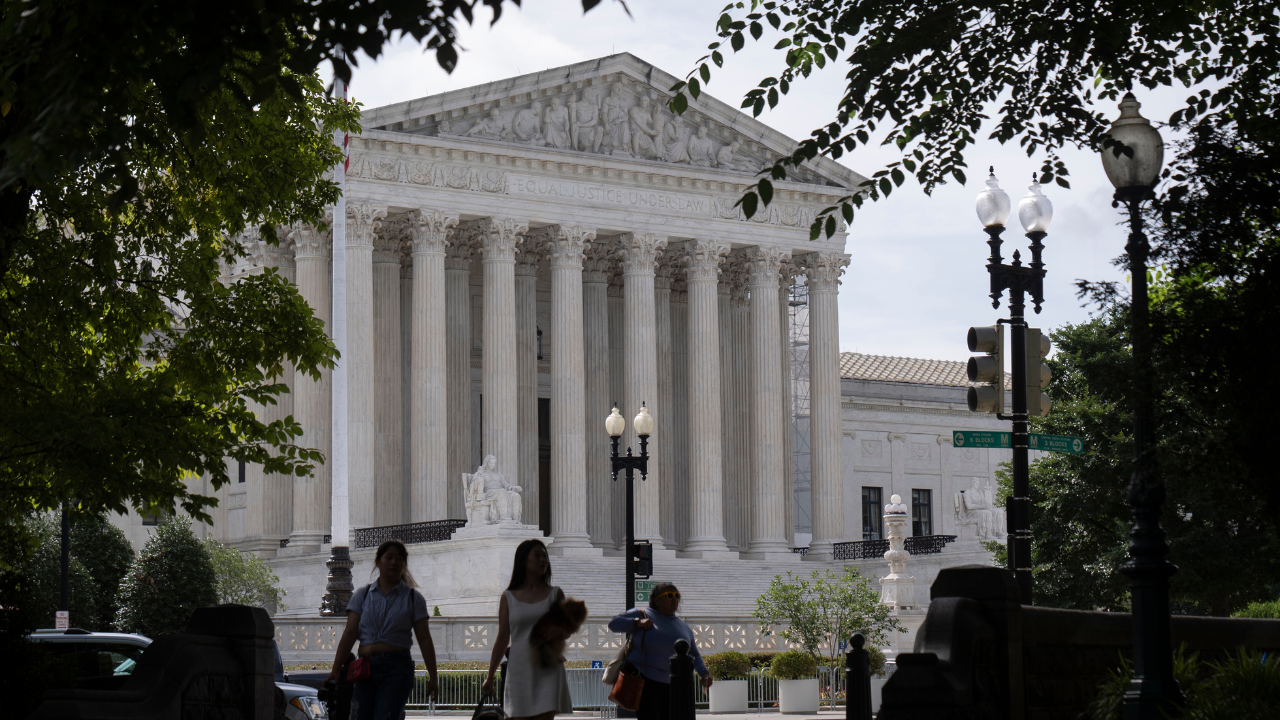
The Supreme Court is back at the center of a fight over what “race-neutral” really means when school officials use it to reshape who gets in and who gets left out. In Montgomery County, Maryland, Asian American parents say a policy designed to balance enrollment in gifted magnet programs quietly turned into discrimination with a polished label.
The case has big stakes because it cuts to the core of equal protection. If the Constitution protects people as individuals, then race should not decide a child’s shot at opportunity, whether the discrimination is open or dressed up in bureaucratic language.
Montgomery County’s public schools, among the largest in the country, once admitted magnet middle school students using grades, test scores, and teacher recommendations. Asian American students ended up making up nearly half of the enrollment, which triggered concern inside the school system after consultants flagged what they called racial and socioeconomic imbalances.
The response was not a small tweak. Officials moved toward a system built to produce a different racial outcome, adding new criteria and narrowing access in ways that hit some students harder than others.
That shift led to a lottery system, but not the kind most people would recognize as open and random. Students now have to clear a high cutoff on a standardized measure, and the benchmark changes depending on the school cluster they attend.
For children in schools with heavy Asian American enrollment, the bar is far steeper. For others, the door stays much wider, which is why parents say the policy is no longer about merit or fairness but about engineering the racial makeup of the class.
That is the heart of the dispute now before the court. The county argues the policy is neutral on its face, while the parents say its design and effect make the discrimination obvious, even if the language sounds careful and technical.
The lower courts have been more willing than they should be to look past that reality. Under that logic, a discriminatory policy can survive as long as the harm is not “enough,” which is a strange standard in a country built on individual rights.
That is why the case matters far beyond one school district. If officials can lower the burden for some students and raise it for others based on race, then equality starts looking less like a right and more like a spreadsheet.
Supporters of the challenge point to a simple principle: the Constitution protects people, not racial averages. A child does not become less worthy of fairness because other children of the same race are doing well on paper.
This is not the first time the issue has reached the high court’s doorstep. Similar disputes over selective admissions and racial balancing have surfaced before, and the justices have signaled deep frustration with courts that excuse discrimination when it is packaged as diversity policy.
Justice Alito has warned that this kind of reasoning is dangerously wrong, and that view reflects a growing concern on the court that some lower courts are treating racial balancing as if it were routine administration. That approach turns the promise of equal protection into a moving target, one that changes depending on who is measuring the data.
The Montgomery County case puts the justices in position to draw a harder line. If the court is serious about the idea that race-based sorting has no place in public education, it can say so clearly and stop officials from hiding bias behind neutral-sounding rules.
That matters for families who want schools to reward achievement instead of racial engineering. It also matters for every district watching closely, because a ruling here could decide whether “fairness” means the same thing for everyone or something different every time the numbers start looking inconvenient.
