
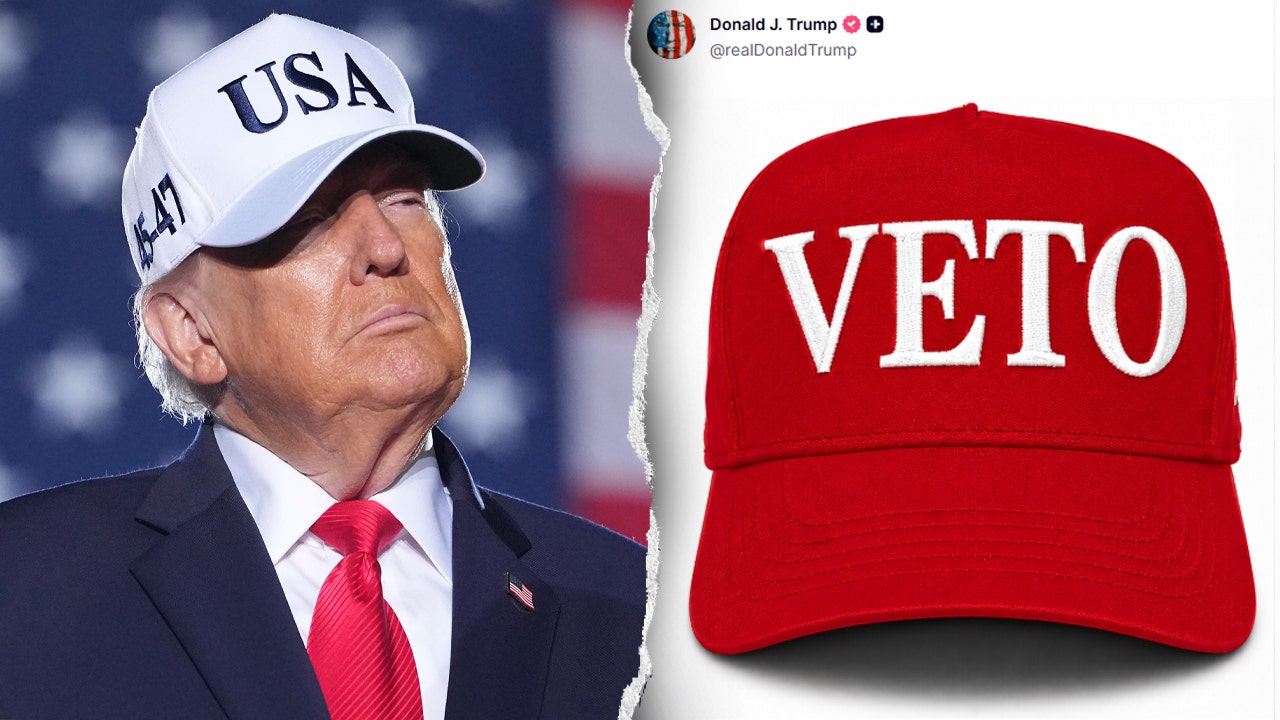
President Donald Trump is already drawing a line in the sand after Democrats scored a big night in the midterms, promising to block what he called “insane” legislation and signaling that the next stretch of Washington will be a knife fight over power, policy, and blame. He also pointed to higher gasoline prices and the fallout from the conflict with Iran as factors that may have hurt Republicans, while arguing that the outcome did not erase the broader fight he thinks his side is still in.
Trump said the veto pen is not just a technicality, but a real weapon if Democrats start sending over bills he thinks go too far. He framed the strategy as both a warning and a negotiating posture, saying repeated vetoes would eventually force the other side to deal with him if they want anything moving.
The president’s reaction came after Democrats flipped at least seven Senate seats and more than two dozen House districts, a sweep that put them in control of both chambers of Congress. That kind of shift changes the whole rhythm in Washington, giving Democrats the power to shape the agenda, slow down nominees, and squeeze the White House with investigations.
Trump did not sound crushed by the result, even if he made clear he was surprised by how far Republicans fell short. He also said he has already been in touch with some Democratic lawmakers, suggesting that the new balance of power could bring some awkward but practical conversations.
At the same time, he kept coming back to the economy, especially the sting of paying more at the pump. Trump said he believed many voters supported his Iran policy in principle but were not eager to swallow the short-term pain that came with it, especially when gasoline prices were climbing.
“I don’t think it’s the war, Bret, I think it’s the gasoline price,” Trump told “Special Report” anchor Bret Baier. “People agree with what I’m doing on Iran, but they really probably weren’t willing to do the short-term consequence of paying more for gasoline.”
That line puts a sharp edge on the political fallout. It also shows how quickly foreign policy can collide with kitchen-table economics, where voters often care less about strategy papers and more about what shows up at the pump on Tuesday morning.
Trump defended his approach toward Iran as a necessary move with long-term value, even if it came with immediate costs. He argued that preventing Tehran from getting a nuclear weapon matters more than the temporary hit, and he cast the pressure as part of a bigger national security calculation.
“I think a part of it was Iran. But at the same time, people understood the importance of what I’ve done with Iran,” Trump said. “I think historically it’s going to be much more important than this evening, because you can’t let the number one state sponsor of terror have a nuclear weapon.”
He also turned some of the blame inward on Republicans who failed to turn the excitement around his rallies into actual votes. Trump said the campaign trail energy was real, but some of the candidates he backed never quite connected with voters the way he expected.
“I’m a little bit surprised. I thought they’d do better,” Trump said. “We had tremendous rallies. We had about 30 of them.” He added that some of his endorsed candidates had alienated the MAGA base by previously going after him, while others just never managed to light a fire under the turnout machine.
“They didn’t like the candidates and some of the candidates that I endorsed fought me, and they didn’t like that they fought me,” Trump said. “And I wasn’t on the ballot. If I was on the ballot, they would have gotten out,” he added.
Even with Republicans taking a beating, Trump still made room to praise Democrats for running a strong race. He said they fought hard and earned their win, while also making a familiar point about how different elections can feel when his own name is not on the ballot.
“I think the Democrats did a good job, I really do. I think they did a good job. They fought hard,” Trump said. “I don’t like to consider it a defeat,” he added. “If you’re on the ballot, it’s different than if you’re not on the ballot.”
