
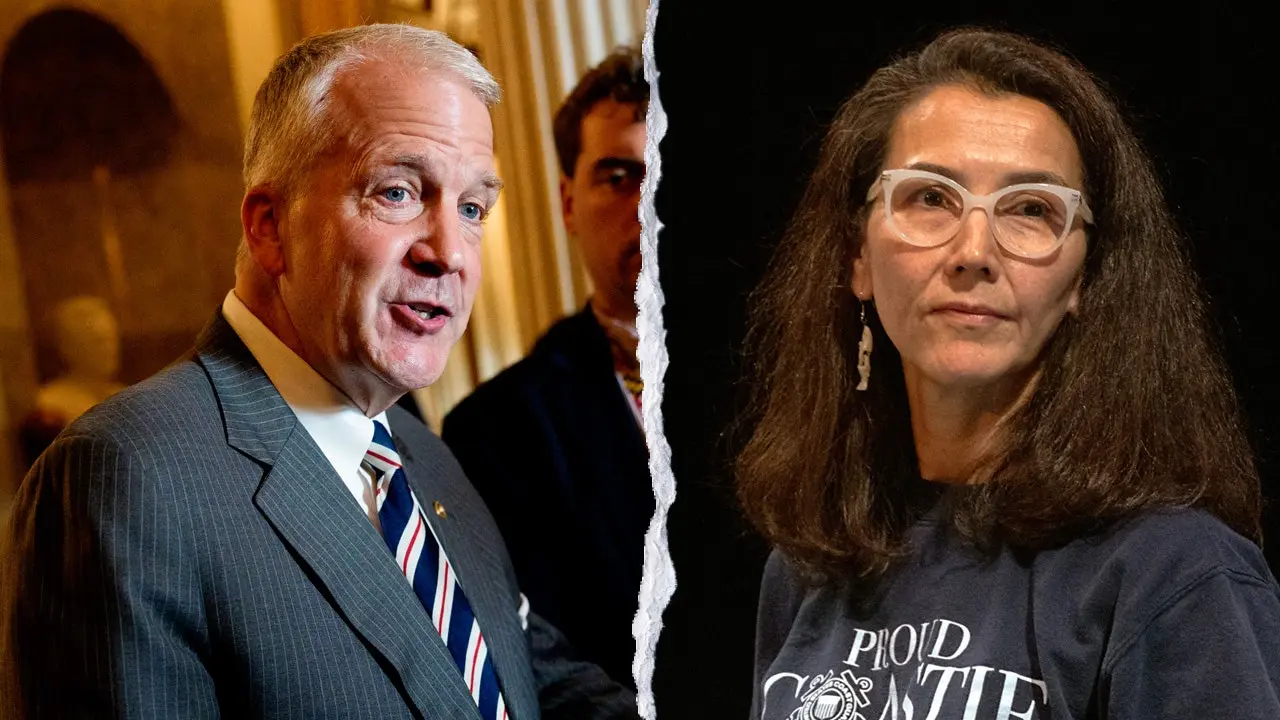
The fight over Alaska’s Senate ballot has turned into a messy legal and political brawl, with the Justice Department trying to prove that voter confusion could justify blocking certification if the race gets tight. At the center of it is a bizarre lineup: two men with nearly the same name, one a sitting Republican senator and the other a retired teacher running under a nearly identical label. The controversy has pulled in state officials, campaign lawyers, and election law experts who are split over whether anonymous ballots can really show who meant to vote for whom.
What started as a strange ballot wrinkle has now grown into a broader question about federal power, election rules, and how far prosecutors can go when they think a race may have been manipulated. The Justice Department filed its lawsuit before Election Day, arguing that confusion over the similar names could have changed the outcome if Sen. Dan Sullivan loses. That theory has already run into resistance from lawyers who say the federal law cited by DOJ is about voter registration, not candidate eligibility or how a ballot is printed.
The backstory is what makes the whole thing feel even stranger. Reports say the Mary Peltola campaign worked with outside operatives to encourage another Dan Sullivan to enter the race, with the goal of muddying the waters for voters and peeling support away from the incumbent Republican. Peltola’s camp has denied involvement, but documents, texts, and interviews described in reporting have kept the spotlight fixed on whether the second candidacy was part of a deliberate spoiler play.
State officials already looked at the issue and initially agreed there was a problem. Alaska’s Division of Elections knocked the schoolteacher off the ballot, saying his bid did not look like a genuine run for office and seemed designed to confuse voters. That ruling did not last, though, because an Alaska Superior Court judge later overturned it and said election officials did not have the power to toss a candidacy on that basis.
Now the ballot itself is at the center of the dispute. The incumbent appears as “Sullivan, Dan S.” with party and incumbent labels, while the other candidate is listed as “Sullivan, Daniel J. Jr.” with no party designation. Supporters of the ballot say that difference is enough to prevent mix-ups, but critics argue that in a tight race, even a small amount of confusion can matter when voters are moving quickly through a ranked-choice system.
The Justice Department’s problem is not just legal, it is practical. It may be one thing to argue that confusion existed in the abstract, but quite another to prove that actual voters were misled, especially when ballot privacy makes it hard to connect a person to a specific vote. That is why some election lawyers say statistical patterns alone will not carry the day, no matter how suspicious they look from a distance.
“This is just the stuff that is just impossible to measure after the fact,” Notre Dame law professor Derek Muller said of the DOJ’s plan to infer voter intentions from anonymous ballots. That skepticism runs through the entire case, because the department would likely need more than numbers to show that voters selected the wrong Dan Sullivan by mistake and that those mistakes were enough to change the result. Witnesses, affidavits, and direct testimony would all have to line up in a way that is rare in election litigation.
Todd Blanche has suggested the department could study ranked-choice ballot patterns for signs of confusion, pointing to situations where voters may have selected names in a way that suggests they were trying to vote straight Republican. “So, because of rank-based voting, voters… they write not just one, not just two, but multiple names on the ballot. And so there are a number of scenarios where it could be obvious that a voter was confused by the way they wrote down candidates,” Blanche told CNN’s Dana Bash. He later said, “It will be obvious from the results and from the ballots that voters were confused, and that could be obvious from the way that they rank the Dan Sullivans or not including a Dan Sullivan on the ballot,” he said in a later interview with CBS.
That argument has not impressed everyone. Ben Hovland, a senior fellow at the Center for American Progress, called the theory deeply unusual and said it does not resemble a normal federal voter-registration case. Walter Olson of the Cato Institute was even blunter, saying the case may never get far unless a federal judge accepts the idea that Alaska violated federal law by letting the schoolteacher remain on the ballot.
Republicans see the matter as more than a legal footnote, since Alaska remains one of the states where a small shift can have an outsized effect on control of the Senate. The state’s ranked-choice voting system already makes the outcome harder to predict, and a ballot with nearly identical names only adds another layer of tension. With dismissal motions pending and federal prosecutors still digging in, the race has become one of those odd election stories where the law, the strategy, and the politics all collide at once.
