
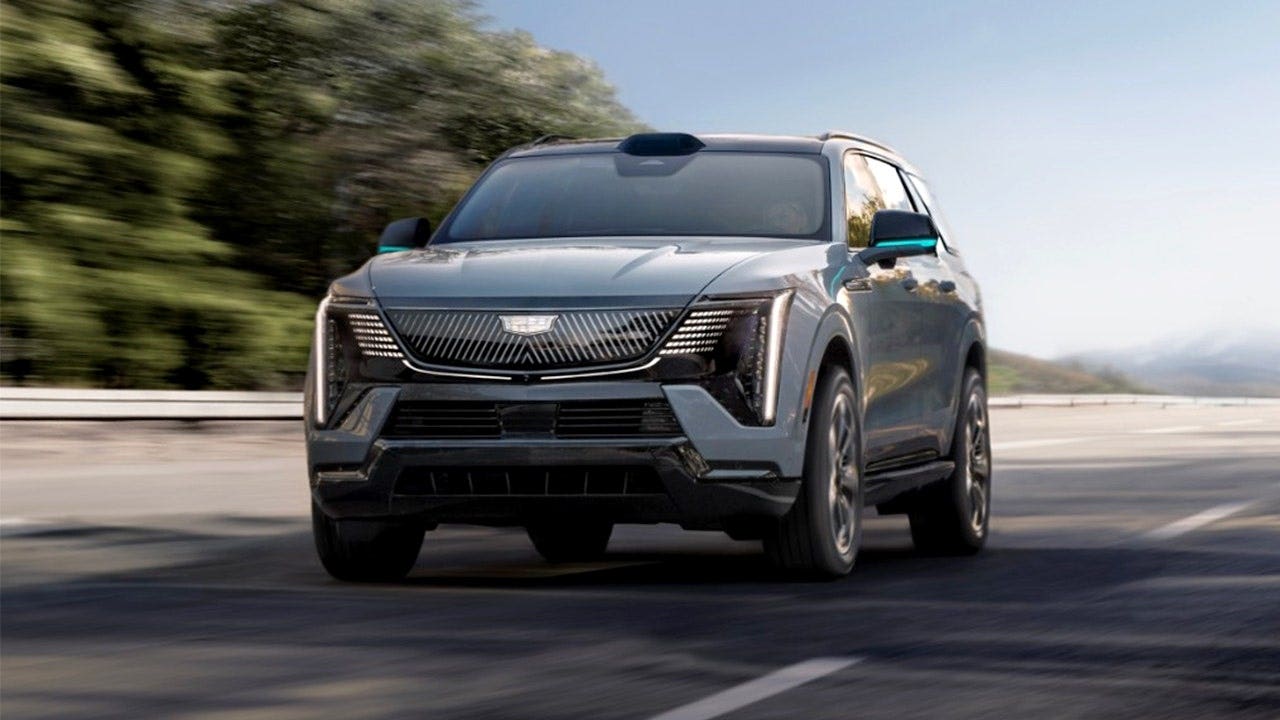
General Motors is pushing toward a future where highway driving could become so automated that attention shifts from the road to a screen. The company is testing “eyes-off” technology aimed at letting drivers do other things while the vehicle handles the job, but the big question hanging over all of it is simple: how safe can that really be at speed?
GM says the feature is part of a wider plan to build on its existing Super Cruise system, which already handles steering, acceleration, and braking on compatible roads as long as the driver stays alert. The new version would go further by removing the constant need to watch the road when the system is active. That would open the door to things like reading email, joining a virtual meeting, or even watching a movie while the car does the driving.
The first target for the technology is the Cadillac Escalade IQ, with rollout expected no earlier than 2028 if development and testing stay on track. The system would use lidar, radar, and cameras to read the road, while turquoise lights on the dashboard and mirrors would show when eyes-off mode is available. Availability would still depend on state laws and whatever safety hurdles remain between now and launch.
GM is not pretending this is ready for prime time yet. The company is digging into how drivers react when the car suddenly needs them again, because that handoff is where things can get ugly fast. If a vehicle reaches a point it cannot safely handle, the delay in human response could make all the difference.
That is why GM has been loading volunteers into a simulator at its Global Technical Center in Warren, Michigan. Instead of sending them onto live highways, researchers place them in realistic driving scenarios with sudden lane changes, construction zones, and other problems that force quick decisions. Sensors track eye movement, stress levels, and other reactions to see how people behave when their focus has already drifted elsewhere.
One of the more unusual tools in the research mix is Candy Crush. The game is being used to pull participants into a distracting activity so engineers can study the moment when attention has to snap back to driving. It sounds quirky, but it gets at a serious issue, since even a few seconds of hesitation at highway speed can cover a shocking amount of ground.
GM’s broader automated-driving push does not stop with the Escalade IQ either. The company has said it wants to bring autonomous highway driving to its full-size SUVs and light-duty pickups, including gas-powered models. That would take the technology well beyond luxury EV territory, which tells you GM sees this as more than a niche experiment.
The move also puts GM in the same conversation as other automakers trying to loosen the driver’s grip on the wheel. Ford’s BlueCruise and Tesla’s Full Self-Driving system both cut down the workload, but they still require humans to stay engaged. Mercedes-Benz has offered a limited eyes-off system before, though its U.S. approach has shifted as it works on the next phase of automated driving.
Pricing is another piece of the puzzle, and it is not a small one. GM already uses a subscription model for Super Cruise after the included service period ends, and that raises the obvious question of what an even more advanced system might cost. Buyers may love the idea of a car that gives them back time, but monthly fees can change the mood pretty quickly.
The biggest concern remains the same one that shadows every automated system: what happens when the road throws something weird at the car? Construction debris, missing lane markings, or a driver cutting across traffic can all create moments where automation needs backup. GM still has a lot to prove before anyone should assume the road can be safely handed over and forgotten.
