
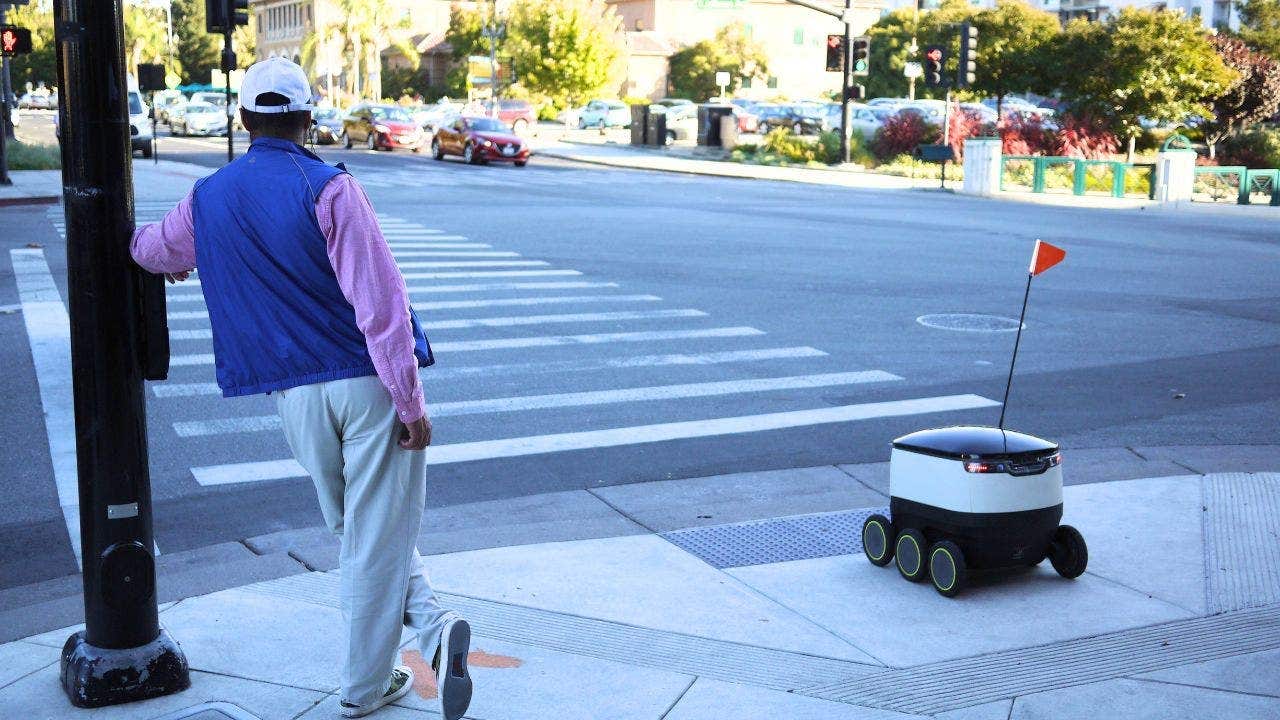
In Philadelphia, a sidewalk clash over an Uber Eats delivery robot turned into a flash point for a much bigger debate about automation, workers, and who gets to claim space in public. A 78-year-old retired professor was arrested after refusing to move, even though Pennsylvania law says delivery robots must yield to pedestrians.
What looked like a small street encounter quickly became something sharper: a protest, a legal question, and a warning sign for cities that are rolling out autonomous delivery tech faster than the public can digest it. The episode also put a spotlight on how uneasy people still are when machines start taking jobs once done by human hands.
Carolyn Marvin, a retired University of Pennsylvania professor, was leaving a flu shot appointment in Center City when she spotted the robot near Reading Terminal Market. Instead of stepping aside, she planted herself in front of it and refused to budge, which brought police to the scene after witnesses reported a disturbance. Officers said she ignored repeated instructions to move, and she was arrested on a disorderly conduct citation.
The video spread fast online, but Marvin was not exactly surprised by the attention. She said she had been blocking delivery robots for months as a form of protest, treating each encounter as a chance to make her point about automation and labor. To her, this was not random sidewalk chaos, but a deliberate public stand against a system she believes is squeezing out human workers.
Marvin has argued that the robots represent more than a novelty. She sees them as corporate tools built to replace couriers who depend on delivery income, and she has said her protest is protected speech. After being taken to police headquarters and later released, she said she planned to challenge the citation and keep protesting when possible.
Her frustration taps into a broader anxiety that is only getting louder. Every time a company adds more autonomous delivery devices, the question hangs in the air: is this helping workers, or slowly edging them out? Even when the answer is dressed up as efficiency, the people who make a living behind the wheel or on a bike are watching closely.
That concern is not just emotional, either. Robots do not need tips, do not ask for overtime, and do not care about parking tickets or traffic. Companies like them because they can lower operating costs, but the tradeoff for neighborhoods and workers is a lot less tidy.
Pennsylvania law adds a twist that makes this incident even more awkward. The state’s vehicle code treats personal delivery devices as pedestrians and says they must follow pedestrian rules, which includes yielding the right-of-way or safely moving around people and cyclists in pedestrian areas.
That does not mean someone can camp out in front of a robot and call it a day. Police said Marvin refused repeated orders to move, and her disorderly conduct charge is separate from the broader question of whether delivery robots should have priority on sidewalks. The legal line between protest and obstruction is where things get messy.
The state also requires operators to notify municipalities before launching delivery robot services, and local officials can bar them from certain places if they believe the machines pose a hazard. That gives cities some control, but it also shows how new this all still is. Communities are being asked to adapt in real time while the technology keeps pushing forward.
Uber Eats has leaned into the robot rollout through its partnership with Avride, whose small, four-wheeled machines handle short trips and carry food in locked compartments. The robots move at low speeds and use cameras and sensors to navigate, which makes them sound harmless until they are clogging a sidewalk or leaving someone wondering how to get around them.
The service began in Philadelphia in March 2026, and the rollout has since expanded. That growth is part of the appeal for companies, since a robot can make a short delivery without another car in traffic or a courier hunting for parking, but it also raises obvious questions about access, safety, and who gets squeezed when convenience becomes the main goal.
Philadelphia is far from alone in dealing with that tension. Other cities have already seen delivery robot pileups, awkward jams, and close calls that make people nervous about crowded sidewalks. For residents using wheelchairs, walkers, or other mobility aids, even a brief blockage can turn into a serious barrier.
The incidents in Philadelphia have helped fuel that skepticism. A past complaint about a robot bumping into a pedestrian added to the sense that these machines are not always as graceful as the marketing suggests. They may be built to be careful, but city streets are messy, unpredictable places.
And that is really what makes the Marvin episode stick. It is not just about one woman refusing to move for a robot. It is about a city trying to absorb a new technology while workers, residents, and officials all wrestle with the same uneasy question: how much room should automation get when it shows up on the sidewalk?

1 Comment
How hard would it be to kick one of those delivery robots over?
What would happen if a car or truck hit one of these robots in a crosswalk?
Does the good professor have a legal defense fund?
If she’s dancing around blocking the machine’s every move to go around her, that’s certainly one thing. But if she’s just standing there and the robot won’t go around her – that’s another thing entirely.
I have to agree with the professor about job loss. Delivery was always a good entry level position or something for a few bucks while going to school. As this AI + automation trend continues, who is going to have a job to be able to buy anything?