
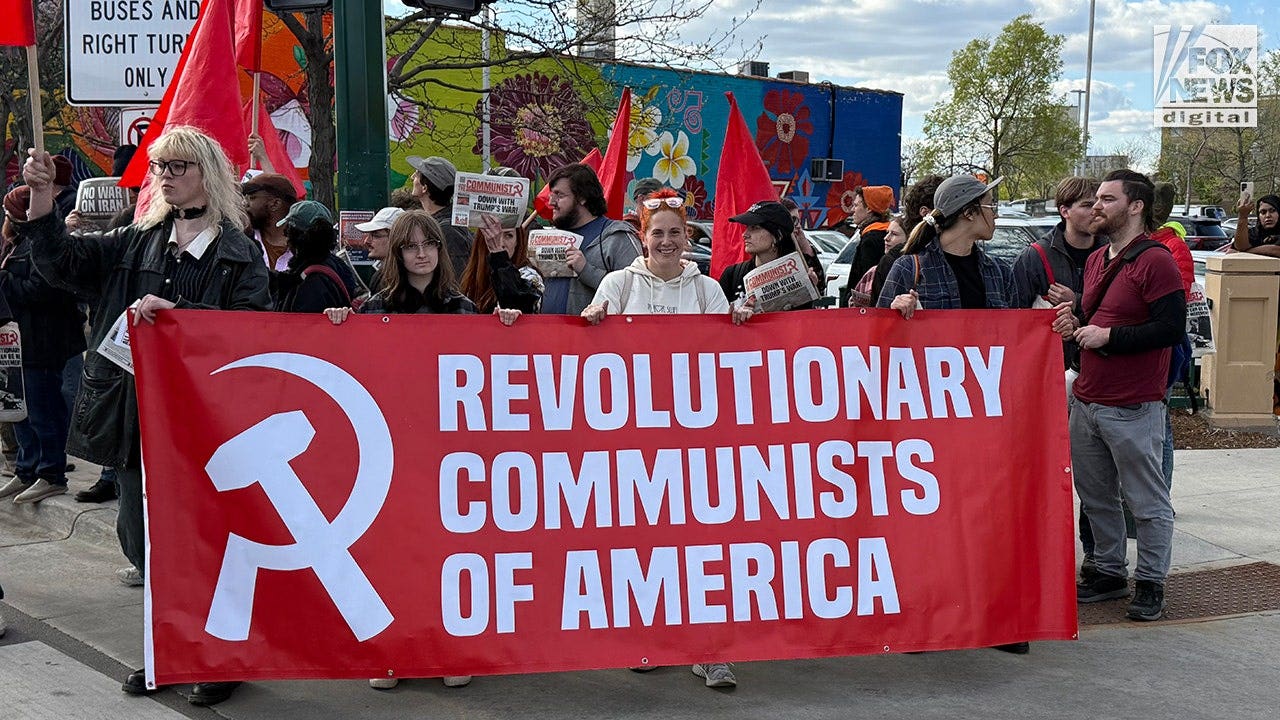
A casual farmers market chat turns into a much bigger clash over memory, history, and the easy appeal of communism to people who have never lived through it. The piece leans hard on the gap between trendy slogans and the ugly record of communist rule, then pushes the case that young Americans need far more honest education about what those systems actually did.
It starts with a jarring scene: a hammer and sickle on display beside ordinary weekend produce, a symbol that lands very differently for immigrants who fled communist regimes. For them, that image is not quirky or provocative. It is a flashing warning sign attached to a system that crushed lives, erased freedom, and left families with scars that never really fade.
The conversation that follows is the kind that leaves people shaking their heads. A young supporter of communism talks in broad, cheerful theory, but when pressed on the history behind her politics, the answers get foggy fast. The usual lines show up anyway: America has dark chapters, capitalism has sins, and some kind of moral repayment is supposed to fix everything.
That is where the whole exchange starts to crack. It is one thing to criticize flaws in American life, and another to wave away the wreckage of communism with a shrug and a smile. The trouble is not just confusion over details, but a basic refusal to reckon with the scale of the damage done by communist regimes.
The article argues that this kind of ignorance is not an accident. A lot of younger people, it says, have been fed a heavily filtered version of history that frames society almost entirely as oppressor versus oppressed. In that lens, class struggle becomes a kind of moral shortcut, and old American ideals like individual effort, local responsibility, and free markets get painted as outdated or suspect.
That framework can make communism sound clean and noble when it is anything but. It offers a fantasy of fairness without the hard reality of coercion, scarcity, and political force. Once the pitch is stripped down, what remains is a promise built on resentment and a record built on fear.
The strongest part of the argument comes when the focus shifts from theory to facts. The historical record is not thin or ambiguous. There are survivor accounts, government documents, and visual evidence from gulags, labor camps, prisons, forced relocations, starvation campaigns, and the targeting of entire communities.
Those crimes are not just locked in the past, either. The piece points to communist and post-communist authoritarian states that still use repression, intimidation, and brutality to stay in control. From places like Cuba and North Korea to other hardline regimes, the same old pattern keeps showing up in new clothes.
That is why the farmers market moment matters more than it first seems. The young communist in the story is not being malicious so much as uninformed, and that may be even more dangerous. A society can survive bad ideas better than it can survive bad ideas wrapped in innocence and moral vanity.
The answer offered is straightforward and pretty familiar: teach the truth early, clearly, and without apology. Families, schools, churches, media, and civic institutions all have a part to play in passing down the basic principles of freedom, constitutional government, and personal responsibility. If those ideas go missing, the vacuum gets filled by slogans that sound compassionate and end up doing real harm.
There is also a broader warning buried in the piece. A country that forgets what communism did will eventually start treating it like just another edgy opinion instead of a system that devours people. That kind of amnesia is how bad ideas stop sounding threatening and start sounding sophisticated, right up until reality walks back in.
