
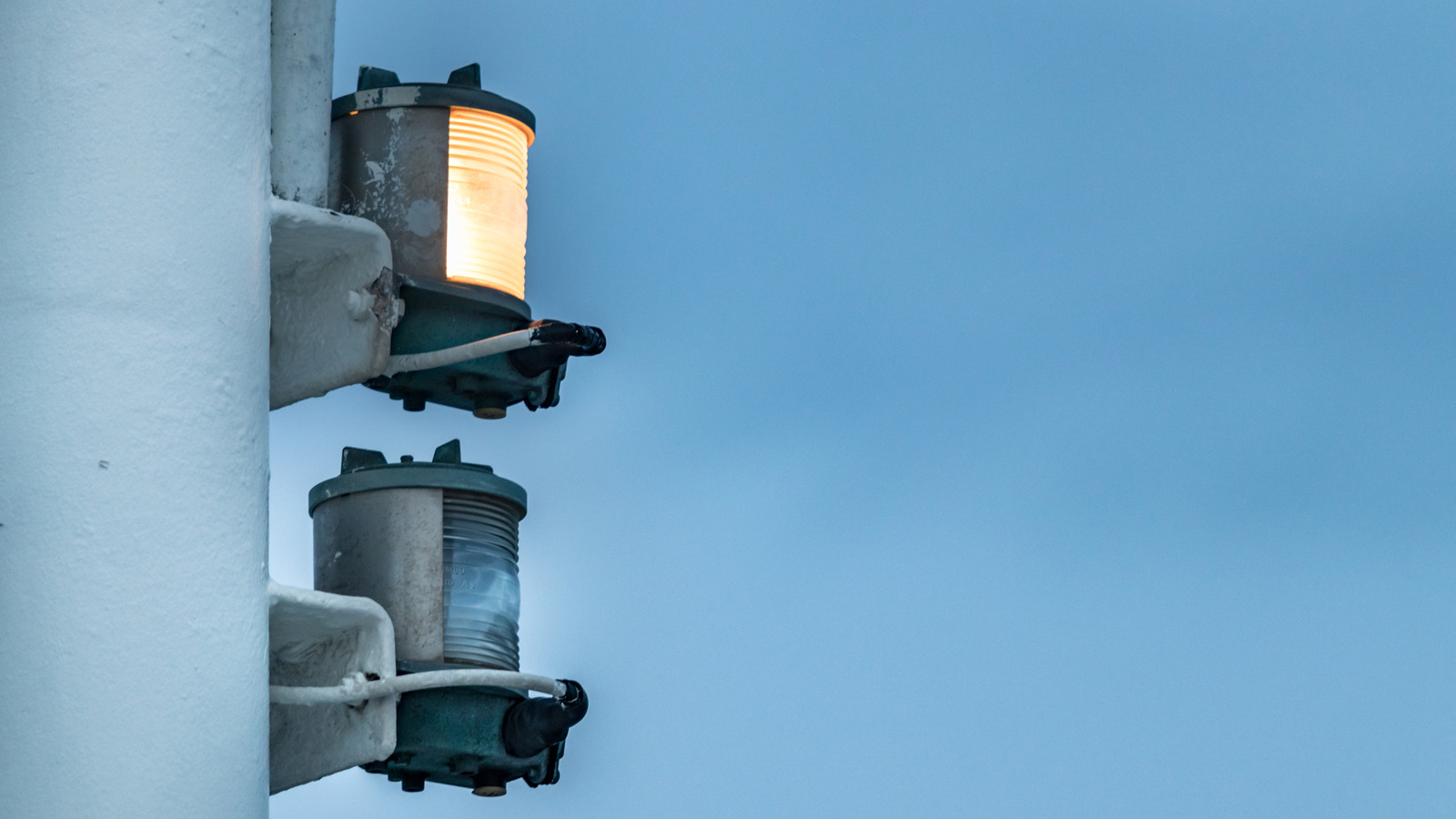
Boating at night depends on lights doing a lot of quiet heavy lifting. White navigation lights are a big part of that system, working alongside red and green sidelights to help nearby boaters read a vessel’s position, direction, and size without guessing. The exact setup changes with the kind of craft, but the basic idea stays the same: make the boat visible and make its movement understandable.
A white navigation light usually signals where a boat is and how it is oriented on the water. Where that light is placed matters a lot, because the rules treat smaller boats, larger boats, and different rigs a little differently. That is why a white light can mean one thing on a compact motorboat and something slightly different on a bigger vessel with a mast or sternlight.
On many power-driven vessels under 12 meters, an all-around white light is the simple answer. It shines in every direction and is placed close to the centerline so it can be seen from all sides. Smaller boats often rely on this setup because they do not always have the space or structure for a more complex arrangement.
Once a boat gets larger, the lighting picture becomes more layered. Vessels over 12 meters but under 20 meters can use a masthead light that throws light forward and to both sides, along with a sternlight at the back. Together, those lights create a full 360-degree picture for other boaters, which is exactly the point when traffic, darkness, and distance start making everything harder to judge.
The visibility requirement is not just about flashing a little glow into the dark. A boat’s white light needs to be visible from every direction and strong enough to be noticed from up to two nautical miles away. That kind of range gives other vessels time to react, which matters when water conditions, speed, and angle can change the situation in seconds.
White lights also work in tandem with red and green sidelights, and those colors are not random decoration. Red marks the port side and green marks the starboard side, giving other boaters a fast read on which way the vessel is facing. In low visibility, that color code becomes a lifesaver for avoiding confusion, near misses, and bad calls.
Each sidelight has its own arc of visibility, helping reveal more than just a boat’s location. When those lights are seen together with the white light, they tell a fuller story about the vessel’s movement. A boat showing both red and green may be coming straight on, while the white light helps define the overall outline from behind or at a distance.
That system is why navigation lights are taken seriously on both inland waters and open waterways. A bright white light might seem simple at first glance, but it is part of a carefully built language that every boater is expected to understand. When darkness falls, that language becomes the difference between smooth passage and risky guesswork.
Boats may be made for freedom, but the lighting rules keep that freedom from turning chaotic. A white navigation light does not just say a boat is there. It helps tell the full story of where it sits in the water, how it is moving, and how everyone else should respond.
