
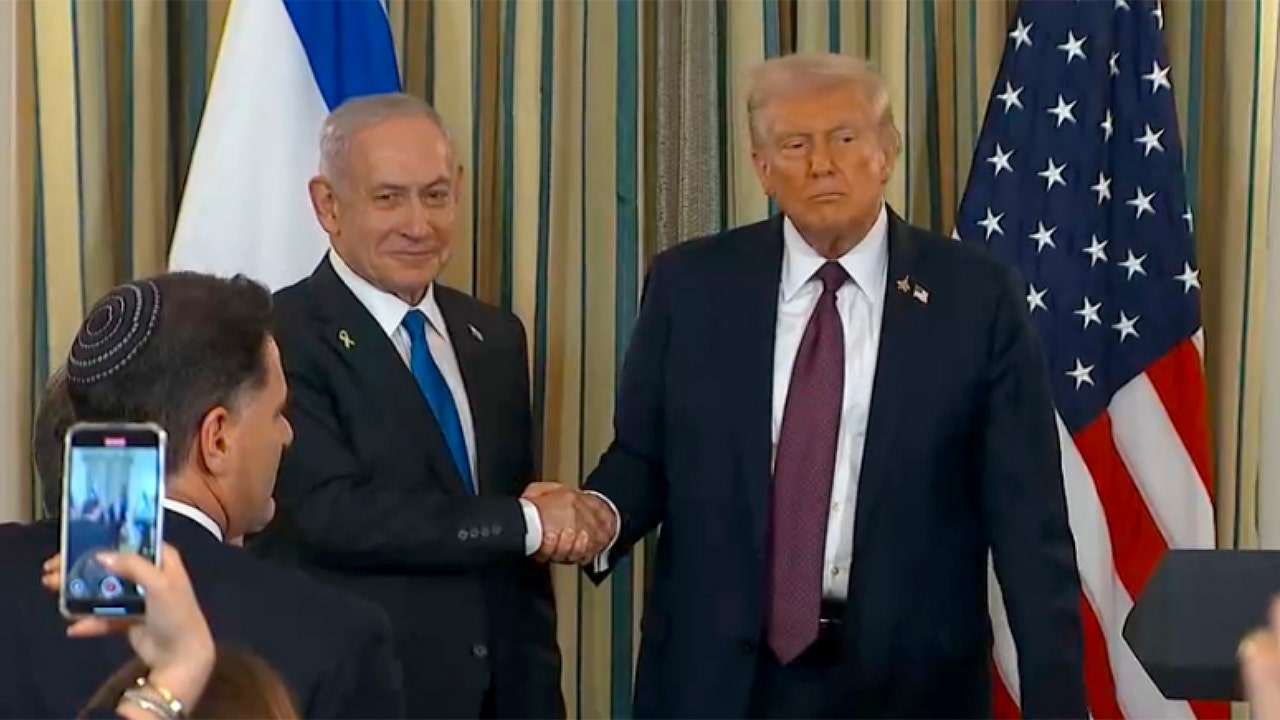
Trump’s backing for Benjamin Netanyahu landed like a political flare, tying Israel’s election fight directly to the larger showdown with Iran. The message was blunt: keep Netanyahu in power or the United States may end up carrying more of the load alone.
President Donald Trump is throwing his support behind Israeli Prime Minister Benjamin Netanyahu and the Likud Party ahead of the Oct. 27 Knesset vote. In his endorsement, Trump cast Netanyahu as a “great warrior” and a dependable partner as Israel faces war on multiple fronts and keeps Iran’s nuclear ambitions in its sights.
Trump’s praise was unusually personal. “I have watched Bibi under the most trying of times,” he wrote Sunday morning. “Normal men or women in such situations would have wilted under the pressure — But Bibi did not wilt, he actually got stronger, and maintains that same Strength today.”
He followed that by framing Netanyahu as the kind of ally Washington wants by its side. “This is the kind of Partner that the United States of America is demanding of Israel, a Country for which it has done so much,” Trump added. “Please let this Letter serve to represent my Complete and Total Endorsement of Bibi Netanyahu in his upcoming Race for Re-election as Prime Minister of Israel.”
The core of Trump’s warning was just as sharp. “If Israel has the wrong leader, which would be anyone other than Bibi, America will have to do this work ourselves, and I am not inclined to do so,” he wrote. “BIBI NETANYAHU WILL NEVER LET YOU DOWN!”
Netanyahu answered quickly on X, thanking Trump for the show of support and the work the two sides have done together. “Thank you, President Trump, for the tremendous support and the joint work,” Netanyahu replied. “Together, we will complete the mission.”
The election itself is a straight fight for control of Israel’s 120-seat Knesset, where party lists decide the balance of power and the next prime minister is chosen through coalition politics. Voters do not pick a leader in a one-man contest, and the side that can piece together 61 seats gets to govern.
That structure leaves plenty of room for drama. After the vote, Israel’s president consults with party leaders and gives a Knesset member, usually the one best positioned to build a coalition, the task of forming a government.
For Netanyahu, the math is tight. Current projections put Likud in the range of 18 to 22 seats, while a broader right-religious bloc tied to him is forecast around 49 to 51 seats, still short of a majority.
That gap means the smaller parties matter more than ever, and that is where the real leverage sits. Coalition partners can decide whether Netanyahu gets another shot at running the country or whether the whole political map gets scrambled again.
Trump’s endorsement also fits a larger pattern of close alignment between the two leaders, especially on Iran and regional security. Even when the relationship gets noisy, the hard edge of Middle East politics tends to pull them back into the same lane.
The stakes are bigger than one election or one headline. Israel’s next government will face immediate pressure over war, deterrence, and whether the country can keep enough political unity to make tough calls without blinking.
