
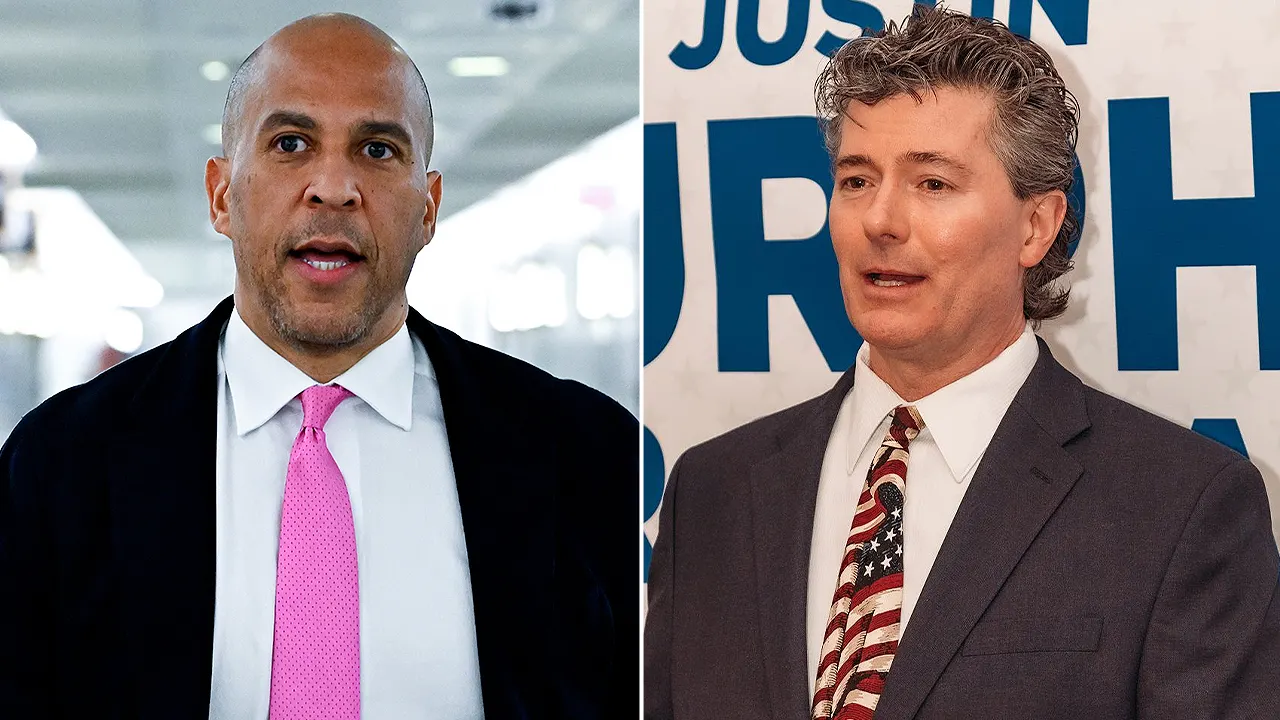
Here’s the tension in the room: a New Jersey Senate debate turned into a sharp clash over Iran, Donald Trump, and how far the United States should go to wrap up a war. Justin Murphy, the Republican challenger, drew loud applause for a blunt line aimed at Trump, while Cory Booker answered with familiar warnings about reckless foreign policy and costly Middle East entanglements.
Booker’s reaction came fast after Murphy told Trump to “Finish it.” That one-liner landed hard with the audience, but it also pushed the debate straight into the kind of argument that follows Trump wherever foreign policy comes up: strength versus restraint, force versus endless drift.
Murphy, a former Tabernacle deputy mayor and attorney from the Pine Barrens, made his case without much sugarcoating. When pressed on what he would tell Trump about Iran, he argued that stopping halfway makes no sense and said the Iranian Islamic Revolutionary Guard Corps is a radical terrorist organization that has crushed the lives of ordinary Iranians.
He went further, saying the war should end “in a positive manner” and that the United States should not pull back before the job is done. His closing jab, calling on Trump to put on his “cowboy hat” and finish the conflict, got attention because it matched the mood of a crowd that seemed ready for a tougher line.
Booker, for his part, did not miss the chance to slam the whole approach. He dismissed Murphy’s remarks as the kind of “Yahoo” foreign policy that has repeatedly dragged the country into Middle East wars, and he argued that swagger has a nasty habit of draining American money and patience.
The split-screen moment said plenty. While Murphy kept pressing his case, Booker looked down, shook his head, and then reacted with raised eyebrows and pursed lips, the kind of expression that can say more than a whole paragraph. It was the sort of televised body language that turns a policy exchange into instant political theater.
The debate also reflected the larger stakes for New Jersey Republicans. The state has leaned blue for a long time, but Trump has made inroads in recent years, especially in places that used to feel safely out of reach for the GOP.
That context matters because New Jersey has not elected a Republican to the U.S. Senate since 1972, when Clifford Case won re-election. A few later Republican names, including Nick Brady and Jeff Chiesa, reached the chamber only through brief appointed terms, which is a reminder of how steep the hill still is.
Murphy tried to use the debate to show he could speak plainly about the issues people actually argue about at kitchen tables and campaign stops. His comments on immigration added fuel to that effort, as he described a grim case involving an alleged kidnapping and sexual assault tied to an illegal immigrant who had reportedly been released earlier by federal authorities.
That message fits neatly into a broader Republican argument that voters are tired of confusion, weakness, and a Washington class that talks around real threats. For Murphy, the goal was not just to sound tough, but to present a clear contrast with Booker’s caution and the old habit of endless handwringing.
Booker, meanwhile, leaned into the familiar defense that Trump is all bluster and bad judgment, even joking about his claim that he knows more than his generals. He also pointed to Trump’s history in Atlantic City as another reason to question the president’s decision-making, turning the exchange into a mix of foreign policy fight and local insult.
The debate left the audience with a simple, messy choice: trust the candidate who says the war should be finished with force, or the one warning that force without discipline leads to another expensive mess. In a state where political surprise still matters, that kind of clash can hang in the air long after the cameras stop rolling.
