
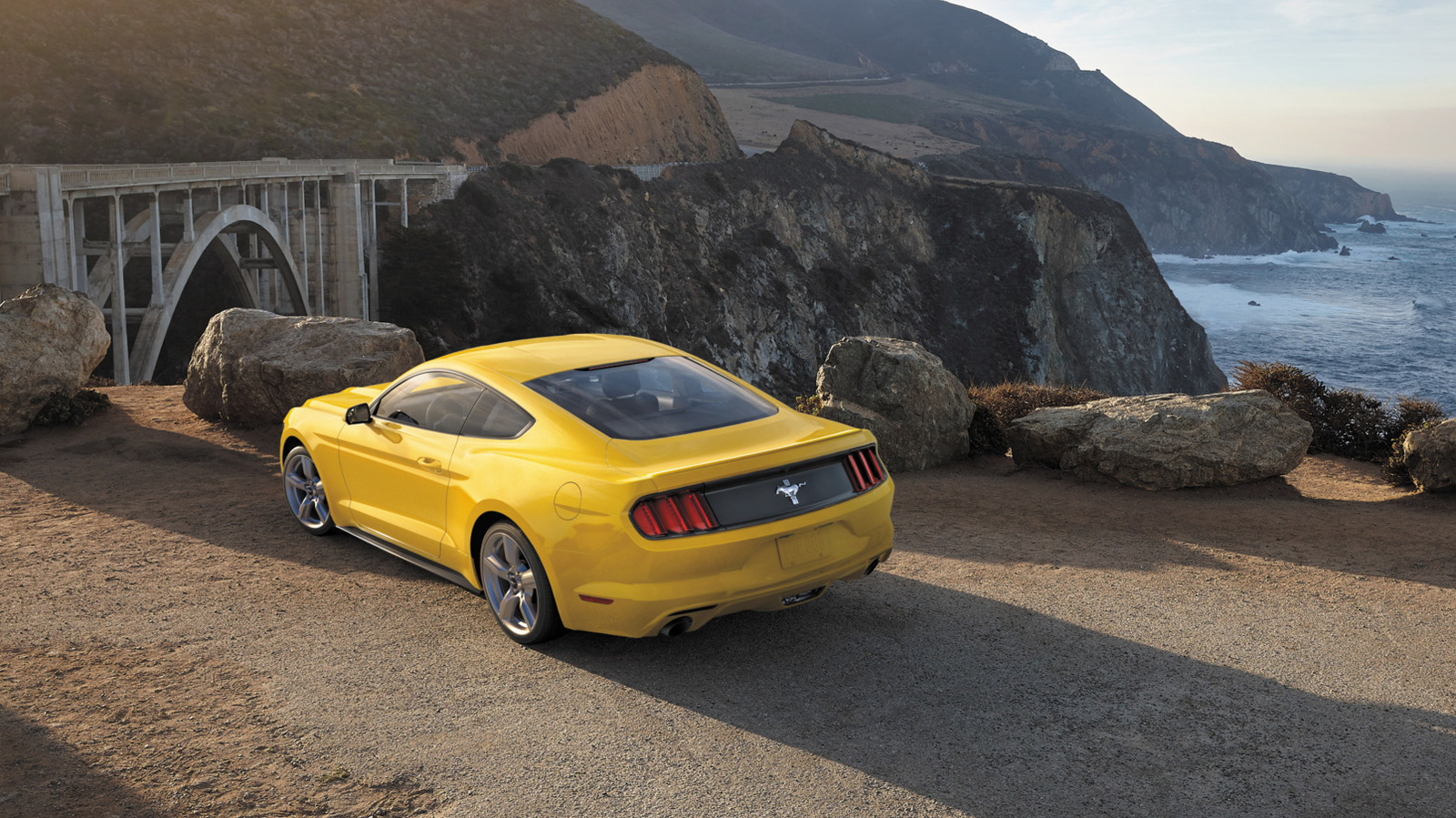
The V6 Mustang had a long run, but its exit was really about shifting priorities, not a sudden betrayal of the badge. Ford had already spent years steering the Mustang toward stronger performance, better efficiency, and a cleaner lineup, and the turbocharged EcoBoost four-cylinder ended up making the old six look outdated.
When the Mustang first showed up in 1964, it was sold as an affordable, practical car with a modest 170 cubic-inch six as the base engine. Over time, though, the car’s image hardened around big V8 power, and that reputation became almost inseparable from the nameplate. The six-cylinder versions were still useful and easier on fuel, but they increasingly lived in the shadow of the performance models.
By 2017, the V6 was gone from the Mustang lineup for good. The last version used a 3.7-liter V6 rated at 300 horsepower, which was plenty for everyday fun and quick street driving. Even so, the writing was already on the wall because Ford had a stronger option ready to take its place.
The turbocharged 2.3-liter EcoBoost four-cylinder was the real game changer. It produced 310 horsepower and 328 lb-ft of torque, which gave it a clear edge over the old V6 on paper. That extra punch came with better fuel economy too, and in a market where gas prices and efficiency matter, that combination was hard to ignore.
The mileage difference was not huge, but it was enough to matter to buyers comparing costs over time. The EcoBoost Mustang could reach up to 30 mpg on the highway, while the V6 was rated at 27 mpg highway. That gap may sound small, but it adds up quickly when the car is driven every day instead of saved for weekend blasts.
Performance buyers also tended to move in one direction. If a customer wanted a cheaper Mustang, the EcoBoost made more sense than the V6. If a buyer wanted the full muscle-car experience, the V8 was still sitting at the top of the food chain, which left the V6 stuck in an awkward middle space with less identity than before.
Ford’s broader product strategy sealed the deal. Around the same time, the company was trimming back sedans and hatchbacks and leaning harder into SUVs, trucks, and turbocharged engines across the board. That bigger shift meant old-school naturally aspirated engines were losing ground fast, and the V6 Mustang had fewer reasons to survive.
The Mustang was also one of the last Ford vehicles still carrying the 3.7-liter V6, which made it easier to phase out. Keeping a low-volume engine around can complicate manufacturing, sourcing, and long-term planning. Once the EcoBoost proved it could deliver more power with better efficiency, the six-cylinder lost its practical case.
That does not mean the V6 Mustang was a bad car. It had enough power to be entertaining, enough efficiency to stay reasonable, and enough presence to wear the badge proudly. But the market had moved, Ford had moved, and the Mustang moved with it, leaving the V6 as one more chapter in a story that kept getting faster, leaner, and more turbocharged.
