
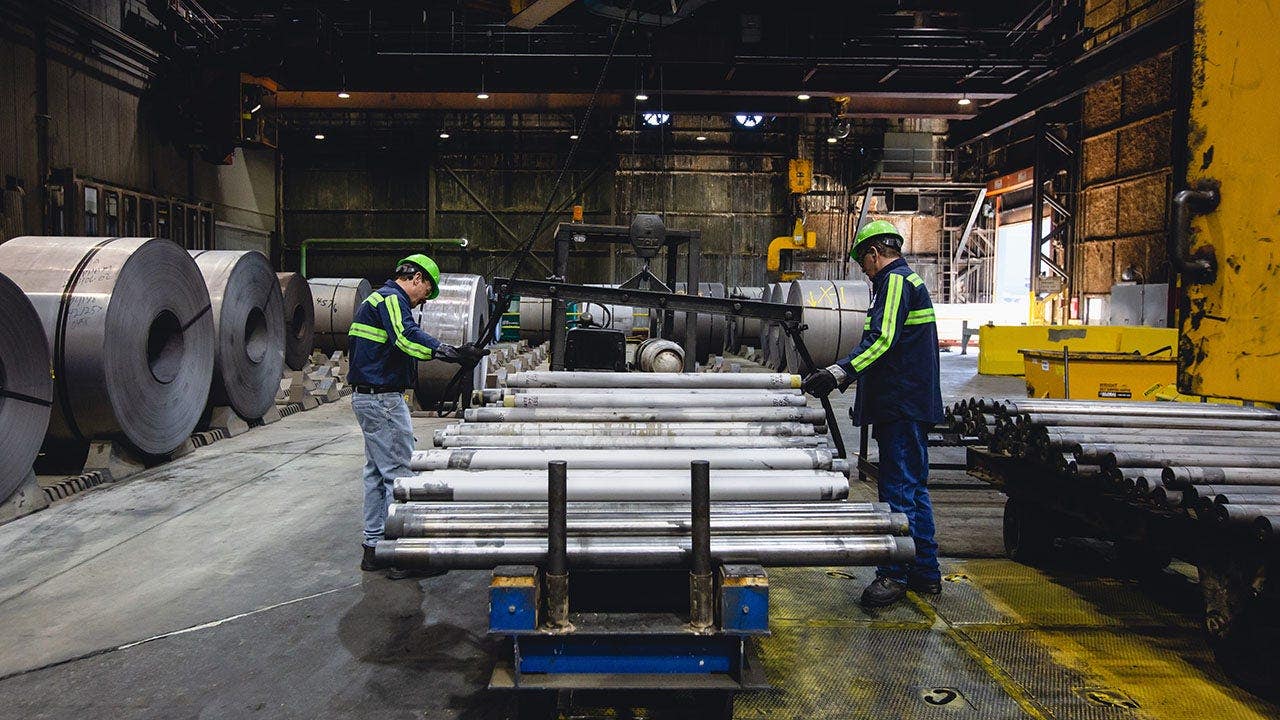
Blue-collar manufacturing is showing real momentum again, with fresh data pointing to a rebound in factory work, stronger wages, and a growing push to bring production back home. A new Council of Economic Advisers report ties much of that shift to Trump-era policies aimed at reshoring industry, expanding investment, and making it easier for companies to build in the United States.
According to the report, 72,000 manufacturing jobs were added in 2026, with much of the gain coming from durable goods like metal products and transportation equipment. That stands in sharp contrast to the last two years of Biden’s term, when 200,000 manufacturing jobs vanished and the industrial base kept getting thinner.
The administration’s broader approach is at the center of the turnaround. The report says tariffs and a stronger emphasis on domestic production have helped make America a more attractive place to manufacture, especially for companies looking for long-term stability instead of chasing lower costs overseas.
One of the biggest drivers is the One Big Beautiful Bill Act, which the report says gives manufacturers a major incentive to keep spending at home. Its 100% tax deduction for new factory construction and equipment purchases has made it easier for firms to expand without punishing themselves on the back end.
That kind of policy matters because manufacturing is not some abstract Wall Street game. It is the kind of work that puts skilled workers on shop floors, keeps paychecks moving through local towns, and gives businesses a reason to hire, train, and grow where the jobs are actually needed.
The report points to Jergens, an Ohio-based manufacturer that expanded into Illinois after the bill passed. Company leadership says workers have been putting in more voluntary hours and keeping more of what they earn, which is exactly the kind of ripple effect lawmakers talk about but rarely manage to produce.
Overtime has also become a bigger part of the picture. Schron said 83% of his workers are now picking up extra hours, helped by the OBBB’s no-tax treatment for overtime pay, which gives employees a clearer reason to stay engaged and clock more time when work is available.
Another example comes from Ketchie Inc. in North Carolina, where the workforce grew by 25% after the company used the expensing rules to buy new machinery. The firm reportedly waited for the bill to pass before making the purchase, a sign that policy changes can move real business decisions instead of just generating headlines.
Pay is rising too, and that is where the story gets even more interesting. Manufacturing wages are up 7.9% since January 2025, and the report says that translates to nearly $2,500 more a year for blue-collar workers after inflation is taken into account.
The gains are not limited to factory floors. Construction has added 100,000 jobs since Trump took office, while semiconductor production is also pulling in huge commitments from major companies. Micron is building chip plants in Idaho, Virginia, and New York, while Apple is putting $600 billion into American semiconductor production.
The report also says major pharmaceutical companies such as GSK and Gilead are investing billions in the United States, alongside automakers like Stellantis. All told, the CEA says reshoring and tariff policies have helped drive $11 trillion in investment during Trump’s second term, which is a staggering number by any measure.
That manufacturing push is happening against a tense economic backdrop. Inflation is still squeezing families, and voters are paying close attention to gas, groceries, housing, and healthcare as the midterms get closer.
Those cost pressures are showing up in polling as well, with many Americans saying everyday expenses remain a serious problem. Even with signs of industrial revival, the economy is still the kind of issue that can dominate kitchen-table conversations, especially when people feel the pinch every time they fill the tank or check out at the store.
